
.png)

How to Stop Chimney Smells at Home
A smoky, damp or stale smell drifting from the fireplace is hard to ignore. If you are wondering how to stop chimney smells, the first thing to know is that the smell itself is usually a clue. Chimneys do not start smelling for no reason, and the right fix depends on whether the cause is soot, moisture, poor airflow, a blockage or something that has found its way into the flue.
For most households, the smell gets worse in warm weather, after rain, or when the fire has not been used for a while. That can be frustrating, especially if the room is otherwise clean and dry. The good news is that many chimney odours can be improved once the underlying issue is properly identified.
Why chimneys start to smell
A chimney is constantly exposed to changing temperatures, moisture and airflow. Even when you are not using the fire or stove, air is moving up or down the flue. If there is soot, tar or creosote left inside, that airflow can carry the smell back into the room.
Moisture makes it worse. Rain entering a chimney pot, condensation forming in a cold flue, or damp trapped in old masonry can all mix with soot deposits and create a sour, smoky odour. In some cases the smell is musty rather than smoky, which often points more towards damp than heavy soot build-up.
There are also simpler causes. Birds' nests, fallen debris and old blockages can create unpleasant smells of their own. If an animal has entered the chimney, the odour can become very strong very quickly. A chimney that smells only at certain times of day may be reacting to changes in air pressure, wind direction or extractor fans pulling air back down the flue.
How to stop chimney smells by finding the real cause
The most effective way to stop the smell is to treat the cause, not just mask it with room sprays or scented candles. Those might cover it for an hour or two, but they will not solve what is happening inside the chimney.
Start by noticing when the smell appears. If it is strongest after wet weather, damp ingress is a likely factor. If it is worst in hot summer conditions, old soot and creosote deposits are often to blame, because warm air can lift those odours into the room. If the smell is sudden and severe, especially after periods of bird activity, a nest or blockage is worth checking.
If you use a wood burner or open fire regularly, build-up inside the flue is one of the most common reasons. Even a chimney that was fine through winter can start to smell once the appliance is used less and the warmer months arrive.
A proper chimney sweep is often the first answer
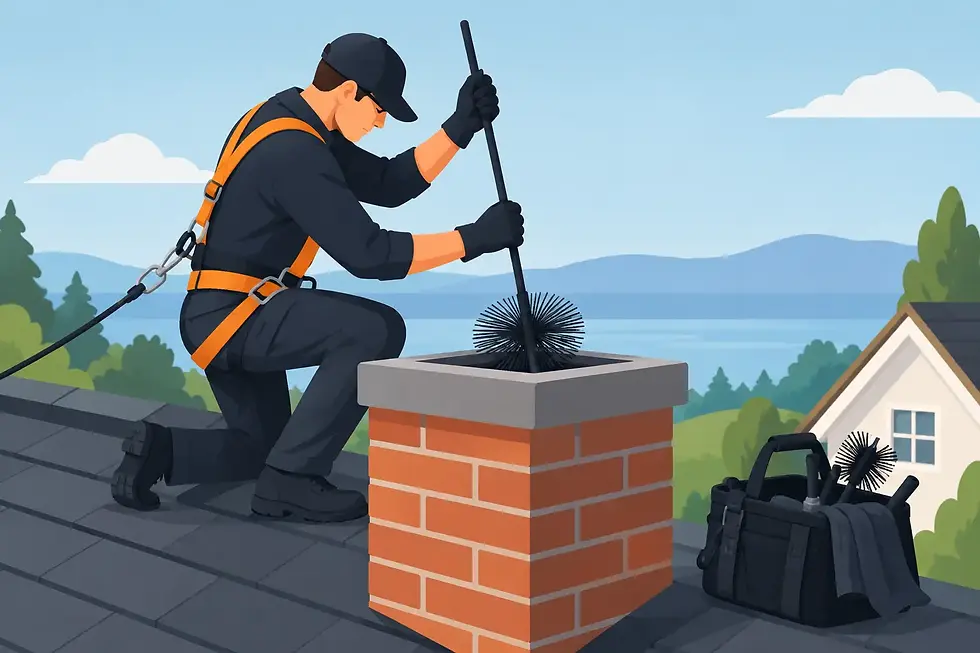
In many cases, the simplest fix is a thorough professional sweep. Removing soot, tar residues and debris reduces the material causing the smell in the first place. It also gives you a clearer picture of whether there is anything else going on, such as a nest, damaged liner or excess moisture.
This is particularly important if the chimney has not been swept for some time. A clean flue is not just about smell. It also helps with safety, performance and early detection of problems. If you have an open fire, wood burner or stove, regular sweeping should be part of normal household maintenance rather than something left until there is an obvious issue.
For homes across Somerset, Dorset and Devon, this is often the point where a professional service makes life easier. A clean, careful sweep and a proper look up the flue can often save a lot of guesswork.
Check for damp and rain entry
If sweeping helps but the smell keeps coming back, moisture may be part of the problem. Rain can enter from the top if the chimney pot is too exposed or if there is no suitable cowl in place. Masonry can also absorb water over time, especially on older properties and period homes where the chimney stack has taken years of weather.
You might notice other signs alongside the smell, such as staining on the chimney breast, discoloured plaster, flaky decoration or a generally musty feel in the room. If that sounds familiar, the chimney may need more than just a sweep.
A chimney cowl or cap can help in the right situation, but it is not a one-size-fits-all fix. The wrong fitting can interfere with ventilation or appliance performance. It depends on whether the flue is active, what appliance is connected, and how the chimney is built. That is why it helps to have the chimney checked before adding anything at the top.
Ventilation matters more than many people realise
One common reason for odours is downdraught. Instead of air naturally rising up the chimney, outside conditions or indoor pressure changes can push air back into the room. That air carries the smell of the flue with it.
Modern homes are often more sealed than older ones, and extractor fans in kitchens or bathrooms can create negative pressure indoors. When that happens, the chimney can become the easiest path for air to re-enter the house. You may notice the smell more when windows are shut, when the cooker hood is on, or when the weather is still and muggy.
Sometimes a little background ventilation helps. In other cases, a vented chimney balloon or similar product can reduce airflow from a disused fireplace while still allowing some ventilation. The key word is vented. Completely sealing a chimney is rarely a good idea because trapped moisture can make the problem worse.
How to stop chimney smells in disused fireplaces
A disused fireplace often smells more than one in regular use because the air is stagnant and the old soot remains in place. If the flue is no longer used, it still needs to breathe. Blocking it tightly at the fireplace opening may seem sensible, but that can trap damp and stale air inside the stack.
A better approach is usually to have the chimney swept, check that it is free from nests or debris, and then fit an appropriate vented closure if needed. That keeps ventilation going while reducing the amount of odour drifting into the room.
If the fireplace has been boarded over in the past and no one is quite sure what condition the flue is in, it is worth having it inspected. Old properties can hold surprises, and hidden damp or debris is not unusual.
When the smell points to a blockage or bird activity
If the smell is strong, sudden or unpleasant in a way that goes beyond normal sootiness, a blockage may be present. Birds' nests are a common issue in spring and early summer, especially in chimneys without cowls. Twigs, nesting material and droppings can all create odours, and they can also restrict the flue.
That is not something to ignore. A blocked chimney is a safety problem as well as a smell problem. If you plan to use the fire or stove, the flue needs to be clear and working properly.
This is also where guesswork can do more harm than good. Poking around from the fireplace opening rarely solves the problem and can cause mess indoors. Proper removal and, where needed, a camera survey give a much clearer view of what is happening inside.
A few things that help, and a few that do not
There are small steps that can reduce odour in the short term. Keeping the room gently ventilated, using the appliance correctly, burning only suitable dry fuel, and making sure ash is removed all help keep smells under control.
What tends not to work is trying to perfume over the problem, stuffing the fireplace opening with towels, or fitting DIY chimney covers without checking whether the flue still needs ventilation. These can hide the symptom while making the cause worse.
It is also worth remembering that heavy tar and creosote deposits may need more attention than a routine clean if they have built up over time. That usually comes back to burning habits, fuel quality and the way the appliance has been operated.
When to call in a professional
If the smell keeps returning, if you can see signs of damp, or if there is any chance of a nest or obstruction, it is time to have the chimney properly assessed. A professional chimney sweep can clean the flue, check for common faults and advise whether further maintenance is needed.
At Three Counties Sweeps, that usually means looking at the whole picture rather than just brushing the chimney and leaving. The smell in your sitting room may start inside the flue, but the real cause could be airflow, moisture, a blockage or a maintenance issue that needs sorting before the next heating season.
A chimney should not make your home smell unpleasant. If it does, there is usually a reason, and once that reason is dealt with properly, the room feels fresher, safer and far more comfortable to live in. If something does not smell right, trust your nose and get it checked.


Comments