
.png)
Why Is My Fireplace Smoking? Causes and Fixes
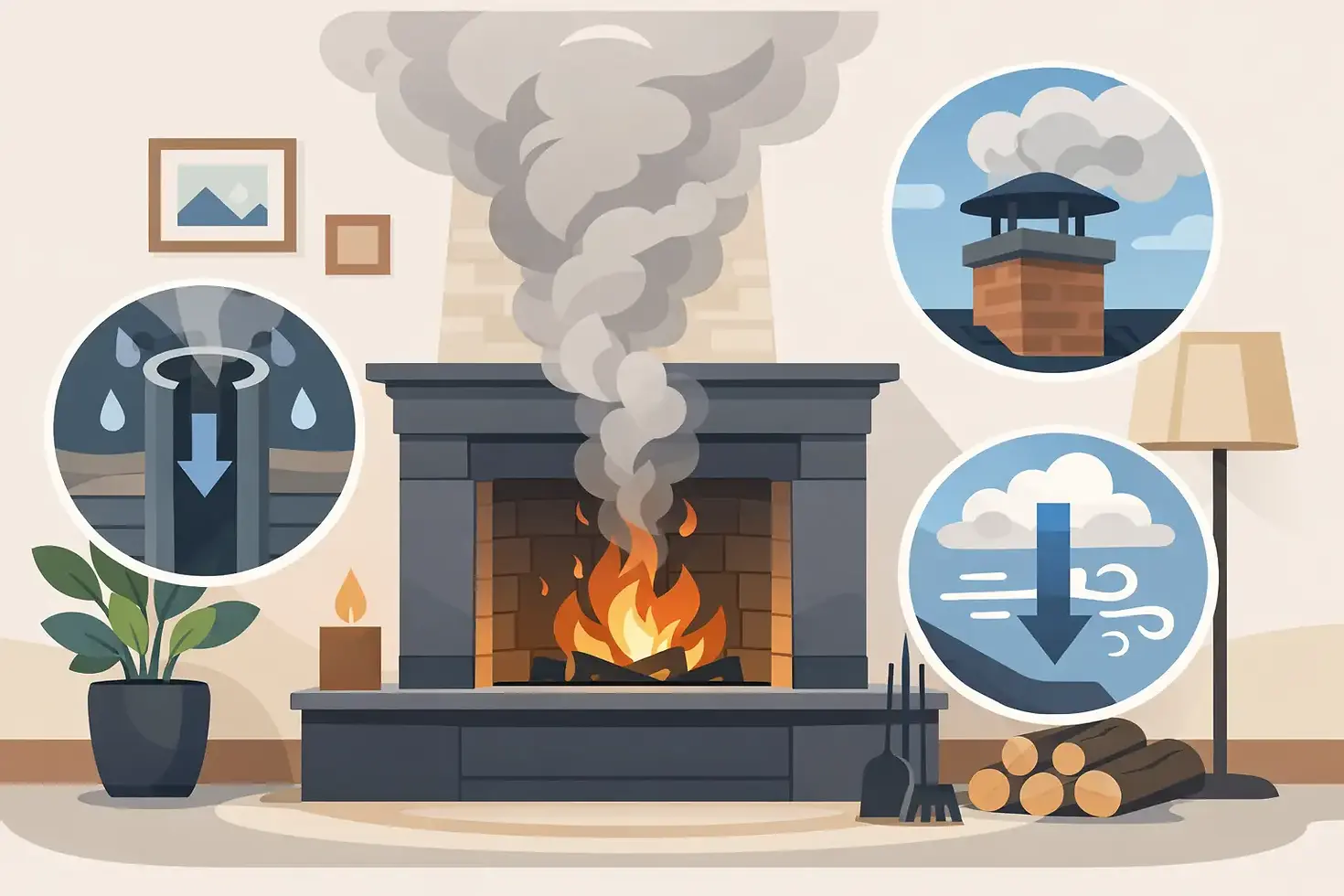
A fireplace should draw smoke up the chimney, not send it back into the room. If you are asking, “why is my fireplace smoking?”, treat it as more than an annoyance. Smoke can quickly make a room unpleasant, stain furnishings and expose your household to harmful gases. Stop using the fire if smoke continues to enter the room, ventilate the space, and do not assume the problem will clear on its own.
Sometimes the cause is simple, such as a cold chimney or unsuitable logs. Other times, a blocked flue, poor airflow or a fault in the chimney needs professional attention. The pattern of the smoke often provides a useful clue.
Why Is My Fireplace Smoking Into the Room?
For a fire to work properly, warm air and smoke need to rise through the flue. This upward movement is called draw. Anything that weakens that draw, narrows the flue or creates competing airflow in the house can cause smoke to spill into the room.
If the fireplace has always worked well and has suddenly started smoking, think first about a blockage, a change in ventilation or damp fuel. If it has smoked ever since you moved in or installed a new stove, the chimney height, flue size or fireplace set-up may need to be assessed.
A cold flue is preventing the draw
This is especially common when lighting the first fire of the season, after a long period without use, or on a mild, still day. Cold air can sit inside the chimney like a plug. When you light the fire, the smoke struggles to push that cold air upwards and may come back into the room instead.
Try warming the flue gently before building up the fire. Start with a small, hot kindling fire using dry kindling and an appropriate firelighter, with the air controls or vents fully open. Keep the fireplace doors open only if the appliance instructions say this is safe. Once the chimney has warmed, the draw should improve.
If smoke still pours into the room after the flue is warm, stop and investigate rather than adding more fuel.
The chimney or flue is blocked
Soot, tar deposits, fallen masonry, birds’ nests and other debris can restrict the flue. A partial blockage may allow some smoke through but not enough when the fire gets going. A complete blockage can cause immediate and severe smoke blowback.
Nests are particularly common in unused chimneys during spring and early summer, while loose debris may appear after storms or following deterioration in an older chimney. A chimney cowl can help in some situations, but it is not a substitute for checking and sweeping the flue.
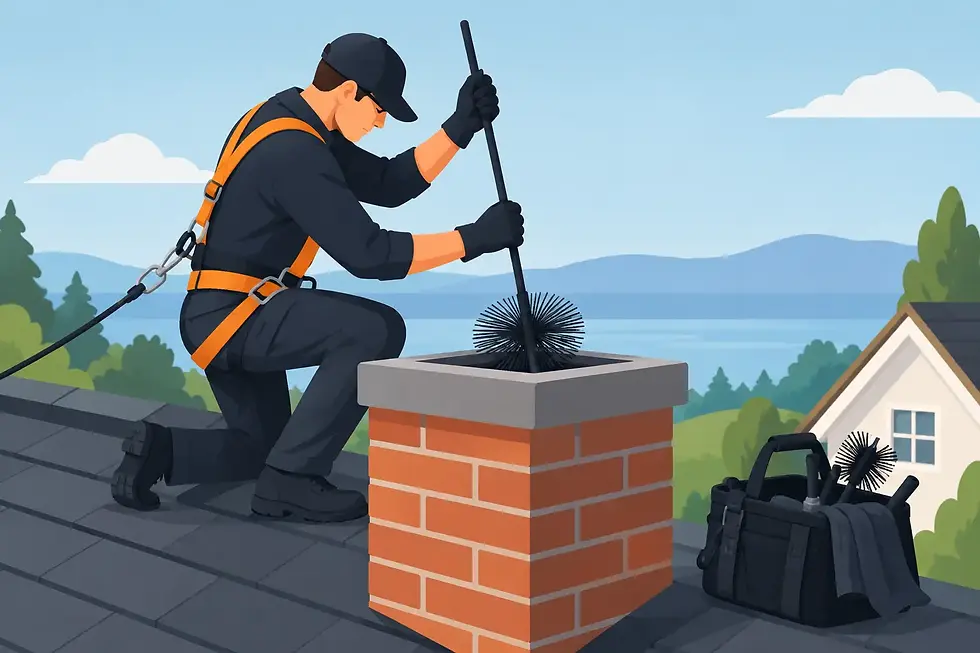
Do not attempt to inspect a chimney by climbing onto the roof or poking tools up from the fireplace. A professional sweep can assess the flue properly and, where needed, use a CCTV chimney survey to identify obstructions, damage or a problem further up the stack.
Your fuel is too wet or unsuitable
Wet wood creates more smoke, less heat and more deposits inside the chimney. Logs should be properly seasoned or kiln dried, with a moisture content of 20% or below. Freshly cut timber, wood stored outdoors without cover and damp logs brought in from the garden are common culprits.
Avoid burning treated timber, painted wood, household rubbish or coal in an appliance that is not designed for it. These materials can release unpleasant fumes, produce excessive soot and damage the flue over time.
The way a fire is built matters too. A large pile of logs on a weak flame can smoulder instead of burning cleanly. Begin with dry kindling, establish a bright flame, then add small logs gradually. A clean-burning fire should look lively rather than sluggish and smoky.
Check the Air Supply Around the Fireplace
Modern homes are often better sealed than older properties. New windows, draught-proofing, extractor fans and even a powerful cooker hood can affect the air available to a fire. If the chimney cannot pull replacement air into the room, it may struggle to draw smoke upwards.
As a simple check, turn off kitchen and bathroom extractor fans and open a nearby window slightly before lighting the fire. If the smoking improves, lack of ventilation may be part of the issue. Do not permanently rely on an open window without getting advice, particularly with a wood burner or stove that has specific ventilation requirements.
Some appliances require a dedicated air vent. Blocking or covering a purpose-made vent can affect safe operation. If you are unsure whether your fireplace or stove has the correct air supply, ask a qualified chimney professional to look at the whole installation rather than just the hearth.
Wind and chimney position can cause downdraughts
Wind does not always improve chimney draw. Depending on the position of the chimney, nearby trees, roof shapes and taller neighbouring buildings can create a downdraught. Instead of allowing smoke to escape, the wind can force air down the chimney.
You may notice this only in certain wind directions. The fire may work perfectly on a calm day, then smoke badly when the wind is from the south-west. This does not automatically mean a cowl is the answer. The type of chimney, its height, the flue and the local wind pattern all need considering before any alteration is made.
A professional assessment can establish whether the chimney is too short, poorly positioned, damaged or likely to benefit from an appropriate anti-downdraught cowl. Fitting the wrong cowl can sometimes restrict the flue further, so it is worth getting the diagnosis right first.
A closed damper, blocked throat or appliance fault
Some open fireplaces have a damper above the fire opening. If it is closed or only partly open, smoke has nowhere to go. Check that it is fully open before lighting the fire, if your fireplace has one.
With stoves and wood burners, check that the air controls are open for lighting and that ash has not built up in a way that restricts airflow. Door seals, baffle plates and flue connections can also affect how an appliance performs. Do not alter internal stove parts unless you have the manufacturer’s instructions and know they are correctly fitted.
An open fireplace may also smoke because the opening is too large for the chimney, the throat is incorrectly sized, or the flue lining is unsuitable. These are design issues rather than cleaning issues, and they need a careful survey before any remedial work is proposed.
When Smoking Means Do Not Use the Fireplace
Stop using the fireplace and arrange an inspection if smoke enters the room regularly, if you smell fumes after the fire has gone out, or if soot is falling into the hearth. The same applies if you hear debris in the flue, see cracks around the chimney breast, or find signs of a nest.
Never ignore symptoms of carbon monoxide exposure. Headaches, dizziness, nausea, unusual tiredness and confusion can all be warning signs. Leave the property, get into fresh air and seek urgent advice if anyone feels unwell. Every home with a solid-fuel appliance should have a working carbon monoxide alarm installed and tested in line with the manufacturer’s guidance.
A chimney fire can also leave damage that affects draw. Signs may include a loud roaring sound during use, an unusually hot chimney breast, cracked flue liners or flakes of soot around the fireplace. Do not relight the fire until the chimney has been checked.
How Regular Sweeping Helps Prevent Smoke Problems
Sweeping removes soot and combustible deposits, but it also gives the chimney professional attention before a small issue becomes a smoky living room or a safety concern. How often your chimney needs sweeping depends on the fuel, how often you use it and the type of appliance. Wood-burning and multi-fuel appliances usually need more frequent attention than occasional open fires.
Keep a note of when the chimney was last swept, what fuel you burn and whether the fireplace behaves differently in particular weather. This information helps a sweep narrow down the cause quickly. It is also sensible to have the flue checked before returning to regular fires in autumn, rather than waiting until the first cold evening when you want the fire most.
If your fireplace is smoking, a clean, friendly inspection can provide reassurance as well as a practical answer. Three Counties Sweeps can assess chimneys across Somerset, Dorset and Devon, from routine brush and vacuum sweeping to nest removal and CCTV surveys where the cause is not obvious.
A fire should make your home feel warm and settled, not leave you reaching for the windows. Use dry fuel, give the chimney the maintenance it needs, and get persistent smoke checked before lighting another fire.


Comments