
.png)
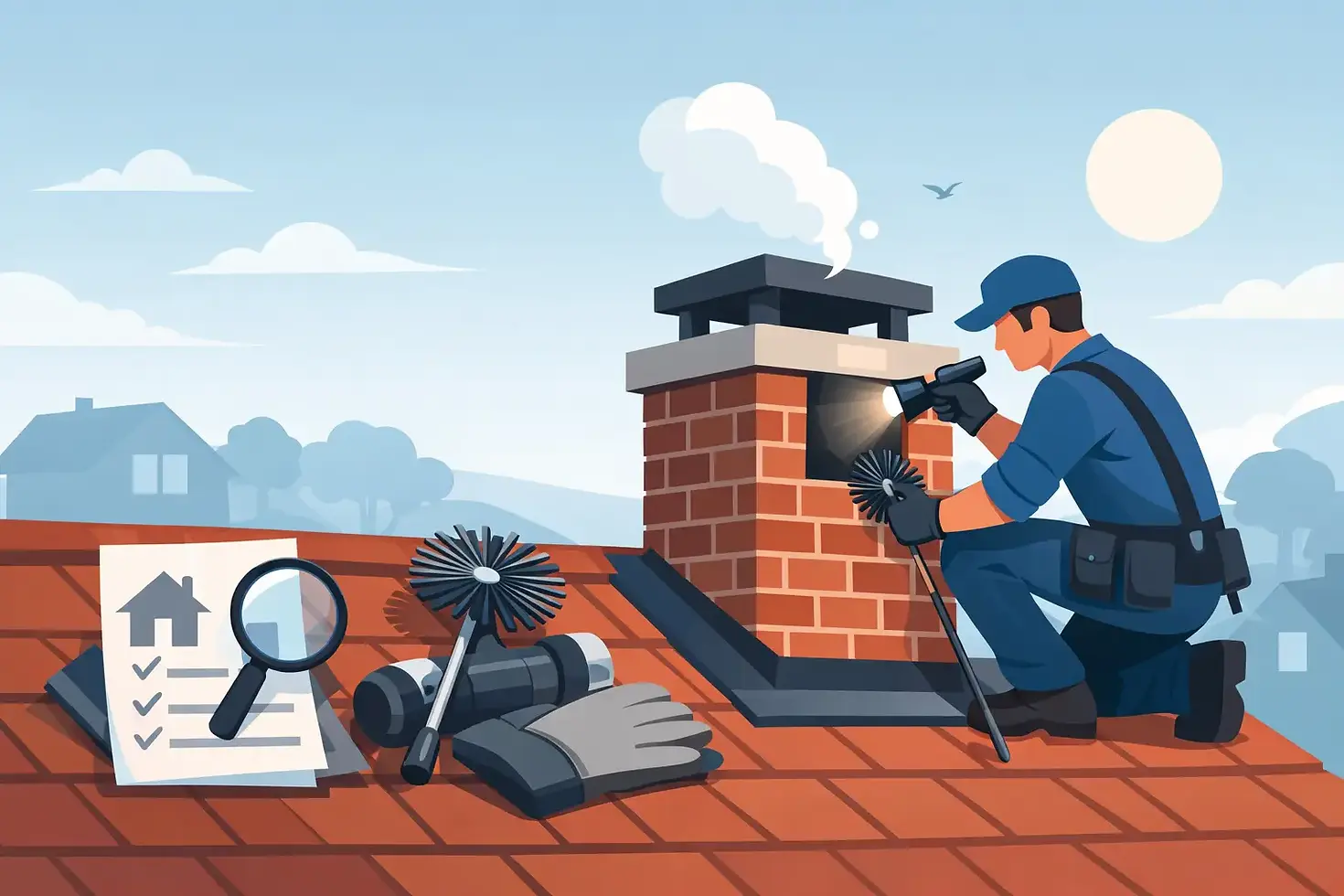
A Homeowner’s Guide to Annual Chimney Servicing
A fire that draws well, lights without fuss and leaves no smoky smell in the room can make chimney care easy to put off. But a chimney works hard behind the scenes. This guide to annual chimney servicing explains what needs attention, when to arrange it and why a regular visit is one of the simplest ways to look after your home.
For households with a wood burner, open fire, gas fire or stove, servicing is about more than removing soot. It is a chance to spot blockages, assess how the flue is performing and deal with small problems before they become inconvenient, expensive or unsafe.
Why annual chimney servicing matters
Every time solid fuel burns, it leaves deposits in the flue. Soot is familiar, but tar-like creosote can also build up when wood is damp, fires are left to smoulder, or the appliance is not burning efficiently. Over time, these deposits restrict the flue and increase the risk of a chimney fire.
Birds’ nests, loose mortar, fallen debris and cobwebs can cause trouble too. In rural parts of Somerset, Dorset and Devon, nesting activity is a particularly common reason for an apparently reliable fireplace to start smoking back into the room. A blocked chimney does not always announce itself dramatically. You may first notice a stale smell, black marks around the fireplace, a slower draw or smoke when lighting the fire.
Regular servicing also supports the safe removal of combustion gases. Carbon monoxide has no smell and cannot be seen, so it is not something to guess about. A working carbon monoxide alarm is essential wherever fuel-burning appliances are used, but it does not replace proper chimney maintenance.
For many homeowners, the reassurance matters just as much as the practical benefit. You know the chimney has been checked by someone equipped to do the job cleanly and properly, rather than waiting until a cold evening when the fire refuses to behave.
How often should your chimney be swept?
“Annual” is a good starting point, but the right frequency depends on the fuel you burn and how often the appliance is used. A chimney serving a wood burner used daily through autumn and winter needs more attention than one connected to an occasional decorative gas fire.
As a general rule, chimneys burning wood or house coal are commonly swept up to four times a year when regularly in use. Smokeless fuel may need annual sweeping, while oil and gas appliances are generally serviced annually. Your stove manufacturer’s instructions, fuel supplier and insurer may set more specific expectations, so these should always take priority.
The quality of fuel affects the answer as well. Burning properly seasoned wood with a moisture content below 20% produces a cleaner, hotter fire. Wet logs create more smoke and deposits, meaning the flue may need sweeping sooner. Treated timber, painted wood, household rubbish and coal not approved for domestic use should never be burned in a stove or open fire.
If you only use the fireplace a handful of times each year, an annual check can still be worthwhile. A dormant flue can harbour a nest, moisture damage or debris just as easily as one that sees frequent use.
When is the best time to book?
Late spring and summer are often the easiest times to arrange a sweep. Your fire is unlikely to be needed, access is usually simpler and any repair work identified can be organised before the colder months. It also avoids the autumn rush, when many people remember their chimney only as the first chilly evenings arrive.
That said, the best time to book is before you next rely on the appliance. If you have recently moved into a property, inherited an older stove, noticed smoke entering the room or have no record of the last sweep, do not wait for a convenient season. Arrange an inspection first.
There are occasions when sweeping should be paused. If there is active nesting in the chimney, it must be dealt with responsibly and in line with wildlife protections. A professional can advise on what is present and the appropriate next step, rather than risking harm or making the blockage worse.
What happens during an annual chimney service?
A professional appointment should begin with a quick conversation about the appliance and any concerns you have noticed. Mention poor draw, smells, a recent chimney fire, water marks, debris in the grate or changes since a new stove was fitted. These details help direct the inspection.
The room should be prepared carefully, with the fireplace area protected before sweeping begins. Depending on the chimney, a brush-and-vacuum method or power sweeping may be used to clear soot and deposits from the flue. The correct approach depends on the appliance, liner type, flue condition and level of build-up. More force is not automatically better, especially in an older chimney or a flue with a liner that needs careful treatment.
The sweep will remove the debris collected at the fireplace and check that the flue is clear. Where a problem cannot be confirmed from the hearth, a CCTV chimney survey can provide a closer look inside. This can be useful for suspected cracks, damaged liners, offsets, obstructions or a chimney with an uncertain history.
A proper service should leave you with clear advice, not technical jargon for its own sake. If all is well, you should know when to book again. If work is needed, you should understand what has been found, why it matters and whether you need urgent action or routine maintenance.
Signs you should not wait for your next service
A chimney does not have to be overdue to need attention. Stop using the appliance and seek professional advice if smoke is repeatedly entering the room, if there is a strong sooty or tar smell, or if you hear material falling into the fireplace.
Other warning signs include a sudden change in how the fire draws, staining on walls or ceilings around the chimney breast, visible damage to the pot or stack, and a carbon monoxide alarm sounding. If the alarm sounds, follow its instructions immediately, get people into fresh air and do not use the appliance again until the cause has been investigated.
After a chimney fire, even one that seems small, the flue should be checked before the fireplace is used again. High temperatures can damage liners and mortar in ways that are not visible from the room.
Simple checks between appointments
You should not attempt to sweep your own chimney with improvised equipment, but there are sensible habits that make a real difference between services. Use dry, suitable fuel, keep air vents clear, and avoid turning a lively fire into a long, smoky smoulder overnight.
Before lighting the first fire of the season, look at the hearth, stove door seals and visible flue pipe for signs of damage or loose material. Test carbon monoxide alarms in line with the manufacturer’s guidance and replace batteries or units when required. Keep the chimney breast and fireplace area dry where possible, as persistent damp can point to a problem with the stack, flashing or capping.
It also helps to keep a simple record of servicing, repairs and the fuel you use. This is useful for your own planning and can be reassuring when selling a property or speaking with an insurer.
Choosing a chimney sweep you can trust
Inviting a tradesperson into your home requires confidence, particularly when the work involves a fireplace, carpets and living space. Look for a sweep who explains what they will do, protects the work area and is happy to answer straightforward questions.
Relevant insurance, DBS checking and membership of a recognised industry body are worthwhile signs of professionalism. For example, Three Counties Sweeps is fully insured, DBS checked and a member of the National Association of Chimney Sweeps. Credentials matter, but so does the standard of care on the day: arriving when promised, treating your home with respect and leaving the area clean.
Price should not be the only deciding factor. A very quick visit may not include the time needed to assess a concern, manage a difficult access point or explain the condition of the chimney. Ask what the service covers and whether a certificate or service record will be provided.
A well-maintained chimney should be something you rarely have to worry about. Book ahead, burn good fuel and pay attention to changes in how your fire behaves. That little bit of forward planning helps keep cold evenings comfortable, your home cleaner and your hearth ready when you want it.


Comments