
.png)

Guide to Chimney Bird Nest Removal
- plamb10
- Jun 15
- 6 min read
You usually notice a chimney nest when something stops working as it should. Smoke starts backing up into the room, the stove draws poorly, or you hear scratching and fluttering above the fireplace first thing in the morning. If you are looking for a guide to chimney bird nest removal, the first thing to know is that timing matters just as much as the removal itself.
Birds choose chimneys because they are sheltered, quiet and feel safe from predators. Jackdaws are the usual culprits, and they can fill a flue surprisingly quickly with twigs, moss and debris. What looks like a small nuisance from below can become a serious blockage higher up, with risks ranging from unpleasant smells to carbon monoxide problems and chimney fires.
Why chimney bird nests need dealing with properly
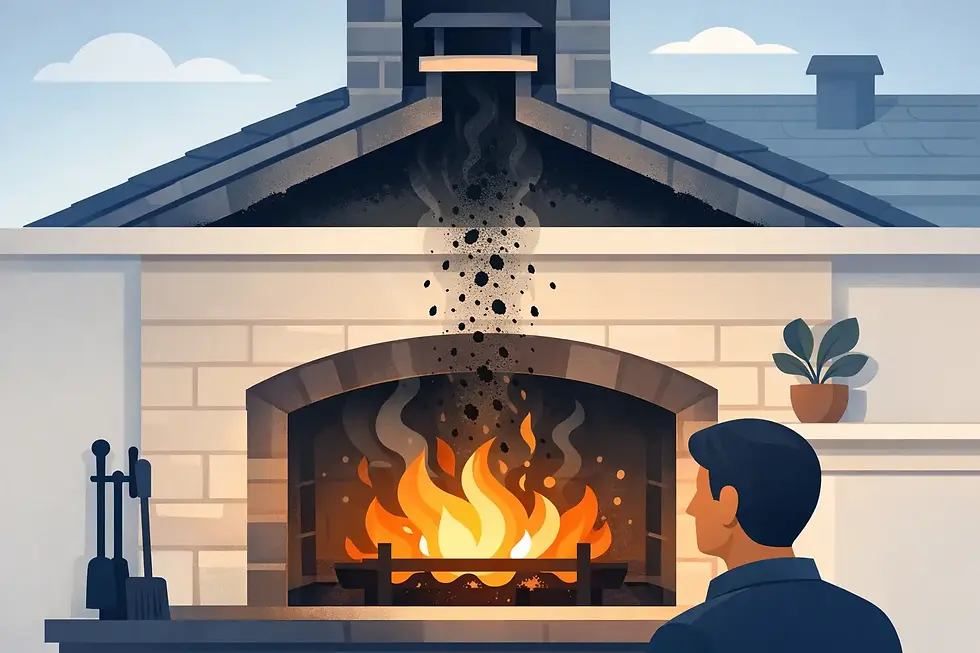
A nest in the chimney is not just an inconvenience. It can restrict or completely block the flue, which means smoke and gases cannot escape as they should. If you use an open fire, wood burner or stove, that is a genuine safety issue.
Even if the appliance is not in use, an old nest can hold damp material and create lingering odours. Bits of nesting material may fall into the fireplace, and in some cases birds can become trapped in the flue or room below. The longer it is left, the messier and more compacted it tends to become.
There is also a legal and welfare side to consider. In the UK, wild birds, their nests and eggs are protected during active nesting. That means you cannot simply remove a nest whenever you find one. If the nest is in use, the safest and most responsible approach is usually to wait until the birds have finished nesting, then arrange professional removal and a check of the flue.
A practical guide to chimney bird nest removal
The right approach depends on whether the nest is active, how severe the blockage is, and what type of chimney or appliance you have. This is one of those jobs where a little caution saves a lot of trouble.
Step 1: Look for the signs
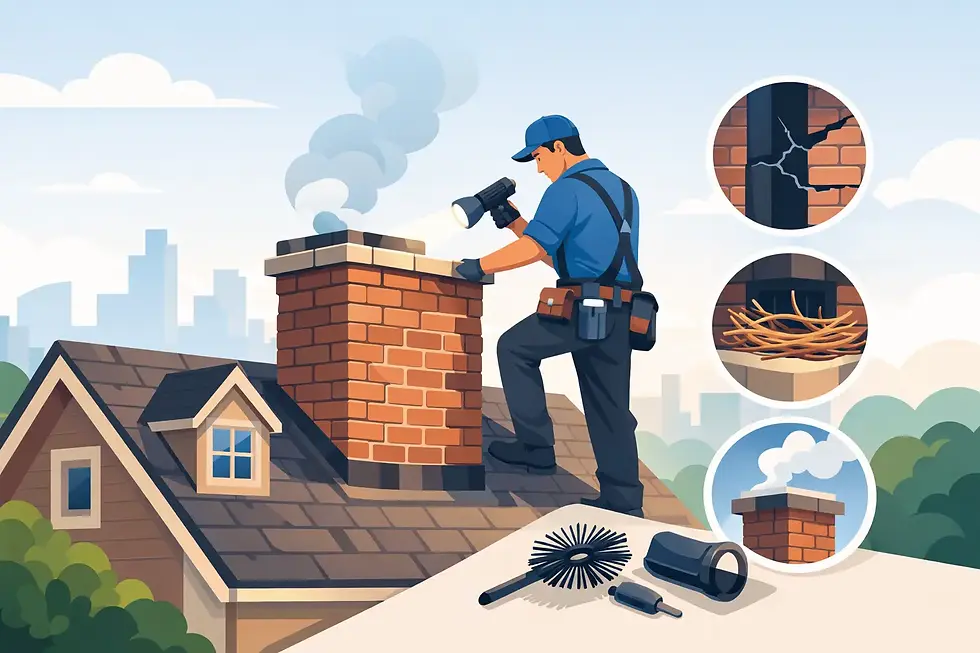
A blocked or partially blocked chimney often gives a few clear warnings. Smoke may spill back into the room instead of drawing upwards. You may hear birds calling from the chimney pot or movement inside the breast. Twigs can appear in the grate or stove. Some homeowners also notice a stale, earthy smell, especially in warmer weather.
If you suspect a nest, avoid lighting a fire to test it. That can harm any birds present and may force smoke, soot and fumes back into your home.
Step 2: Work out whether the nest is active
This is the most important part. If birds are still building, incubating eggs or feeding chicks, the nest should not be removed. An active nest is legally protected, and disturbing it can cause harm as well as put you on the wrong side of the law.
If you are unsure, it is best not to guess. A professional sweep can advise on what they can see from the fireplace opening and, where appropriate, use suitable inspection methods to assess the situation more safely.
Step 3: Do not try to burn or knock it down yourself
Homeowners sometimes assume a small fire will clear the blockage. It will not clear it safely. Dry twigs can ignite unpredictably, and compacted nest material can create intense localised heat inside the flue. That raises the risk of a chimney fire and can damage liners and masonry.
Trying to poke or pull a nest down from below is not much better. You may end up compacting it tighter, dropping a large amount of debris into the appliance, or injuring trapped birds. On taller properties, climbing onto the roof without the right equipment brings obvious risks as well.
Step 4: Arrange professional removal
Once the nest is no longer active, removal should be carried out with the right chimney equipment and proper care for your home. A professional sweep can remove the nesting material, contain the mess, and make sure the flue is properly cleared rather than just partly opened up.
This is especially important with jackdaw nests, which are often built in layers and can extend much further down the chimney than expected. What falls into the fireplace is not always the whole story.
Step 5: Have the chimney checked afterwards
Nest removal is only part of the job. The flue should then be swept and checked for leftover debris, soot build-up and any signs of damage. If there has been repeated nesting over the years, there may be issues with the flue condition or terminal design that need attention.
A CCTV chimney survey can be useful where there is concern about hidden obstruction, damage or an awkward flue layout. It is not necessary in every case, but when a chimney has had a serious blockage or ongoing draw problems, it can give a much clearer picture.
When you can wait and when you should act quickly
There is a bit of judgement involved here. If the nest is active, waiting is usually the correct course unless there is an exceptional welfare or safety concern that needs specialist advice. If the nest is old and your fireplace is out of use, you may have some flexibility on timing.
But if you rely on the appliance, notice smoke coming back into the room, or suspect a full blockage, do not leave it to sort itself out. Chimneys do not improve with neglect. Damp, odour and obstruction all tend to get worse.
This matters even more before autumn and winter. Many people do not discover a nest until the first cold evening when they light the stove and the room fills with smoke. Having the chimney checked before the heating season starts is far easier than dealing with an urgent problem when you want the fire on.
Can a chimney cowl or bird guard stop it happening again?
Often, yes, but it depends on the chimney and the appliance. A suitable cowl or bird guard can help prevent birds from getting into the flue while still allowing proper ventilation and performance. The key word is suitable.
Not every terminal fits every chimney, and the wrong fitting can cause problems of its own. Some restrict flow too much, some are not right for solid fuel use, and some simply do not suit the way that particular chimney draws. That is why it is worth getting proper advice rather than choosing purely on price.
On some properties, especially older homes and period cottages, chimney design can be a bit idiosyncratic. A solution that works well on one flue may not be right on the next. Good prevention is about keeping birds out without compromising safety or performance.
Why professional removal is usually the sensible choice
Chimney work sits in that awkward category of household jobs that look simpler from the ground than they really are. A blocked flue, nesting debris, soot and awkward access all make this a specialist task.
A professional service should leave you with more than a pile of twigs in a bag. You want the blockage removed safely, the surrounding soot and debris cleaned out properly, and the chimney checked so you can use it with confidence. You also want someone who respects your home, keeps the work area clean and explains clearly what they have found.
That is why many householders prefer an insured, DBS-checked chimney specialist with recognised industry membership rather than taking chances with a general handyman or a bit of improvised DIY. Cleanliness, safety and straightforward advice matter just as much as getting the nest out.
What happens during a typical visit
In most cases, the work starts with an assessment of the appliance and fireplace opening, followed by careful preparation to protect the room. The nest material is then removed using the appropriate rods, brushes and vacuum equipment. If there is heavy compaction, the process can take longer than a standard sweep.
Once the flue is cleared, the chimney is swept through properly and the sweep will check that the passage is open and functioning as it should. If there are signs of damage, repeat nesting or a more complicated obstruction, they may recommend a further inspection.
For homeowners in Somerset, Dorset and Devon, that sort of local, owner-led service can make a real difference. It is reassuring to have someone in the house who turns up when promised, works neatly and tells you plainly whether the chimney is ready to use or needs further attention.
A few signs your chimney may need more than nest removal
Sometimes a nest is the immediate problem, but not the only one. If your chimney has a history of poor draw, damp staining, bits of masonry falling, or strong soot smells even after cleaning, there may be an underlying issue with the flue, liner or terminal.
That does not always mean an expensive repair is around the corner. Sometimes the fix is straightforward. But it is better to spot those issues early than keep sweeping away symptoms and wondering why the problem returns.
If you think birds may have nested in your chimney, the safest next step is not to prod, burn or ignore it. Leave the fire unlit, get it checked properly, and deal with it at the right time. A clear chimney should give you peace of mind as well as warmth, and that is always worth doing properly.

Comments