
.png)

Why Does My Chimney Smell in Summer?
- plamb10
- Jun 17
- 6 min read
You light nothing for weeks, the weather turns warm, and then that stale, smoky or damp smell starts drifting into the room. If you have been asking, why does my chimney smell in summer, you are certainly not the only one. It is a very common problem in homes with open fires, wood burners and older chimneys, and in most cases it points to a build-up of soot, moisture or poor airflow rather than anything mysterious.
Summer chimney smells can be unpleasant, but they are also useful warning signs. A chimney that smells is often telling you it needs attention before autumn arrives and you start using the fire or stove again.
Why does my chimney smell in summer more than in winter?
This catches a lot of homeowners out. In winter, when your fire or stove is being used, the heat creates an upward pull in the flue. That helps carry smoke, soot particles and odours out of the chimney rather than letting them settle indoors.
In summer, the chimney is usually cold and unused. Warm air outside, changes in pressure and still conditions can all affect how the flue behaves. Instead of drawing air upwards, the chimney can allow stale air and odours from inside the flue to drift back into the room. If there is old soot, tar, bird activity or moisture in the chimney, you will notice it far more once the weather warms up.
That is why the smell often seems worse on muggy days or just before rain. It is not always that the chimney has suddenly become dirtier. It is that the conditions are making existing deposits far more noticeable.
The most common causes of a smelly chimney
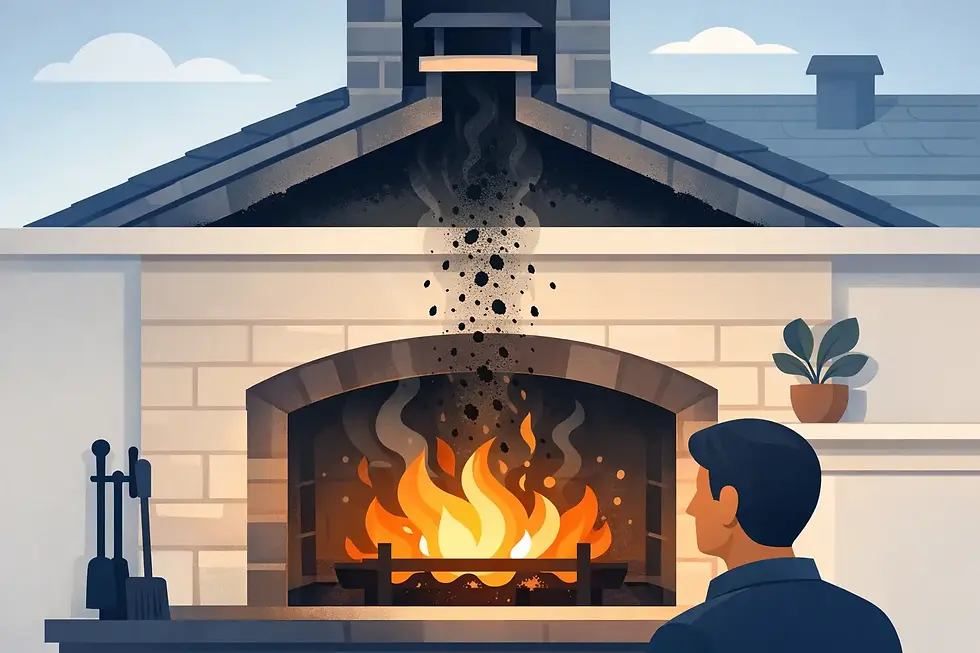
The usual culprit is soot and creosote left inside the flue. Even if you only burn seasoned logs, your chimney still collects deposits over time. If fuel has ever been a little damp, if the fire has been slumbered, or if the appliance has not been burning as cleanly as it should, those deposits can be stronger smelling. In warm weather, they can give off an acrid, smoky or tar-like odour.
Moisture is another major cause. Chimneys sit exposed to the weather all year round, and if rain gets in or damp lingers inside the stack, it can mix with soot and old debris to create a sour, musty smell. Sometimes people describe it as an old fireplace smell. Sometimes it is more like damp plaster, ash or stale smoke.
Birds' nests are also common in spring and early summer. If a pot has no suitable cowl, birds may build in the flue. Nesting materials restrict airflow, hold damp and create strong odours. Even when the nesting itself is not active, bits of twigs, feathers and debris left behind can cause ongoing problems.
There is also the possibility of downdraught. Some chimneys are more prone to this because of their height, nearby trees, roof shape or the way the house sits in the landscape. Air pressure changes can push air back down the chimney instead of allowing it to rise naturally. In a rural or exposed property, this can be especially noticeable during certain weather conditions.
What the smell can tell you
Not every chimney smell is the same, and the type of smell can offer a clue.
A smoky smell usually points towards soot and tar deposits in the flue. A damp, musty smell often suggests moisture getting into the chimney or sitting in old debris. A strong stale smell from an unused fireplace may mean the chimney simply needs sweeping and checking after a long period of non-use.
If the smell is very sharp, oily or particularly heavy, creosote build-up may be more significant. That matters because creosote is not just unpleasant. It is also highly flammable, so a smell problem can sometimes be a safety issue waiting to become a bigger one.
If you notice a bad smell alongside bits of debris falling into the fireplace, poor draw, black staining, or signs of bird activity, it is worth getting the chimney inspected rather than hoping it will sort itself out.
Can I fix the smell myself?
There are a few simple things you can try, but they work best for mild cases and they should not replace proper sweeping or inspection when the chimney is due attention.
First, make sure the fireplace or stove is clean. Old ash left sitting can hold odours, especially in damp weather. Clearing that out may help a little.
You can also check whether ventilation in the room is contributing to the problem. In some homes, particularly newer or more sealed ones, air pressure can encourage smells to come back down the flue. Opening a window slightly from time to time can reduce the effect.
If you have a stove, keeping the door closed when it is not in use will often limit the smell entering the room. With an open fireplace, some people use a chimney balloon or similar temporary draught stopper during the warmer months. That can reduce odours, but it is important to use the right product and to remove it before lighting any fire. It also will not solve the underlying issue if the flue is dirty, damp or blocked.
What you should not do is mask the smell and ignore it. Air fresheners do not remove soot, nests or moisture problems. They just cover them up for a while.
When a sweep is the right answer
If the chimney smells strongly, has not been swept recently, or has been sitting unused since winter, a professional sweep is usually the most effective fix. Sweeping removes the soot, tar, debris and nesting materials that commonly cause summer odours. It also gives you a clearer idea of whether there is anything else going on, such as a blockage, damaged liner or signs of rain ingress.
This is especially worth doing before the heating season starts again. Plenty of people wait until the first cold spell, then realise the chimney smells, draws poorly or is not safe to use. Booking earlier tends to be easier and gives you time to sort out any follow-up work if needed.
In some cases, a CCTV chimney survey may be sensible too. That is useful if the smell keeps returning after sweeping, if you suspect a structural problem, or if the chimney has not been checked properly for some time. Hidden issues such as fallen masonry, liner faults or stubborn obstructions are not always obvious from the fireplace opening alone.
Why summer is actually a good time to deal with it
It may feel odd to think about chimneys in the middle of warm weather, but summer is often the best time to sort chimney maintenance. The appliance is usually out of use, so there is no rush, and you are not left scrambling when temperatures drop.
A summer sweep can remove smells, clear out any spring nesting activity and make sure the flue is ready for safe use later in the year. It can also help spot problems caused by winter burning habits, such as excessive tar build-up from cooler fires or less-than-ideal fuel.
For homeowners in older properties, or homes with disused fireplaces, this can be particularly worthwhile. Chimneys in period homes often have a few quirks, and small issues are easier to deal with before they become larger repairs.
How to prevent chimney smells coming back
Regular sweeping is the biggest part of prevention. How often you need it depends on what you burn and how often you use the appliance, but leaving it too long almost always increases the chance of smells, build-up and poor performance.
Burning the right fuel matters as well. Properly seasoned wood produces fewer deposits than wet logs, and a fire that burns hot and clean is generally kinder to the flue than one that is constantly slumbering.
It also helps to keep an eye on the top of the chimney. If the pot is uncapped or poorly protected, rain and birds may be contributing to the problem. The right cowl or terminal can make a real difference, though the best option depends on the chimney type and how the appliance is used.
And if you notice changes, act early. A slight smell in June is easier to deal with than a blocked or unsafe chimney in November.
Why does my chimney smell in summer even if I barely use it?
This is another common question, and the answer is usually that old deposits, damp and airflow issues do not need recent use to create a smell. A chimney can sit unused for months and still give off odours if there is historic soot in the flue or moisture entering from above.
In fact, lightly used chimneys can sometimes be overlooked for longer because people assume there is not enough use to justify maintenance. But if a chimney is connected to an open fireplace or stove, even occasional use can leave enough residue to smell once summer conditions bring it back into the room.
If your chimney smells every summer, treat that as a pattern rather than a nuisance. A proper sweep and check usually gets to the bottom of it, and if something more than soot is involved, it is far better to find out in good time. A fresh, clean chimney should not be something you only think about when the weather turns cold.


Comments