

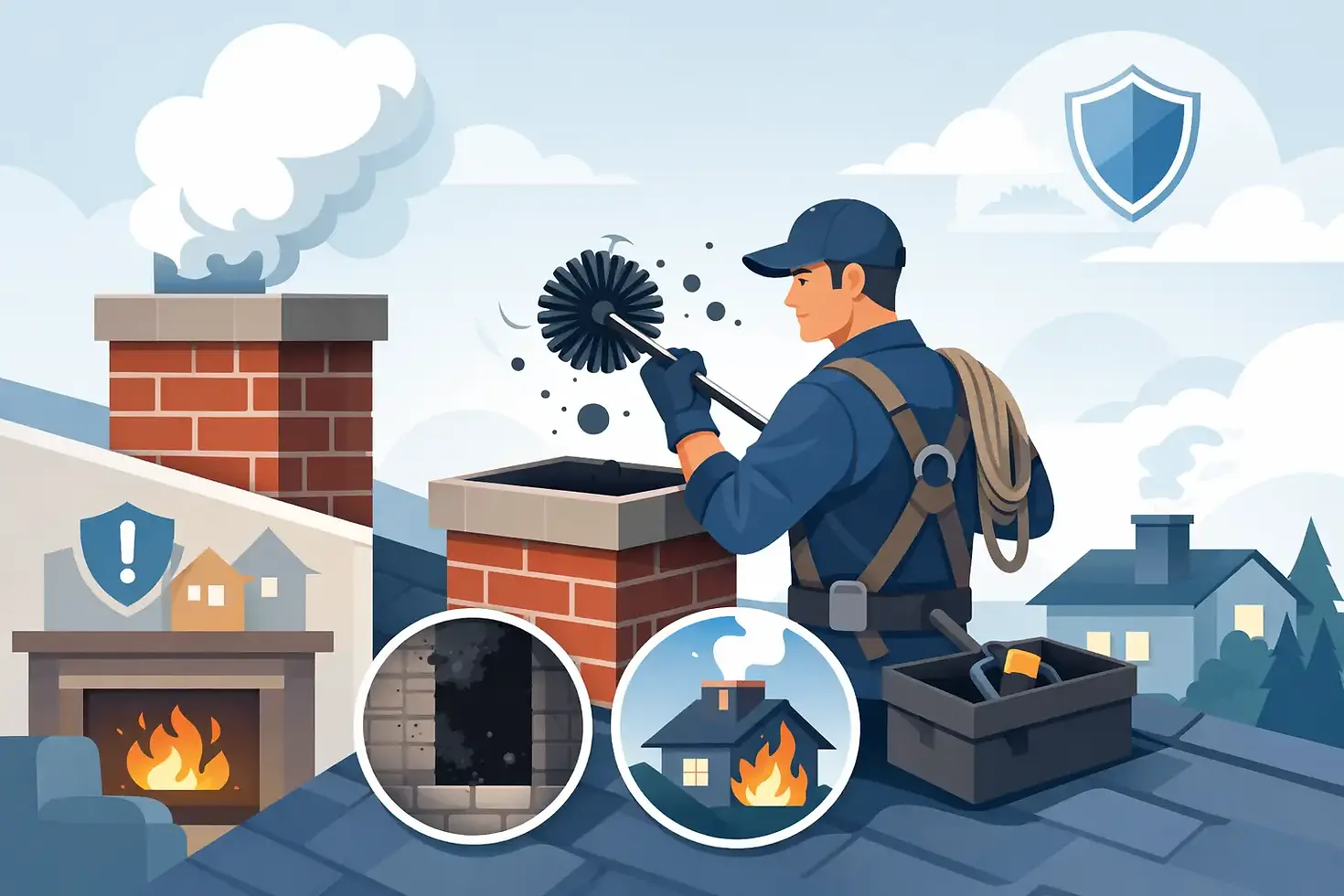
Why Is It Important to Sweep a Chimney?
A fire that does not draw properly, a wood burner that starts smoking into the room, or a strange sooty smell on a damp day - these are usually the moments people ask, why is it important to sweep chimney flues regularly? The short answer is safety. The fuller answer is that a clean chimney helps protect your home, your family, and the way your fire or stove performs through the colder months.
For many households across Somerset, Dorset and Devon, chimneys are part of everyday life. In older cottages, family homes and rural properties, they are often used far more than people realise. Because the chimney is largely out of sight, it is easy to assume that if the fire lights, everything must be fine. Unfortunately, that is not always the case.
Why is it important to sweep chimney flues?
Every time you burn wood, coal or smokeless fuel, your chimney collects deposits. The most common are soot, tar and creosote. Over time, these narrow the flue and increase the risk of problems. Some develop slowly, while others can become serious very quickly.
The biggest concern is chimney fire. Creosote is highly flammable, and if it builds up inside the flue, a single hot burn can ignite it. Chimney fires are not always dramatic in the way people imagine. Sometimes they sound like a roaring rush of air or create intense heat that damages the flue lining, chimney structure or surrounding parts of the house. Even if the fire appears to burn itself out, hidden damage can remain.
There is also the issue of dangerous gases. A blocked or restricted chimney can stop smoke and fumes from leaving the property properly. That includes carbon monoxide, which has no smell and no visible warning sign. Regular sweeping helps keep the flue clear so combustion gases can escape as they should.
Then there is performance. Fires and stoves need good airflow. If soot, nests or debris reduce the draw, the appliance becomes harder to light, less efficient to run and more likely to smoke back into the room. Many people notice the symptoms before they realise the cause.
A swept chimney is about more than fire risk
When people think about chimney sweeping, they often think only about preventing chimney fires. That is certainly one reason, but it is not the only one.
A clean flue helps your appliance burn fuel more efficiently. That can mean a steadier flame, less smoke, and less residue building up again too quickly. In practical terms, it often makes your stove or open fire easier to use and more pleasant to sit beside.
It can also help you spot problems earlier. During a proper sweep, issues such as bird nests, loose masonry, heavy tar deposits or signs of damage may become obvious. Catching these early is usually simpler and cheaper than waiting until the problem causes smoke leakage, staining, damp or poor performance.
For households that only use the fire occasionally, sweeping still matters. In fact, chimneys left unused for part of the year are often attractive to birds building nests. Moisture can also mix with old soot deposits and create unpleasant smells, especially in warmer or wetter weather.
How often should a chimney be swept?
This depends on what you burn and how often you use the appliance. There is no single answer that fits every household.
As a general guide, wood-burning appliances often need sweeping at least once a year, and sometimes more if used heavily. Smokeless fuels may also need regular attention. Open fires can produce a surprising amount of soot, particularly if they are used through winter. If you burn unseasoned wood or use the stove daily, deposits tend to build up faster.
That is why a sensible approach is to treat chimney sweeping as routine maintenance rather than a one-off fix. Waiting until there is a problem usually means the chimney has already been under strain for some time.
Signs your chimney may need sweeping sooner
Sometimes the chimney is due for sweeping before the annual reminder comes around. There are a few common signs worth paying attention to.
If smoke spills into the room when lighting the fire, the draw may be poor. If you notice a strong smoky or sooty smell, especially when the fireplace is not in use, there could be residue or blockage in the flue. Black deposits falling into the grate, difficulty keeping the fire going, or excessive soot around the appliance can all point to a chimney that needs attention.
You may also hear birds or notice bits of nesting material. A nest can block the flue surprisingly quickly, and that is not something to ignore.
These signs do not always mean the same issue, which is why inspection matters. Sometimes the answer is straightforward sweeping. In other cases, a CCTV survey or further maintenance may be the better next step.
Why professional sweeping makes a difference
A proper chimney sweep is not just about pushing a brush up the flue. A professional service is there to clean the chimney thoroughly, check for obvious concerns and carry out the work with as little disruption to your home as possible.
That matters to most homeowners. You want someone reliable, careful in the house and clear about what they are doing. You also want reassurance that the job is being carried out safely and properly.
Professional sweeping methods can vary depending on the appliance, the flue type and the level of soot or tar present. In some cases, traditional brush and vacuum sweeping is suitable. In others, power sweeping may be more effective. If there are concerns about the condition of the flue, a CCTV survey can provide a closer look.
It is also worth remembering that not all chimney problems are obvious from the fireplace opening. Damage, partial blockages and heavy deposits can sit higher up in the system. A trained sweep knows what to look for.
Why is it important to sweep chimney systems before winter?
Autumn is when many people remember their chimney for the first time since spring. That makes sense, but it also means the busiest period tends to be just before colder weather sets in.
Having the chimney swept before winter gives you time to deal with any problems before you rely on the fire or stove every day. If a nest is found, if the flue is more restricted than expected, or if there are signs that further checks are needed, it is better to know early.
There is also a comfort factor. Once the weather turns, most households want the appliance ready to use without fuss. A clean chimney helps make that first fire of the season safer and more straightforward.
That said, winter is not the only time to book. Spring and summer can be sensible times too, especially if you want the appliance left clean after the heating season or would prefer to avoid the autumn rush.
The cost of leaving it too long
Putting off chimney sweeping can seem harmless, especially if the fire still appears to work. The trouble is that chimney problems usually build quietly.
A restricted flue can reduce efficiency and make fuel burn poorly. Heavy deposits can become harder to remove if left too long. Nests and blockages can turn a routine visit into a more involved job. If a chimney fire occurs or the flue suffers damage, the cost and disruption are in a different league altogether.
There is also the simple fact that prevention is easier than repair. Regular maintenance gives you a clearer picture of the condition of the chimney and helps avoid unpleasant surprises.
For many local homeowners, that peace of mind is the main reason they keep sweeping on schedule. It is one of those jobs that rarely feels urgent until it suddenly is.
A sensible part of looking after your home
If you use a fireplace, stove or open fire, chimney sweeping should sit alongside the other routine jobs that keep a home safe and running properly. It is not about being alarmist. It is about being practical.
At Three Counties Sweeps, that is exactly how we see it - a straightforward, professional service that helps keep homes cleaner, safer and ready for use. For householders who value reliability, clear advice and respect for the home, regular chimney care is a small step that can prevent much bigger problems later on.
If you have been meaning to get yours checked, the best time is before the chimney gives you a reason to think about it.


Comments