
.png)

A Guide to Carbon Monoxide Alarms at Home
A carbon monoxide alarm is one of the smallest safety devices in your home, but it can give your family a vital early warning. This guide to carbon monoxide alarms explains what they do, where they should go and what to do if one sounds. For anyone using a wood burner, open fire, stove, gas boiler or other fuel-burning appliance, it is a sensible part of looking after the home.
Carbon monoxide, often called CO, has no colour, smell or taste. You cannot see it building up in a room, which is why an alarm matters. It is produced when fuels such as wood, coal, oil, gas or LPG do not burn completely. A blocked chimney, poorly maintained appliance, inadequate ventilation or a fault in a flue can all create a risk.
What a carbon monoxide alarm does
A CO alarm monitors the air and sounds when it detects a dangerous build-up of carbon monoxide. It is not the same as a smoke alarm. Smoke alarms are designed to alert you to fire, while carbon monoxide alarms are there to warn of an invisible poisonous gas. Homes with fireplaces and stoves need both.
An alarm does not prevent carbon monoxide from being produced, and it cannot tell you exactly where the gas is coming from. Think of it as an early warning system, not a substitute for proper installation, servicing and chimney sweeping. The safest approach is to combine a suitable alarm with regular care of every appliance, flue and chimney.
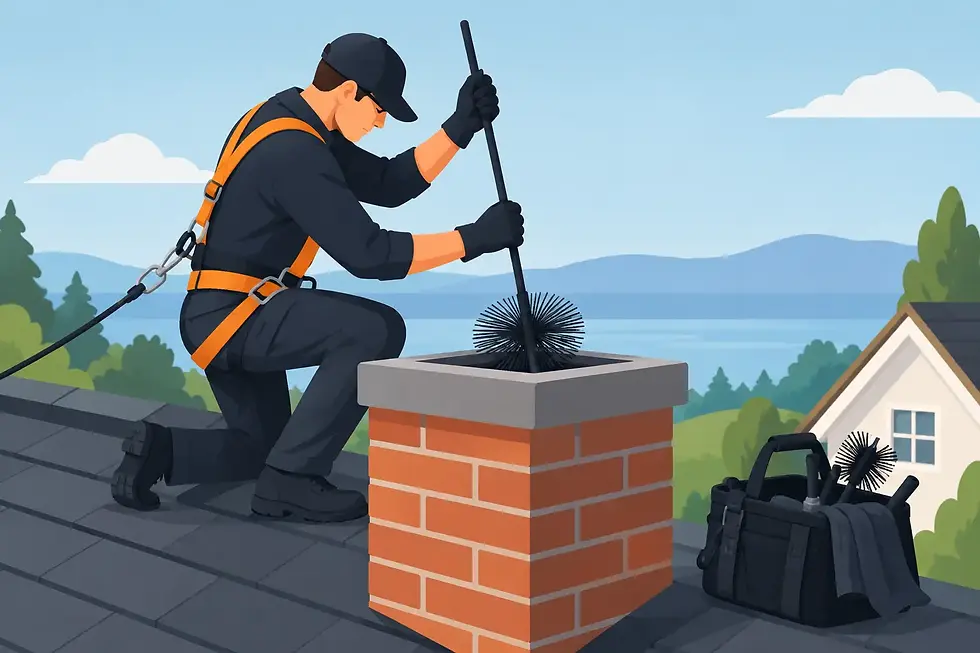
For a solid-fuel fire or wood burner, a clean, clear chimney helps combustion gases leave the property as they should. Bird nests, soot deposits, damaged liners and other blockages can interfere with the safe passage of fumes. If a fireplace begins to smoke into the room, smells unusual, burns poorly or leaves more soot than normal, stop using it until the cause has been checked.
Choosing the right carbon monoxide alarm
Look for an alarm that meets the relevant British or European safety standard, shown as BS EN 50291 on the unit or its packaging. Choose a purpose-made carbon monoxide alarm rather than a combined device unless the combined model clearly meets the standard for both CO and smoke detection.
Mains-powered, battery-powered and sealed-battery alarms are all available. The right choice depends on the property and where the alarm is needed. Battery alarms are straightforward to fit and useful where wiring is impractical. Sealed long-life battery models reduce the chance of a battery being removed and forgotten. Mains alarms can be a good option in a wider home safety system, though they should still have battery back-up in case of a power cut.
Check the stated working life before you buy. Many carbon monoxide alarms need replacing after seven or 10 years, even if they still appear to work. The expiry date is usually printed on the alarm itself. A test button confirms that the sounder and power supply are operating, but it does not prove the sensor will last forever.
Avoid placing too much faith in price alone. A recognised, correctly fitted alarm that is tested regularly is far more useful than an expensive model left in a drawer or installed in the wrong place.
Where to fit carbon monoxide alarms
Always follow the fitting instructions supplied with your particular model, as manufacturers' instructions take priority. As a general rule, fit an alarm in every room containing a fuel-burning appliance, such as a wood burner, open fire, gas fire, boiler or oil-fired appliance. Do not fit one right beside the appliance itself.
For most installations, the alarm should be between one and three metres horizontally from the potential source of carbon monoxide. It should be positioned where it can be heard, especially from bedrooms. If the instructions allow ceiling fitting, keep it away from walls and corners. If wall-mounted, it is usually placed high on the wall, above doors and windows, but below the ceiling. The instruction leaflet will give the precise clearances.
A few places are best avoided. Do not position an alarm directly over a cooker, sink or radiator, or in a steamy bathroom. Heat, grease, moisture, dust and strong household chemicals can affect performance or cause nuisance alarms. Garages and very cold loft spaces may also be unsuitable unless the alarm is designed for those conditions.
For larger homes, it can be wise to have alarms on each level and close enough to sleeping areas that everyone will hear them at night. This is particularly worth considering in older cottages, rural homes and properties with more than one stove or fireplace. A closed bedroom door, a television or a deep sleep can all make a distant alarm harder to hear.
Alarms near wood burners and open fires
The room containing the stove or open fire is the priority. Place the alarm according to its instructions, keeping it clear of the heat plume and far enough away to prevent normal use of the appliance affecting it.
If the appliance is in a sitting room but bedrooms are upstairs, an additional alarm on the landing may offer greater peace of mind. It will not replace the alarm in the appliance room, but it can give a clearer warning to people sleeping upstairs.
Testing, cleaning and replacing your alarm
Press the test button once a month. It takes only a moment and gives everyone in the household a chance to recognise the sound. Children should understand that a CO alarm is not something to ignore or silence without telling an adult.
Keep the unit free from dust by gently vacuuming around its vents or wiping it as the manufacturer advises. Do not paint over it, spray air freshener near it or cover it with furniture, curtains or decorations. If it chirps to indicate a low battery, change the battery promptly if the model has a replaceable one.
Write the replacement date somewhere you will see it, such as on a household calendar or inside a kitchen cupboard. If you move into a property and do not know the age of its alarms, check the date label rather than assuming they are current. An out-of-date alarm needs replacing, even when its test button still works.
What to do if a carbon monoxide alarm sounds
Treat an alarm as genuine until you know otherwise. Do not ignore it because you cannot smell smoke or because the fire appears to be burning normally. If it is safe to do so, turn off fuel-burning appliances, open doors and windows, and move everyone outside into fresh air.
Call 999 if anyone has collapsed, is unconscious, is severely unwell or has symptoms such as confusion, chest pain, breathlessness or severe headache. Carbon monoxide poisoning can feel similar to flu, with headache, dizziness, nausea and tiredness, but it does not cause a high temperature. Pets may also become unwell.
Once outside, seek appropriate emergency or medical advice and do not re-enter the property until you have been told it is safe. Do not use the appliance again until it has been checked by a properly qualified professional. For gas appliances, contact the gas emergency service or a Gas Safe registered engineer. For a stove, fire or chimney, arrange for the appliance and flue to be inspected and any blockage or defect put right.
Do not simply remove the battery or silence the alarm and carry on. A nuisance alarm is possible, but that should be established only after the property and appliance have been checked. Your family's safety is worth the inconvenience.
Regular chimney care supports alarm safety
A carbon monoxide alarm is there for the unexpected, while regular maintenance reduces the chance of a problem developing. Chimneys and flues should be swept at intervals appropriate to the fuel you burn and how often you use the appliance. Wood and coal fires, in particular, can create deposits that need professional attention.
A sweep can also spot signs that deserve further investigation, including nests, excessive tar, damaged flue liners or poor draw. Where needed, a CCTV chimney survey can provide a clearer view inside the flue without guesswork. At Three Counties Sweeps, we believe the best home safety advice is straightforward: keep the appliance maintained, keep the chimney clear and make sure a working alarm is close by.
Fit the alarm before you need it, test it before you forget, and let a qualified professional investigate anything that does not seem right.


Comments