
.png)

Can a Blocked Chimney Cause Smoke?
You light the fire, expect that familiar warm draw up the chimney, and instead the room starts filling with smoke. It is unpleasant, messy and worrying in equal measure. If you are asking, can a blocked chimney cause smoke, the short answer is yes - very often it can.
Smoke should travel up and out of the flue. When something interrupts that path, it has to go somewhere else, and that usually means back into the room. A blockage is one of the most common reasons for this, but it is not the only one. That is why it helps to know what a blockage looks like, what other faults can behave in a similar way, and when it is time to stop using the fire and get it checked properly.
Can a blocked chimney cause smoke indoors?
Yes, absolutely. A chimney works by creating enough draw to pull smoke, gases and combustion by-products safely upwards. If the flue is narrowed or blocked, the draw is weakened or stopped altogether. The result can be smoke spilling from the fireplace opening, leaking from the stove door, or lingering in the room long after the fire is lit.
Sometimes the problem is obvious. You may notice smoke coming back immediately, a strong sooty smell, or bits of debris falling into the hearth. In other cases it is less dramatic. The fire may seem slow to catch, difficult to keep burning, or prone to puffing smoke into the room when you open the stove door.
A full blockage will usually cause clear problems very quickly. A partial blockage can be more deceptive. The appliance may appear to work on some days and then smoke badly on others, especially in still weather or when the fire is first lit.
What causes a chimney to become blocked?
The most common cause is soot and creosote build-up. Over time, burning wood, coal or smokeless fuel leaves deposits inside the flue. If sweeping is overdue, those deposits can thicken enough to restrict airflow. With wood burners, burning unseasoned logs can make the issue worse because wetter fuel produces heavier tar deposits.
Birds' nests are another very common culprit, especially in spring and early summer. Jackdaws are well known for building deep, stubborn nests inside uncapped chimneys, and these can block a flue surprisingly quickly. Even if the nest is not complete, loose twigs and nesting material can interfere with draw.
Falling masonry, damaged liners and general debris can also cause trouble. In older properties, bits of mortar or brick can break away inside the chimney. In some cases, a previous issue has never been properly repaired, and the internal flue passage is no longer clear.
Then there is simple neglect. A chimney that has not been used in a while can still develop problems. Cobwebs, nesting material, loose soot and damp-related debris can all affect performance when it is put back into use.
Signs your chimney may be blocked
Smoke coming back into the room is the headline symptom, but it is not the only one. You might also notice the fire struggles to stay lit, the stove glass blackens very quickly, or the room smells smoky even when the fire is low.
A blocked chimney can also produce a lazy, sluggish flame rather than a lively, clean burn. If you hear unusual rumbling, notice debris in the fireplace, or see birds frequently entering and leaving the chimney pot, those are all clues worth taking seriously.
One point that matters here is carbon monoxide. You cannot see it or smell it, and poor flue performance can increase the risk of it entering the home. If you have any concern that fumes are not venting properly, stop using the appliance until it has been checked. A working carbon monoxide alarm is essential, but it should never be the only line of defence.
If it is not blocked, what else could be causing the smoke?
This is where a bit of nuance helps. While a blockage is a common answer to can a blocked chimney cause smoke, smoking problems do not always mean the flue is physically obstructed.
Cold chimneys can cause smoke on start-up. If the air inside the flue is very cold, especially after a long period without use, it can resist the upward movement of smoke. This can sometimes improve once the flue has warmed, but not always.
Poor ventilation in the room can also affect draw. Modern homes, replacement windows and extractor fans can all reduce the amount of air available to feed the fire. If the appliance cannot get enough air, the chimney may struggle to pull smoke away properly.
The fuel itself matters as well. Wet logs, overloading the fire, slumbering a stove for long periods or using the wrong fuel for the appliance can all lead to excess smoke and poor combustion. In those cases, the chimney may be clear enough, but the fire is not burning cleanly.
Finally, there may be an issue with the chimney design, flue size, liner condition or terminal. Some faults only become obvious in certain weather conditions or with a particular appliance. That is why a proper inspection can save a lot of guesswork.
What should you do if smoke is coming back from the chimney?
The first thing is simple - stop using the fire until you know why it is happening. It can be tempting to try again with more kindling, a hotter fire or the door cracked open, but if the flue is blocked or the draw is unsafe, that can make matters worse.
Check for obvious signs without taking risks. If there is visible debris in the fireplace, a strong smell of soot, or signs of birds nesting, those are useful clues. Make sure your carbon monoxide alarm is fitted and working.
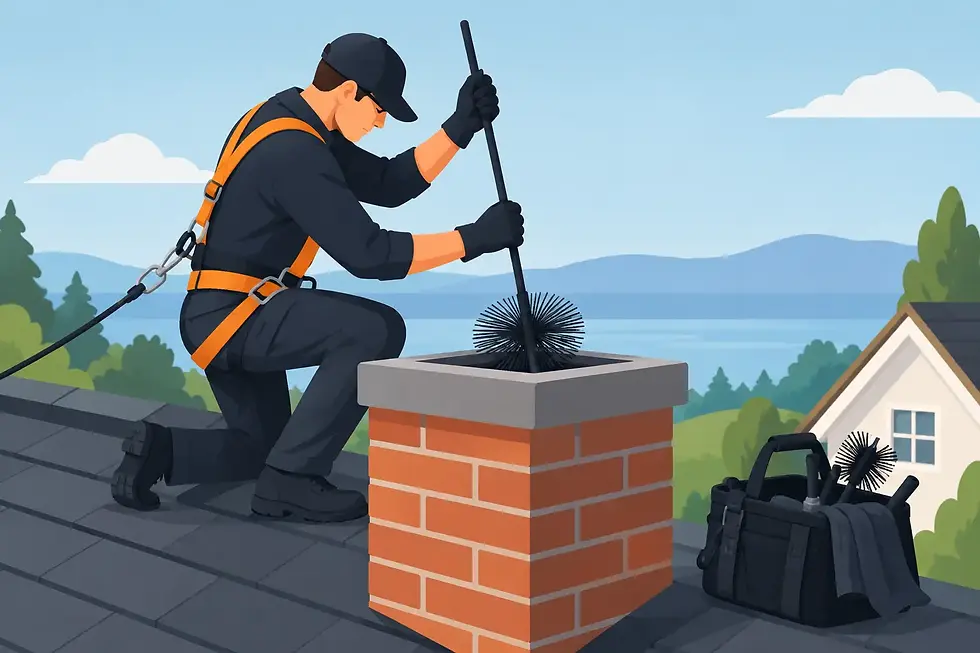
After that, the sensible next step is to have the chimney professionally swept and, if needed, inspected. A proper sweep removes soot and tar deposits, but it also helps identify whether there is a nest, a structural issue or another cause behind the smoking. If the problem is not straightforward, a CCTV chimney survey can show what is happening further up the flue.
Why sweeping often solves the problem
In a lot of cases, smoking starts because the chimney has gradually narrowed with soot or creosote and the change has gone unnoticed. Homeowners often adapt without realising it. They use more firelighters, leave the stove door open longer, or assume the appliance is just a bit temperamental.
A thorough sweep clears those deposits and restores proper airflow. It also gives you a much clearer idea of the chimney's general condition. If there is a deeper issue, such as a damaged liner or a birds' nest packed tightly above the visible section, it is far easier to spot once loose soot has been removed.
This is one reason regular maintenance matters. Sweeping is not just about cleanliness. It is about keeping the chimney safe, helping the appliance burn properly and catching small issues before they become larger ones.
That depends on the fuel you burn and how often you use the appliance. As a general rule, chimneys serving wood burners and open fires usually need regular sweeping through the heating season or at least annually. Heavier use may mean more frequent visits.
If you burn wood, fuel quality makes a real difference. Dry, well-seasoned logs tend to produce a cleaner burn than wet timber, but even a well-run stove still creates deposits over time. Open fires can be particularly sooty, and older chimneys may need closer attention.
If you have moved into a property with a fireplace or stove and do not know its history, it is wise to have it checked before regular use. The same applies if the chimney has been out of action for months or years.
When to call in a professional
If smoke is entering the room, if you suspect a nest or blockage, or if the fire is behaving differently from normal, it is worth getting expert help rather than trial and error. A professional sweep can remove build-up cleanly, assess how the flue is performing and advise if anything more than sweeping is needed.
For some households, especially in older or rural homes across Somerset, Dorset and Devon, chimney problems can be a mix of age, weather exposure and seasonal use. That does not mean every smoky fire points to a major repair, but it does mean a proper look is far more reassuring than guessing.
At Three Counties Sweeps, that practical side of the job matters just as much as the cleaning itself - turning up reliably, treating the home with respect and explaining clearly what has been found.
A smoky fire is never something to brush off as one of those things. Sometimes the fix is straightforward, sometimes it takes a closer look, but either way your chimney is telling you something. The safest approach is to listen to it early, before smoke in the room becomes a bigger problem.


Comments