
.png)

Chimney Draw Problem Help That Works
You usually notice a draw problem the moment you light the fire. Smoke starts drifting into the room, the stove feels slow to get going, and instead of that comforting warmth you get a smell of soot and a rising sense that something is not right. If you are looking for chimney draw problem help, the good news is that poor draw often has a clear cause - and once the cause is found, it can usually be put right.
A chimney should pull smoke and gases up and out of your home safely. When that pull is weak, interrupted or reversed, your fire will struggle and your room can quickly fill with fumes. That is not just frustrating. It can become a safety issue, especially with wood burners, open fires and multi-fuel stoves used regularly through colder months.
What a chimney draw problem actually means
In simple terms, chimney draw is the upward pull created when hot gases rise through the flue. The hotter the flue gases and the better the chimney setup, the stronger and steadier that draw tends to be. If the flue is cold, partly blocked, poorly sized or affected by outside conditions, that movement can weaken.
This is why one home can have a fire that lights easily every time, while another struggles even with dry logs and plenty of kindling. The appliance matters, but so does the height of the chimney, the condition of the flue, the airflow in the room and even what the wind is doing outside.
Common causes when you need chimney draw problem help
The most common cause is a blockage or restriction in the flue. Soot build-up, fallen debris, old nesting material and bird activity can all narrow the passage and reduce airflow. Even a partial blockage can be enough to upset the way a stove or fireplace performs.
A cold flue is another very common issue, especially if the appliance has not been used for a while. Cold air can sit heavily in the chimney and act like a plug. When you first light the fire, smoke may struggle to push past it and spill back into the room instead.
Poor ventilation in the room can also affect chimney draw. Your fire needs oxygen. In newer homes, or older homes that have had new windows, doors or insulation fitted, the room can become so airtight that the appliance cannot get enough replacement air. The chimney then struggles to pull properly.
Chimney height and flue design matter too. A flue that is too short, oversized for the appliance, or fitted with awkward bends may not create a reliable draw. If there is a downdraught problem caused by roof shape, nearby trees or neighbouring buildings, the wind can force air back down the pot and disrupt normal flow.
Then there is fuel. Wet wood creates more smoke, more tar and less heat. Less heat means weaker draw, and over time it also means more deposits inside the flue. What looks like a chimney problem can sometimes start with what is being burnt.
Signs the problem is more than a one-off
An occasional smoky light-up on a very cold morning does not always mean there is a major fault. But repeated problems deserve attention. If smoke enters the room regularly, your fire is hard to keep lit, the stove glass blacks up unusually fast, or you notice strong smoky smells even when the appliance is not in use, something needs checking.
You may also hear unusual whistling, feel air coming down the chimney, or find that the fire burns lazily no matter how carefully you set it up. These are all signs that the system is not working as it should.
Chimney draw problem help you can try safely
There are a few sensible checks you can make before calling someone out. The first is your fuel. Make sure you are using properly seasoned or kiln-dried wood with a low moisture content. Damp logs make everything harder.
The second is how you light the fire. With a cold chimney, a small kindling fire may not create enough heat quickly enough. Using dry kindling and allowing the flue to warm gradually can help establish an upward pull. Some householders find that pre-warming the flue helps, but this should only ever be done carefully and safely according to the appliance guidance.
Ventilation is worth checking too. If opening a window slightly near the stove improves performance, that points towards an airflow issue in the room. It is not a final fix, but it is a useful clue.
You can also look for obvious signs around the fireplace or stove. Excess soot, debris in the grate, fallen material in the stove, or a sudden change in how the appliance burns can all suggest the flue needs professional attention.
What you should not do is keep using a smoky appliance and hope it settles down. If smoke is coming back into the room, stop and get it checked.
When chimney draw problem help needs a professional
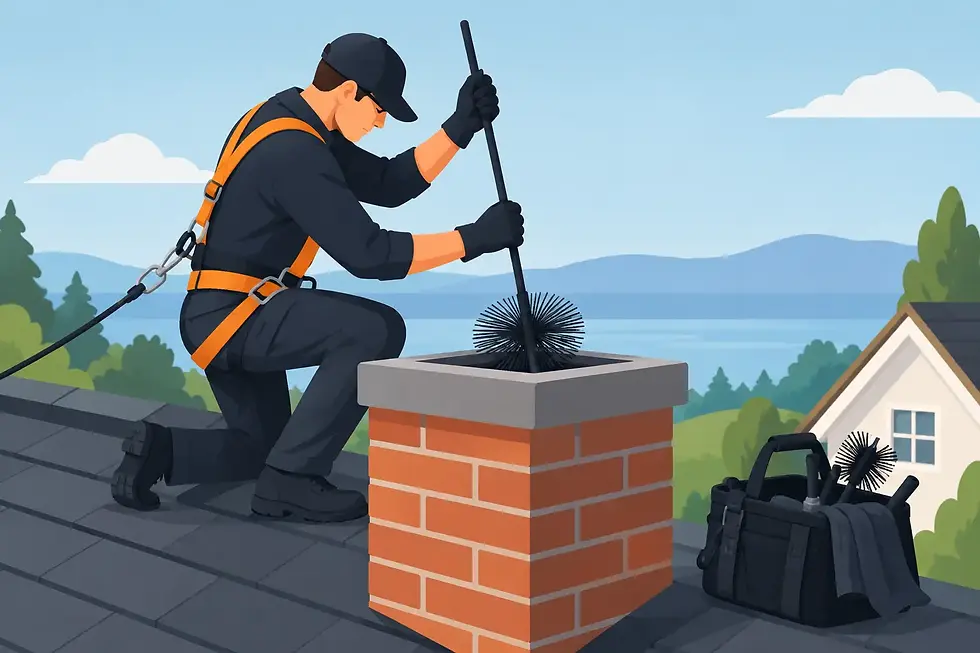
If the problem keeps happening, a proper inspection is the right next step. Sweeping is often the first and simplest remedy. Removing soot, bird nest remains and other obstructions can restore the airflow the chimney needs. In many cases, the problem is not the stove at all - it is the condition of the flue.
If sweeping alone does not solve it, a CCTV chimney survey can be very useful. This allows the flue interior to be checked for narrowing, damage, old liners, poor connections or hidden blockages that are not visible from below. It is especially helpful in older properties, homes with disused fireplaces, and chimneys with a history of smoke issues.
Sometimes the answer is operational rather than structural. Air supply may need to be improved, or the way the appliance is being used may need to be adjusted. In other cases, the chimney pot or terminal may be contributing to wind-related downdraught and need further advice.
The key point is that proper chimney draw problem help should not be guesswork. A good sweep will explain what they have found in plain English and tell you whether the issue is maintenance, usage, airflow or something more involved.
Why sweeping often makes a bigger difference than people expect
A lot of homeowners put up with a sluggish stove for months because the problem builds gradually. They do not always realise how much the flue performance has changed. As soot and deposits increase, the draw weakens bit by bit, and the fire becomes less responsive.
Once the chimney is properly swept, many people notice the difference straight away. Fires light more easily, smoke clears faster, and the appliance feels more controllable. That does not mean every draw problem is solved by sweeping alone, but it is one of the most important places to start.
For homes in Somerset, Dorset and Devon, where there are plenty of older properties, rural locations and solid fuel appliances in regular use, draw problems are not unusual. Weather exposure, older chimney structures and seasonal nesting activity can all play a part.
Chimney draw problem help for stoves and open fires
Stoves and open fires can suffer from draw problems for slightly different reasons. A stove is a more controlled system, so it can be particularly sensitive to poor ventilation, incorrect flue sizing or a blocked liner. If the balance is off, performance drops quickly.
An open fire relies heavily on the chimney creating a strong natural pull. If the room is draughty in the wrong way, the opening is too large for the available draw, or the flue is cold and dirty, smoke spillage is common.
That is why the right fix depends on the setup. Two homes can describe the same symptom - smoke coming into the room - but need completely different remedies.
Choosing the right help
When someone is coming into your home to work on a chimney, trust matters. You want clear advice, a clean approach and someone who respects your house as much as the safety side of the job. That is one reason many people prefer using an insured, DBS-checked professional with recognised industry membership rather than taking chances.
At Three Counties Sweeps, the aim is always to keep things straightforward. Find the cause, explain it clearly, and sort what can be sorted without fuss or mess.
If your fire is smoky, slow, temperamental or simply not behaving as it used to, it is worth getting it checked before the problem gets worse. A chimney should carry smoke away quietly and safely. When it stops doing that, the right help is not complicated - it starts with a proper look at what is happening, and a sensible fix based on the chimney in front of you.
A fire should feel reassuring, not unpredictable, and if yours does not, that is usually your cue to stop battling with it and let someone get to the root of it.


Comments