
.png)

8 Best Signs Your Chimney Needs Cleaning
- plamb10
- Jun 5
- 6 min read
The first clue is often not dramatic. It is the faint smoky smell in the room on a damp morning, a fire that no longer draws properly, or little bits of soot turning up in the hearth. The best signs your chimney needs cleaning are usually small warnings at first, but they are worth taking seriously. A dirty or blocked flue does not just affect how well your fire burns - it can also create a genuine safety issue in the home.
If you use an open fire, wood burner or stove, regular sweeping is part of normal maintenance. Even a chimney that seems to be working can be building up soot, tar or debris out of sight. And if your property is older, has more than one flue, or sits in a rural area where birds nest readily, problems can develop more quickly than many homeowners expect.
Best signs your chimney needs cleaning
One of the clearest signs is smoke coming back into the room when you light the fire. A well-functioning chimney should carry smoke up and away. If it spills out into the room, lingers around the stove door, or only clears after the fire gets very hot, that usually points to restricted airflow. Sometimes the cause is soot build-up. Sometimes it is a partial blockage, damp deposits, or even a birds nest. Either way, it is a sign that the flue needs attention rather than wishful thinking.
Another common sign is a stronger-than-usual smell coming from the fireplace, especially when the fire is not in use. Chimneys can develop stale, sooty or tar-like odours when deposits have built up inside. This tends to be more noticeable in humid weather or during the summer, when airflow changes and smells drift back into the room. A slight fireplace smell is not unusual in older homes, but a persistent or worsening odour often suggests the chimney is overdue a clean.
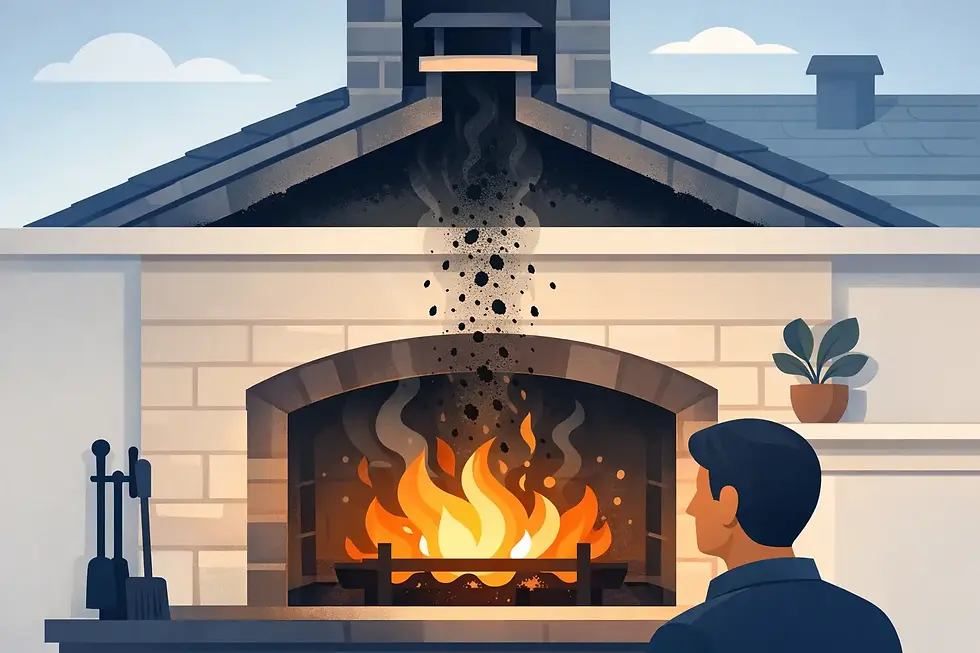
Soot falling into the grate, firebox or hearth is another reliable warning. If you notice black dust, small flakes, or crumbly material dropping down after a fire or during windy weather, the inside of the flue may be carrying more residue than it should. It can also mean the deposits are dry and loose enough to start shifting, which is not something to ignore.
Then there is the way the fire behaves. If your logs are harder to keep alight, the flames seem sluggish, or the stove is not performing as it once did, poor draw could be part of the problem. Homeowners often assume this is down to damp wood or a fussy appliance, and sometimes it is. But when the chimney is partially restricted, the appliance cannot pull in and move air properly. That affects combustion, efficiency and comfort.
The signs people often dismiss
Some of the most important warning signs are the ones people put down to the weather or the age of the house. Black staining around the fireplace opening, for example, is easy to overlook if it has appeared gradually. But soot marks above the stove, around the register plate, or on the chimney breast can point to draught issues or escaping residue.
You might also notice more ash and fine dust in the room than usual after lighting a fire. If cleaning the grate suddenly becomes messier, or you are finding dark residue where you did not before, it may be because the chimney is not venting cleanly.
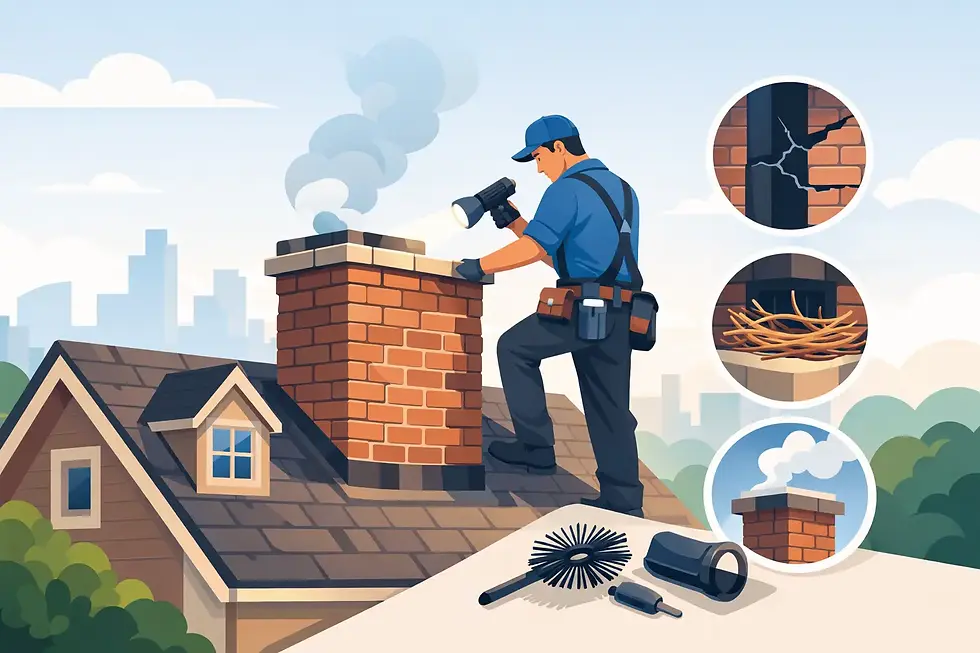
Another often-missed sign is noise from the chimney. Bird activity, scratching, rustling or unusual fluttering can mean nesting material has gone into the flue. In spring especially, this is a common issue. A nest is not just inconvenient - it can severely restrict the flue and create a dangerous blockage if you continue using the fire.
Even a chimney that has simply not been swept for a long time is sending you a message. You do not always get obvious symptoms before a problem develops. If you cannot remember the last sweep, or you have moved into a property and do not know its maintenance history, that alone is reason enough to have it checked.
Why these signs matter
The main risk people know about is chimney fire, and for good reason. Soot and creosote deposits can ignite if enough flammable residue has built up in the flue. Chimney fires can burn extremely hot, damage the liner or masonry, and in serious cases spread beyond the chimney itself.
There is also the issue of carbon monoxide. If smoke and gases are not drawing away as they should, they can come back into the room instead. You cannot rely on smell alone to warn you about that. A blocked or heavily restricted chimney can become a safety problem long before it looks like one.
There is a practical side too. A dirty chimney makes your fire less efficient. You may burn more fuel for less heat, struggle to get the appliance going, and deal with more smoke, mess and unpleasant smells than necessary. In other words, leaving it too long rarely saves trouble. It usually creates more of it.
What builds up inside a chimney
In most domestic chimneys, the usual culprits are soot, tar and creosote. The exact mix depends on what you burn, how often you use it, and how the appliance is operated. Burning unseasoned wood, slumbering a stove for long periods, or running fires at low temperatures can all encourage heavier deposits.
Open fires and wood burners do not behave in exactly the same way. Some flues stay relatively clean with regular use and good fuel. Others build deposits surprisingly fast. That is why there is no one-size-fits-all answer to how often sweeping is needed. It depends on the appliance, the fuel, the age and condition of the chimney, and whether there are any existing issues with draw or damp.
Blockages are not always about soot either. Birds nests, fallen masonry, cobwebs, leaves and general debris can all interfere with safe operation. In older properties especially, a chimney may also hide cracks, loose liners or internal damage that only becomes clear during inspection.
When to book a sweep rather than wait
If you have noticed any of the signs above, it is sensible to book a professional sweep before using the fire again regularly. Waiting for the problem to become obvious is rarely the best approach. With chimneys, small symptoms often mean the issue has already been building for some time.
The start of the colder months is when many people remember their chimney, but autumn is also one of the busiest times to arrange a sweep. A better habit is to treat chimney care as routine household maintenance rather than a last-minute seasonal job. For some homes, once a year is enough. For others, especially with frequent stove use, it may need doing more often.
If you have recently moved house, had building work done, spotted bird activity, or started using a fireplace that has been dormant for a while, it makes sense to have it checked before regular use. The same applies if you are relying on a chimney that has not been inspected for years simply because it appears fine on the surface.
What a professional clean should give you
A proper chimney sweep should leave you with more than a cleaner flue. You should also get a clearer idea of the chimney's condition, whether there are signs of blockage, and whether anything needs further investigation. If there is a nest, a structural issue, or reason to inspect the flue with CCTV, it is far better to find that out early.
For most homeowners, peace of mind is the biggest benefit. You want to know your fire is safe to use, your chimney is doing its job properly, and the work has been carried out cleanly and respectfully in your home. That matters just as much as the sweep itself.
At Three Counties Sweeps, that is exactly how the job should feel - straightforward, tidy and reassuring from start to finish.
If your fireplace smells wrong, your stove is struggling, or soot is starting to appear where it should not, trust what your home is telling you. Chimneys are usually quite good at giving notice before they become a bigger problem.

Comments