
.png)

A Clean Chimney for Safer Fires in Your Home
The comfort of a real fire can change the feel of a home on a cold Somerset evening, but the chimney quietly does the hard work. A clean chimney for safer fires is not simply about keeping soot out of sight. It helps smoke leave the room properly, reduces the build-up of flammable deposits and gives you a better chance of spotting problems before they become costly or dangerous.
Whether you use a wood burner every day through winter, light an open fire at weekends or have inherited a period property with an older flue, regular professional sweeping is one of the simplest ways to look after your home.
Why a clean chimney makes fires safer
Every solid-fuel fire produces combustion by-products. Smoke carries soot, fine ash and tarry deposits up the flue. When wood is damp, the appliance is run too slowly, or the fire does not have enough air, more of these deposits can settle inside the chimney. Over time, they can restrict the flue and affect how well it draws.
The most serious concern is creosote - a sticky, highly flammable residue that can form from wood smoke. If it catches light, a chimney fire can burn fiercely inside the flue. Some chimney fires are obvious, with roaring sounds, sparks or flames at the chimney pot. Others may be less dramatic, yet still damage liners, mortar joints or the chimney structure.
A sweep removes loose soot and deposits, while an experienced chimney professional can also identify signs that need further attention. This might include a damaged pot, a cracked liner, a loose cowl, an obstruction or evidence of nesting material. Sweeping is preventative maintenance, not a job to leave until something goes wrong.
The benefits go beyond fire safety
A dirty or partially blocked chimney can make using your stove or fireplace unpleasant as well as unsafe. If the flue cannot pull smoke and gases away efficiently, you may notice smoke spilling into the room when you open the stove door or light the fire. Lingering smoky smells, especially in warmer weather, can also point to old deposits or poor airflow.
There is also the risk of carbon monoxide. This colourless, odourless gas can be produced when fuel does not burn fully. A blocked or poorly functioning flue is only one possible cause, but it is a reason to take chimney maintenance seriously. Every home with a solid-fuel appliance should have a working carbon monoxide alarm fitted in the same room, tested regularly and replaced according to the manufacturer’s instructions.
A well-maintained chimney also helps your appliance work as it should. Better draw generally makes lighting easier and supports a cleaner burn. That does not mean every lighting issue is caused by the chimney - fuel quality, stove settings, room ventilation and weather can all play a part - but a clean flue removes one important variable.
How often should your chimney be swept?
The right schedule depends on the fuel you burn and how frequently you use the fire. As a sensible guide, a chimney serving a wood burner or open fire used with wood or coal is commonly swept at least once a year. If it is your main source of heat and is in regular use throughout the colder months, more frequent sweeping may be appropriate.
Smokeless fuels generally create less soot, but their flues still need checking and sweeping. Gas and oil appliances also require servicing by an appropriately qualified engineer, as their maintenance requirements differ from a solid-fuel chimney.
Rather than waiting for the first cold snap, consider arranging your sweep before the heating season. Appointments can be easier to secure in spring or summer, and any remedial work can be dealt with before you want to use the stove every evening. For households that burn wood heavily, a second check part-way through the season can provide useful reassurance.
Warning signs not to ignore
A chimney does not always announce that it needs attention. Watch for changes in how your fire behaves, particularly if it has worked well in the past. The following signs are worth acting on:
Smoke entering the room when lighting or refuelling the fire.
A strong soot, tar or smoky smell from the fireplace.
Bits of soot, debris or nesting material falling into the hearth.
Poor draw, slow lighting or a fire that repeatedly goes out.
Staining around the fireplace or chimney breast.
A bird guard or chimney pot that looks damaged, loose or blocked.
Do not keep using the appliance in the hope that the issue will clear itself. Stop using it if you suspect a blockage, arrange an inspection and make sure your carbon monoxide alarm is working. Birds often build nests in unused chimneys during spring and summer, and a nest can create a substantial obstruction by the time autumn arrives.
Good fuel helps keep the flue cleaner
Sweeping is essential, but what you burn affects how quickly deposits form. The best choice for most wood-burning stoves is properly seasoned or kiln-dried wood with a moisture content of 20% or below. Wet logs waste energy as the fire has to drive off excess water, and they create more smoke and tar in the flue.
Avoid burning treated timber, painted wood, household rubbish, cardboard or old furniture. These materials can release harmful fumes, leave corrosive deposits and create far more than ordinary ash. They can also damage your stove and chimney over time.
It is tempting to turn a stove down very low overnight to make a load of fuel last. However, permanently starving a fire of oxygen can lead to a cooler, dirtier burn and increase deposit build-up. Follow the appliance manufacturer’s guidance, use the correct fuel and allow the fire to burn brightly enough to establish a good draw.
What happens during a professional chimney sweep?
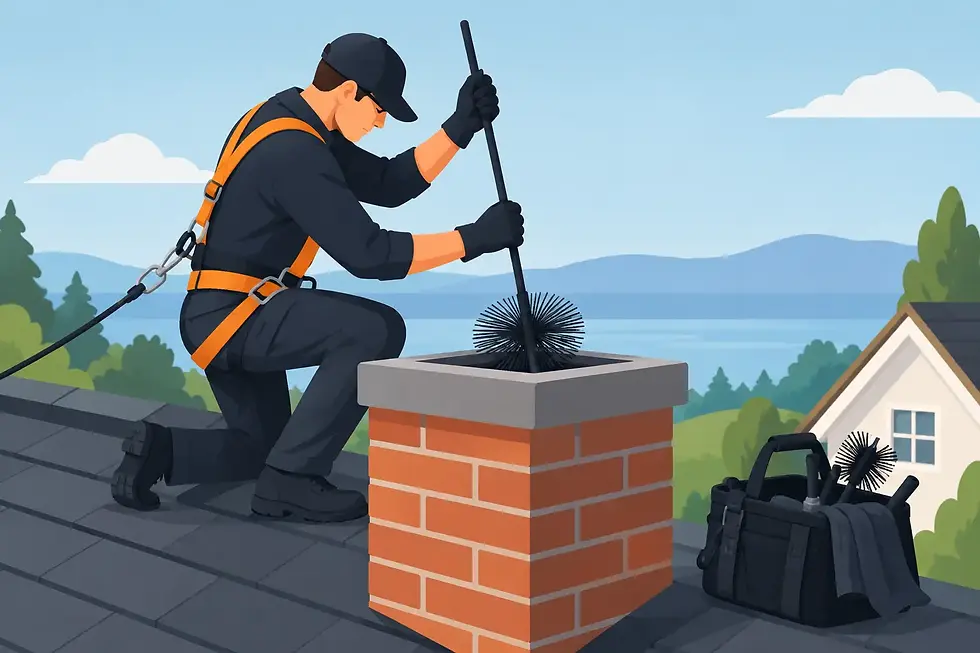
A professional visit should be straightforward and respectful of your home. The hearth and surrounding area are protected before work begins, and the flue is swept using suitable rods, brushes and vacuum equipment. Depending on the chimney and appliance, power sweeping may be used to remove stubborn soot and deposits more thoroughly.
The sweep will assess the condition and operation of the flue as far as is practical from the appliance opening. Where there is a concern that cannot be confirmed by sweeping alone, a CCTV chimney survey can show the inside of the flue in greater detail. This can be particularly useful for older properties, after a chimney fire, when buying a home, or where there are repeated problems with smoke or poor draw.
At Three Counties Sweeps, the aim is to leave your room as tidy as it was found and explain clearly what has been done. You should also receive confirmation that the chimney has been swept, which may be useful for your records and, in some cases, for insurance purposes.
A clean chimney is not the whole safety picture
Sweeping is a key part of safe use, but it works alongside a few other checks. Keep the stove door seals, fire bricks and baffle plates in good condition. Have any installation, liner or structural concerns assessed by the right specialist. Check that air vents have not been blocked or covered, especially in newer, more airtight homes.
If you have recently changed your appliance, fitted a new liner or altered ventilation, the chimney’s performance may change. Equally, a chimney that has stood unused for years may need a careful inspection before being brought back into service. Older rural homes across Somerset, Dorset and Devon often have characterful chimneys, but age can bring hidden defects as well as charm.
Book before your first fire of the season
The ideal time to arrange chimney care is before you need the fire, not after smoke has filled the sitting room. A regular sweep, sensible fuel and a tested carbon monoxide alarm give you a far better foundation for relaxed evenings by the stove or fireplace.
When you light your next fire, you should be able to enjoy the warmth without wondering what is happening above the hearth. That peace of mind starts with a chimney that has been properly checked, cleaned and cared for.


Comments