
.png)
A Safe Chimney Sweeping Process, Explained
A wood burner can look perfectly clean from the hearth while soot and creosote are building up where you cannot see them. A safe chimney sweeping process is about much more than running a brush through a flue. It is a careful check of the appliance, chimney and surrounding room, followed by the right cleaning method and clear advice on anything that needs attention.
For homeowners, the main reassurance should be simple: the job ought to be clean, methodical and suited to your particular chimney. Whether you use an open fire, a multi-fuel stove or a wood burner, regular sweeping helps reduce the risk of chimney fires, smoke entering the room and blockages stopping fumes from escaping safely.
Before the sweep: checking the chimney and the room
A professional sweep starts before any equipment enters the chimney. We will usually ask how often the fire or stove is used, what fuel you burn and whether you have noticed smoke, a lingering smell, poor draw or debris in the fireplace. These details can point to a problem that a standard sweep alone may not solve.
The appliance and hearth area should then be inspected. For a stove, this includes looking at the door seals, baffle plate, firebricks and flue pipe where accessible. With an open fireplace, attention turns to the fire opening, throat and visible brickwork. Any obvious signs of damage, tar deposits or previous water ingress are worth noting before cleaning begins.
The room is protected too. Clean dust sheets are placed around the working area, and a purpose-made soot vacuum is used to keep disruption to a minimum. A chimney sweep should respect your home from the moment they arrive, taking care around carpets, furnishings and pale hearths rather than treating soot as an unavoidable mess.
You can help by allowing the appliance to go completely cold beforehand and moving fragile items from the hearth. There is no need to empty a stove out completely unless you have been asked to do so, but do make sure there is clear access to the fireplace or stove.
The safe chimney sweeping process step by step
The best method depends on the chimney. A straight, well-lined stove flue may be suitable for power sweeping, while another chimney may need traditional brush-and-vacuum sweeping. Both methods can be effective when carried out correctly. The important thing is choosing equipment that fits the flue and using it with care.
Sealing and preparing the opening
Before sweeping begins, the fireplace opening or stove is sealed as far as practical. This prevents soot being pushed back into the room. For many stoves, the internal parts may need to be removed carefully so the sweep can reach the flue. They should be put back correctly once the work is complete.
A vacuum runs throughout the work where needed. This catches loose soot and fine dust at source, rather than allowing it to settle around the room. It is one of the key differences between a clean professional visit and an old-fashioned, dusty experience.
Sweeping the full flue
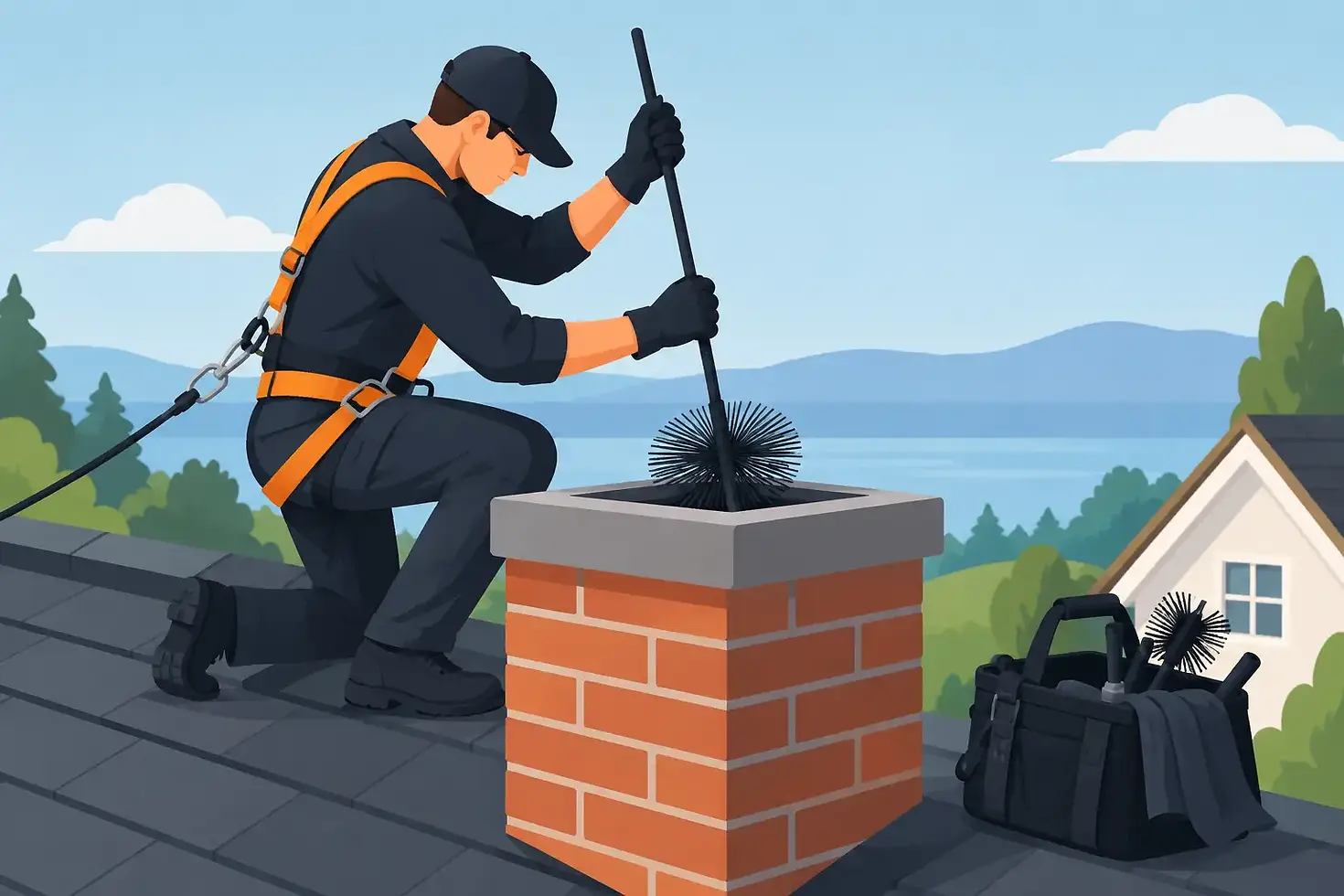
Brushes or power-sweeping rods are introduced from the appliance opening or, where appropriate, from the top of the chimney. The sweep works through the full length of the flue, including bends and transitions that can collect soot. The aim is to dislodge combustible deposits without damaging liners, brickwork or stove components.
Power sweeping uses rotating heads that flex through bends and can be particularly useful for lined flues. Traditional rods and brushes remain a sound option for many chimneys. Neither approach is automatically better in every case. The age of the property, type of liner, layout of the chimney and level of deposit all matter.
If heavy, shiny tar has formed inside the flue, it should not be ignored. Tar can be a sign of damp fuel, low-temperature burning, an oversized flue or poor appliance operation. Sweeping removes loose deposits, but a thick glazed layer may need further specialist advice. Promising that every chimney issue can be brushed away in one visit would not be honest or safe.
Removing debris and checking the draw
Once the flue has been swept, fallen soot and debris are removed from the fireplace, stove and access points. The sweep then checks that the route is clear and, where suitable, carries out a smoke draw test. This provides a practical indication that smoke is travelling upwards rather than spilling into the room.
A smoke test is useful, but it does not replace a detailed inspection where there are signs of a fault. If the chimney has persistent smoke problems, suspected liner damage, hidden obstructions or water-related issues, a CCTV chimney survey may be the sensible next step. A camera survey lets you see inside areas that cannot be assessed properly from the hearth alone.
Refitting and leaving the area tidy
Any stove components removed for access should be refitted securely. The sweep should leave the hearth and immediate work area clean, take away the waste created by the job and explain what has been found in plain language.
You should also receive confirmation that the chimney has been swept. Keep this with your household records, especially if you have a stove, use the chimney regularly or need to demonstrate that it has been maintained. It is a small piece of paperwork that can be helpful for insurance and for your own peace of mind.
What a sweep may find
Not every problem is soot-related. Chimneys are exposed to wind, rain, nesting birds and years of heat cycles, so a careful visit can reveal issues that deserve attention before they worsen.
Birds' nests are common in rural and semi-rural areas, particularly during nesting season. A nest can restrict the flue and lead to smoke or dangerous fumes entering the property. It must be dealt with legally and at the right time of year, as active nests and protected birds require appropriate care. Never attempt to burn a nest out.
Other findings may include loose masonry, a damaged or deteriorating liner, a blocked chimney pot, failed flashing, damp staining or cracks around the appliance. A sweep may also spot burning habits that are increasing deposits, such as using unseasoned wood or slumbering a stove overnight. Good advice is part of safe chimney care, not an added extra.
How often should your chimney be swept?
How often you need a sweep depends on the appliance, fuel and how heavily it is used. As a general guide, wood-burning and multi-fuel stoves commonly need sweeping at least once a year, and often more frequently if they are used as a main source of heat. Open fires also benefit from an annual sweep, even if they are only used occasionally, because nests and seasonal debris can still build up.
Smokeless fuel may produce less soot than wood or house coal, but the chimney still needs checking and cleaning. If you burn wood, choose properly seasoned, dry logs. Wet wood creates more smoke and tar, makes the glass dirtier and leaves your chimney working harder than it should.
Do not wait for a problem before booking. A strong smoky smell, soot falling into the grate, black marks around the fireplace, a stove that is difficult to light, or smoke spilling into the room are all reasons to stop using the appliance and seek advice promptly.
Why experience and care matter
Chimney sweeping involves working around fire safety, household dust and parts of a property that are mostly out of sight. It is worth choosing someone who is properly insured, trained and able to explain their findings without confusing jargon. DBS checking and membership of a recognised trade association, such as the National Association of Chimney Sweeps, offer additional reassurance when you are inviting a tradesperson into your home.
At Three Counties Sweeps, the focus is on a friendly, careful service that leaves you clear about the condition of your chimney and what, if anything, should happen next. A clean hearth is welcome, but the real value is knowing your fireplace or stove has been approached with the respect your home deserves.
If your chimney is due, arrange the visit before the colder months make it part of your routine. It is far nicer to light the first fire of the season knowing the flue has already been checked, cleaned and left ready for use.


Comments