
.png)

Best Ways to Keep Chimneys Safe at Home
- plamb10
- Jul 23
- 5 min read
A cosy fire should leave you warm, not worried. The best ways to keep chimneys safe start with treating the chimney as part of your heating appliance, rather than something hidden above the fireplace. Whether you have an open fire, wood burner, multi-fuel stove or an unused chimney in an older property, regular care helps prevent chimney fires, carbon monoxide risks, smoke problems and expensive damage.
For many homes across Somerset, Dorset and Devon, chimneys work hard through the colder months and then receive little thought until the first chilly evening of autumn. A few sensible checks, combined with professional sweeping and maintenance, can make all the difference.
Best ways to keep chimneys safe through the year
Have the chimney swept at the right intervals
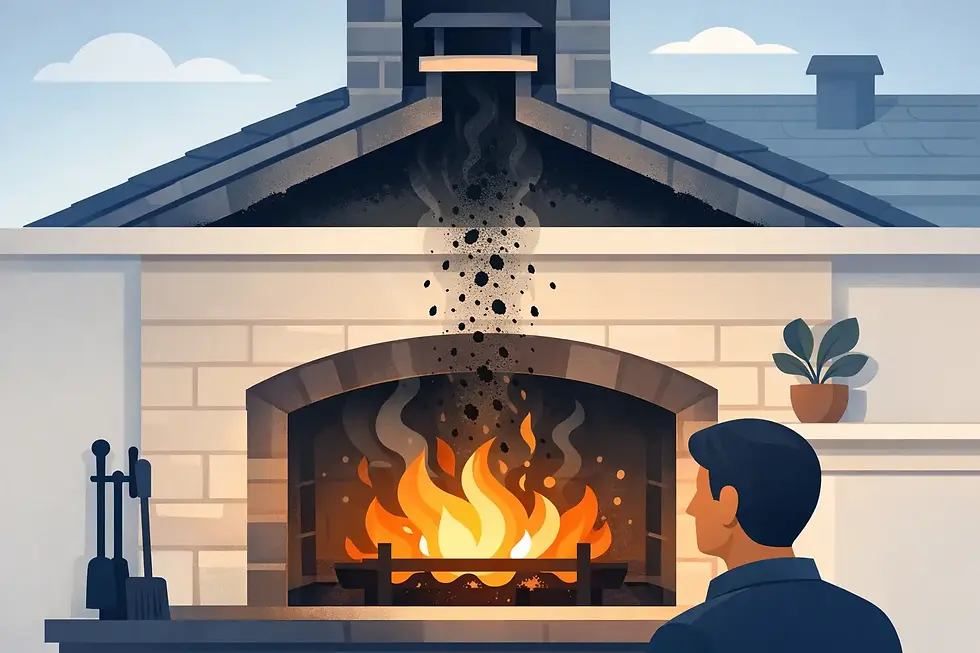
Soot, ash, tar and creosote collect inside a flue as fuel burns. Left to build up, these deposits restrict the passage for smoke and gases. They can also ignite, causing a chimney fire that may damage the flue liner or spread heat into the surrounding structure.
For most households, an annual chimney sweep is the minimum sensible routine. However, the right frequency depends on what you burn and how often the appliance is used. A wood burner used every day through winter will usually need more frequent attention than an occasional open fire. Burning wood can produce sticky creosote deposits, particularly if the logs are damp or the fire is allowed to smoulder.
A professional sweep can advise on a suitable schedule after seeing the appliance, fuel and condition of the flue. Keep the sweep certificate in a safe place too. It provides a useful maintenance record and may be requested by an insurer if there is a fire-related claim.
Burn dry, suitable fuel
The quality of your fuel affects both safety and the life of your chimney. Wet wood wastes energy because much of the fire's heat is spent evaporating water. It also burns cooler and creates more smoke, soot and creosote. This is why properly seasoned or kiln-dried logs are a far better choice for a wood-burning stove or open fire.
Look for wood with a moisture content below 20 per cent. Store logs off the ground in a dry, ventilated wood store, rather than under a completely sealed cover where damp can linger. Freshly cut wood needs time to season properly, so it should not go straight from a pile in the garden to the fire.
Never burn painted, treated or varnished timber, old furniture, MDF, chipboard, household rubbish or plastics. As well as producing unpleasant and potentially harmful fumes, these materials can leave corrosive deposits in the flue. If you use a multi-fuel stove, only use fuel approved for that appliance and follow the manufacturer's instructions.
Use the appliance properly
A chimney cannot perform safely if the fire or stove is being run in the wrong way. Start with a clear flue and make sure the room has the ventilation the appliance requires. Air vents should not be blocked, even if they feel draughty. They are there to provide combustion air and help gases travel safely up the chimney.
Avoid shutting a stove right down for long periods to keep it burning overnight, unless the manufacturer specifically confirms it can be operated that way. Slumbering a fire reduces the flue temperature and encourages tar and creosote to form. A clean, bright burn is generally kinder to the stove and chimney than a smoky, starved fire.
With an open fire, do not overload the grate. Use a suitable fireguard whenever children, pets or vulnerable adults are nearby, and allow ashes to cool fully in a metal container before disposal. Ashes can hold heat for much longer than expected.
Fit and test carbon monoxide alarms
Carbon monoxide is colourless and odourless, so you cannot rely on smell or smoke to warn you of a problem. Any room with a solid-fuel appliance should have a carbon monoxide alarm installed in line with current guidance and the alarm manufacturer's instructions.
Test it regularly, replace batteries where applicable and check the replacement date on the unit. Carbon monoxide alarms do not replace sweeping, servicing or good ventilation. They are a vital last line of warning should combustion gases enter the room.
If an alarm sounds, or anyone develops symptoms such as headache, dizziness, nausea or confusion while a fire is in use, get everyone into fresh air, stop using the appliance if it is safe to do so and seek urgent advice. Do not assume the alarm is faulty and restart the fire.
Watch for changes around the fireplace
Your home often gives early clues that a chimney needs attention. Smoke entering the room, a persistent smoky smell, stains around the fireplace, soot falling into the grate or a fire that suddenly struggles to draw can all point to an obstruction or flue problem.
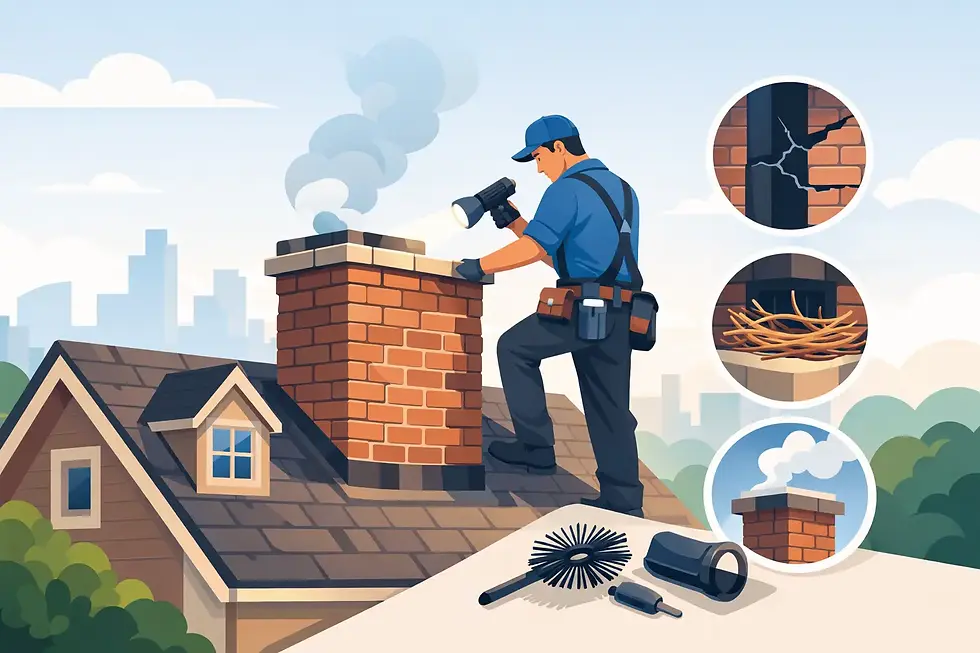
Birds' nests are a common issue, especially in spring and early summer. They can block a chimney surprisingly quickly, causing smoke and dangerous gases to back up into the property. A chimney cowl may help prevent repeat nesting in suitable cases, but it needs to be chosen and fitted correctly. The wrong cowl can interfere with the draw or make sweeping more difficult.
Outside, look out for loose pots, cracked brickwork, damaged flashing, crumbling mortar and signs of water getting in. Water is one of the biggest enemies of a chimney. It can worsen frost damage, affect liners and bring staining or damp into the house. Do not climb onto the roof to inspect it yourself. If you spot a concern from ground level, arrange for a competent professional to assess it.
Arrange a camera survey when there is doubt
A standard sweep removes deposits, but it cannot always show the full condition of the flue. CCTV chimney surveys are especially useful after a chimney fire, when buying an older property, before installing a new stove, or where there are ongoing smoke and draw problems.
The camera can identify cracked liners, displaced flue sections, internal obstructions, heavy tar deposits and faults that would otherwise stay hidden. This avoids guesswork and helps ensure any repair work is based on what is actually happening inside the chimney.
A survey is not necessary every year for every household. It is, however, a sensible investment when a chimney's history is unclear or symptoms keep returning after sweeping.
Do not forget unused chimneys
An unused chimney still needs occasional attention. Rain, nesting birds and deteriorating mortar do not stop simply because there is no fire below. If a chimney has been capped, it should usually still be ventilated to help prevent damp and stale air becoming trapped in the flue.
If you are considering reopening an old fireplace, have the chimney checked before lighting anything. Old flues may be blocked, damaged or unsuitable for a modern appliance without lining or other work. What looks like a straightforward home improvement can become unsafe very quickly if the chimney has not been assessed.
When to call a chimney professional
Book a professional visit before the main heating season rather than waiting until the first cold spell, when appointments are often busier. It is also wise to call sooner if smoke is entering the room, you suspect a nest or blockage, there has been a chimney fire, or you notice damage to the stack or fireplace.
Choose a sweep who is properly insured, works cleanly in your home and can explain the findings in plain language. A member of a recognised chimney sweeping association, such as the National Association of Chimney Sweeps, should follow established professional standards and provide evidence of the work carried out.
At Three Counties Sweeps, the aim is always to leave homes clean, give straightforward advice and make chimney care feel manageable rather than mysterious. The safest chimney is rarely the one that has never caused trouble. It is the one that is checked, swept and looked after before small warning signs become a bigger problem.

Comments