
.png)

Chimney Servicing for Older Homes: Key Checks
- plamb10
- 3 days ago
- 6 min read
An older chimney can look perfectly sound from the hearth while hiding decades of soot, loose debris or a narrowing flue above. Chimney servicing for older homes is about more than keeping a fire drawing well. It is a sensible way to protect the character of a period property while checking that the chimney is safe to use.
Many homes across Somerset, Dorset and Devon have original fireplaces, inglenooks, Victorian chimney breasts or later-installed wood burners connected to much older flues. Each arrangement needs a careful, practical approach. A good service should leave you with a clean chimney, a clear idea of its condition and straightforward advice on anything that needs attention.
Why older chimneys need a closer look
A chimney is exposed to heat, weather and condensation for many years. In an older home, the flue may be unlined, partly lined, altered during previous renovations or shared with a fireplace that is no longer used. What is visible in the room is only one small part of the system.
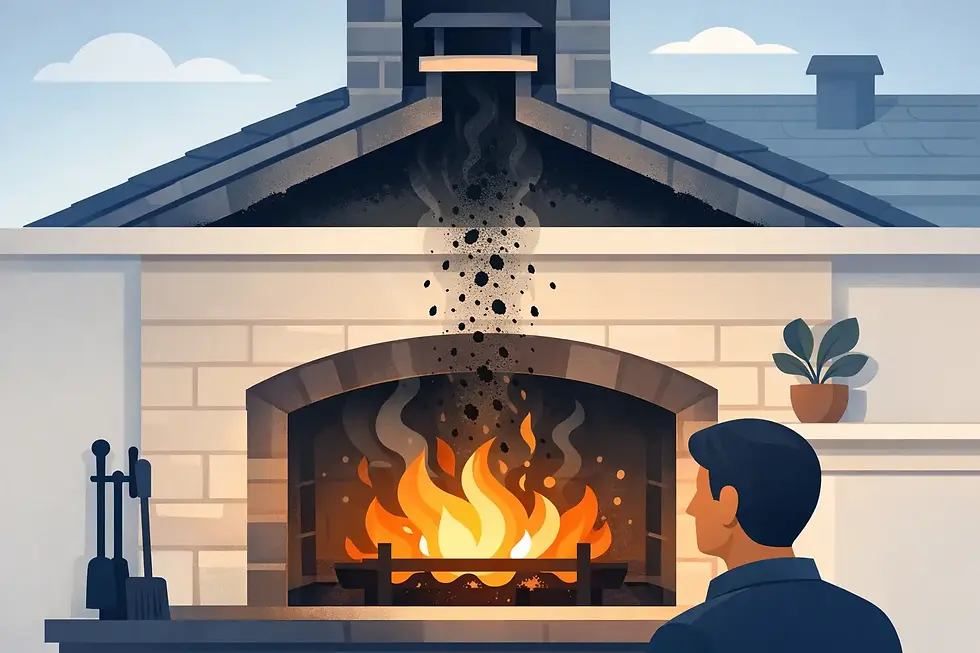
Soot can build up unevenly in bends, ledges and rough internal brickwork. Old mortar may crumble, and a small amount of fallen material can create a partial blockage. Rain entering through a damaged pot, cowl or flashing can also leave a flue damp, which may lead to staining, unpleasant smells and a poor draw when you light the fire.
That does not mean every old chimney has a serious fault. Many continue to work very well with regular care. The difference is that assumptions are less helpful in a period property. A proper sweep and, where appropriate, a camera survey gives a much clearer picture than simply judging the chimney by its age or appearance.
Chimney servicing for older homes: what it should include
The exact visit depends on your appliance and how the chimney is used, but servicing normally starts with a conversation. Your sweep should ask what you burn, how often the fire or stove is used, whether you have noticed smoke entering the room, and whether there have been any changes since the last visit.
A professional brush and vacuum sweep removes soot, ash and loose deposits from the flue while keeping mess in the room to a minimum. In some chimneys, power sweeping is a useful option. This uses a rotating head to clean stubborn deposits and can be particularly effective where a flue has bends or where a stove system needs a more thorough clean. It is not automatically the right method for every chimney, especially where fragile liners or unusual historic features are involved, so the method should suit the flue rather than be a one-size-fits-all choice.
The hearth, fireplace opening, stove and visible flue pipe should also be checked for obvious concerns. These might include a damaged fire brick, loose register plate, worn door rope seal, cracked glass, signs of water ingress or debris that suggests a problem higher up. A sweep cannot replace every specialist trade, but they can identify when a roofer, stove installer, builder or chimney repair specialist should take a closer look.
When a CCTV chimney survey is worthwhile
A CCTV chimney survey is especially useful when you have just moved into an older property, are reopening a long-unused fireplace, have inherited an appliance with no service history, or are considering fitting a stove. It can also help investigate persistent smoke problems, repeated debris in the fireplace or a suspected blockage.
The camera travels through the flue and records what cannot be seen from the fireplace or chimney pot. It may show an old liner, cracked sections, offsets, mortar loss, heavy tar deposits, nesting material or an obstruction. This information helps you make an informed decision before spending money on repairs or installation work.
A survey is not a guarantee that every hidden building issue will be found, and not every older chimney needs one at every appointment. However, it is a sensible next step when there is uncertainty. It is far better to understand the route of the flue before relying on it through the colder months.
The common issues found in period properties
One of the most common discoveries is a flue that has been unused for years. Jackdaws and other birds are drawn to chimney pots, and nests can be surprisingly substantial. Nesting material restricts airflow and can create a fire risk if the fireplace is lit. If a nest is active, it must not be disturbed. Once it is legal and appropriate to remove, professional birds nest removal can clear the flue safely.
Another issue is tar and creosote. Burning wet or unseasoned wood, slumbering a stove overnight, or running an appliance too slowly can produce sticky deposits. In an old, rough flue these deposits may cling more readily than they do in a modern smooth liner. They can cause strong odours in warm weather and, in severe cases, increase the risk of a chimney fire.
A poor draw is also common, but it does not always mean the chimney is blocked. Chimney height, nearby trees, cold air in an external stack, a tightly sealed modern window, extractor fans and the type of fuel being burned can all affect performance. Older homes are full of individual quirks, so the right answer depends on the whole setup. Cleaning may solve the problem, but sometimes ventilation, appliance settings or a flue improvement needs to be considered.
How often should an older chimney be swept?
Frequency depends mainly on the fuel, the appliance and how often it is used, rather than the age of the house alone. As a broad guide, a wood-burning or multi-fuel stove used regularly is commonly swept more often than an occasional open fire. Smokeless fuel, gas and oil appliances also need regular inspection and servicing in line with the appliance manufacturer’s guidance.
For many households, booking before the heating season is a practical habit. It gives time to deal with any problems before the first cold spell, when appointments become harder to find. If you use a wood burner as a main source of heat, you may need more than one visit during the season.
Do not wait for obvious signs. Smoke spilling into the room, a noticeable tar smell, bits of soot falling into the fireplace, a fire that is suddenly difficult to light or a carbon monoxide alarm sounding all call for prompt attention. Stop using the appliance if you suspect a fault or blockage until it has been checked.
Small habits that help between visits
The best thing you can do is burn suitable, dry fuel. For wood, choose properly seasoned logs with a moisture content of 20% or below, and store them where air can circulate. Avoid burning household rubbish, treated timber, painted wood or damp logs. These produce more pollution and deposits, and they can damage both your appliance and chimney.
Empty ash carefully when it builds up, following the stove manufacturer’s advice, and keep vents and air controls free from obstruction. If you have a stove, check the door seal occasionally and do not alter parts or fit a cowl without professional advice. What looks like a simple improvement can affect how the chimney draws.
A suitable carbon monoxide alarm near the appliance is a wise safeguard. Test it regularly and replace it by the date stated by the manufacturer. It is an alarm, not a substitute for a clean, correctly working flue, but it gives your household another layer of protection.
Choosing someone to service an older chimney
Older homes benefit from a sweep who takes time to assess what is there rather than rushing through a standard job. Ask whether they are fully insured, trained, DBS checked and part of a recognised chimney sweeping association. You should feel comfortable having them in your home and confident that they will explain any findings plainly.
At Three Counties Sweeps, we treat every property with care, from a simple village cottage fireplace to a well-used family wood burner. Clean working practices matter just as much as a thorough sweep, particularly when the chimney runs through a much-loved older home.
If your fireplace has been dormant, your stove has started behaving differently or you simply cannot remember the last time the flue was cleaned, arranging a service now can bring welcome peace of mind before you next light the fire.
Comments