
.png)

When Should Chimney Be Inspected? Key Times
- plamb10
- 12 minutes ago
- 6 min read
A chimney can look perfectly fine from the hearth while soot, loose debris or a nesting material blockage is sitting higher up in the flue. So, when should chimney be inspected? For most homes, the sensible answer is at least once a year, ideally before you begin relying on your fire or stove for the colder months.
A regular inspection gives you a clear picture of the chimney’s condition, not just how clean it is. It is a straightforward way to spot small issues before they become smoke in the room, a difficult-to-light stove, unpleasant odours or a bigger repair.
When should a chimney be inspected each year?
For a chimney that is in use, arrange an inspection annually. Late spring and summer are often the easiest times to book. Your stove or fireplace is unlikely to be needed, appointments can be planned without rushing, and there is time to deal with any problems found before autumn.
That said, the best time is the time you can get it checked. If you have not had the chimney inspected recently and you want to light a fire, do not wait for next summer. A professional visit now is far safer than making assumptions about a flue you cannot see.
An annual check is particularly worthwhile for wood burners, open fires and multi-fuel stoves. Burning fuel creates soot and deposits inside the flue. Even a clean-burning stove can leave enough residue to affect safe operation over time, especially if the fire has been run slowly or with damp wood.
The frequency of sweeping is not always identical to the frequency of inspection. How often a chimney needs sweeping depends on the appliance, fuel, how often it is used and the condition of the flue. During a proper sweep, however, a chimney sweep can also look for visible concerns such as damage, blockages, heavy tar deposits and signs that further investigation is needed.
Arrange a check before the heating season
The first cool evening can make a stove feel very tempting. Before the first fire of the season, make sure the chimney has been swept and inspected if it has not been checked within the last year.
A flue left unused over the summer may have become home to birds, insects or small animals. Leaves and other debris can also find their way into an uncapped chimney. In rural parts of Somerset, Dorset and Devon, bird nests are a particularly common reason for a flue to be blocked when a household comes to use it again.
A pre-season visit also helps identify issues caused by weather. Heavy rain, frost, high winds and ageing mortar can affect chimney pots, flashing and brickwork. Not every external defect means the flue is unsafe, but it is better to understand the condition before lighting repeated fires beneath it.
Do not ignore warning signs between annual inspections
A yearly appointment is a good routine, but certain signs call for an earlier inspection. Stop using the appliance until it has been assessed if smoke is coming back into the room or the fire is behaving differently from usual.
Look out for these common signs:
Smoke or fumes entering the room when lighting or using the fire
A strong sooty, damp or tar-like smell from the fireplace, particularly in warm or wet weather
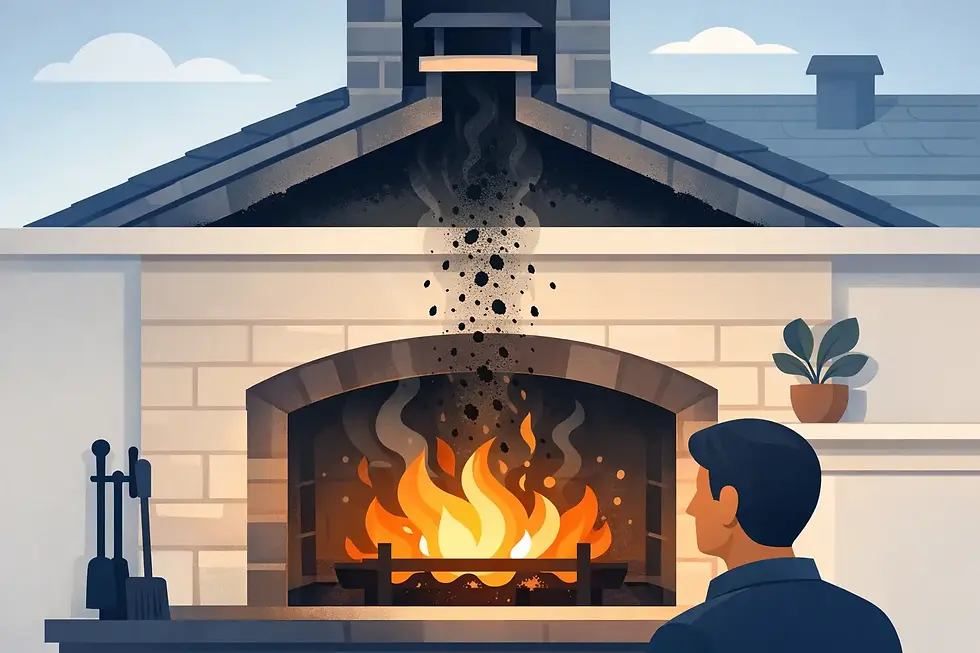
Debris, soot, pieces of nest or small fragments of liner falling into the fireplace or stove
Poor draw, difficulty getting a fire going, or a stove that repeatedly goes out
A bird in the chimney, sounds of nesting, or visible material around the chimney pot
Signs of damp, staining or salt deposits around the chimney breast
Damage after a storm, including a loose pot, fallen brickwork or a damaged chimney cowl
Some of these problems have simple causes. A cold flue, unsuitable fuel or incorrect stove operation can affect draw, for example. But because carbon monoxide is colourless and odourless, it is never wise to guess where fumes are concerned. Make sure your carbon monoxide alarm is fitted and working, and have any suspected flue issue checked promptly.
A chimney inspection matters after changes to your home
Book an inspection when you move into a property with a fireplace or stove, even if the previous owner said it was regularly used. You need an up-to-date view of the chimney’s condition and to know whether the appliance, flue and ventilation arrangement are suitable for how you plan to use them.
The same applies after a new stove has been fitted, a liner has been installed, or alterations have been made around the chimney breast or roof. A chimney is part of a working system. The appliance, flue, liner, pot, cowl and air supply all affect how safely it operates.
Older cottages and period homes deserve particular care. Their flues may take unexpected routes, have more than one fireplace connected to them, or contain old construction materials and historic alterations. A routine visual check may be all that is needed, but where there is uncertainty, a CCTV chimney survey can show the internal condition in far more detail.
What is the difference between a sweep and a CCTV survey?
A chimney sweep removes soot, ash and loose deposits from the flue. It is essential maintenance and often provides the first opportunity to spot obvious concerns. A careful sweep should leave the fireplace area clean and give you useful feedback on what has been found.
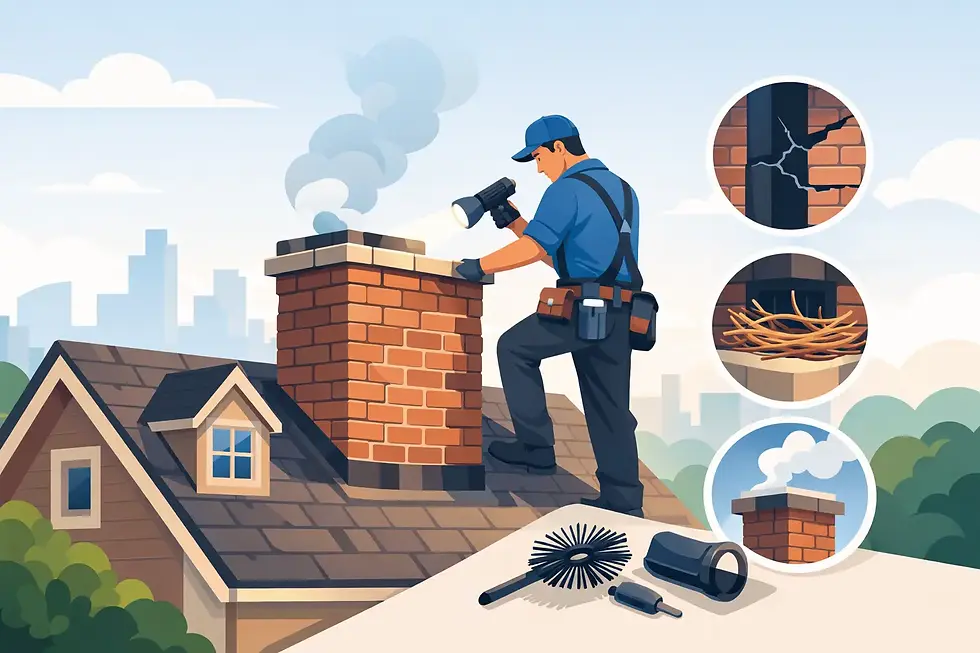
An inspection is the assessment side of the visit. It may include checking the fireplace opening, smoke chamber, flue route where visible, chimney pot and termination, as well as looking for signs of blockage or deterioration.
A CCTV chimney survey is more detailed. A specialist camera is passed through the flue to investigate areas that cannot be properly seen from above or below. This is particularly useful when there has been a chimney fire, persistent smoke problems, suspected liner damage, water ingress, a house purchase, or before remedial work is agreed.
There is a trade-off: not every annual service needs a camera survey. If a chimney has been well maintained and shows no warning signs, a routine inspection alongside sweeping is often appropriate. A camera survey becomes valuable when the chimney’s history is unclear or there is a specific problem to diagnose.
What if the chimney is not used?
An unused chimney still benefits from occasional attention. It may contain a redundant flue liner, old debris, moisture or a bird nest, and damage to the stack can affect the property even if no one lights a fire below it.
If the fireplace has been closed off, ask for the ventilation and exterior terminal to be checked as part of normal property maintenance. Blocking a chimney completely can trap moisture. A disused flue generally needs appropriate ventilation to help prevent damp and stale smells in the chimney breast.
If you are thinking of bringing an old fireplace back into use, arrange a professional inspection first. Do not assume that a chimney is safe because it once served an open fire. Its condition, suitability and any work required should be established before an appliance is connected or fuel is burned.
After a chimney fire, act quickly
A chimney fire is not always a dramatic event with flames coming from the pot. Sometimes it can sound like a loud roaring, cracking or rumbling in the flue, or be noticed by neighbours before the household realises what is happening.
If you suspect one has occurred, stop using the appliance and arrange a detailed inspection. The intense heat can damage liners, crack internal flue surfaces and loosen deposits that later restrict the flue. A CCTV survey may be recommended to check the full length of the chimney before it is used again.
Regular sweeping, using suitable dry fuel and avoiding prolonged slumbering fires all help reduce the chance of a chimney fire. They do not remove the need for periodic checks.
Make the annual visit part of your home routine
The easiest approach is to book your chimney care at the same point every year, much like servicing a boiler or checking a smoke alarm. Keep any paperwork from previous sweeps and surveys, especially if you have a lined flue or a stove installation. A clear record makes it easier to notice changes and plan maintenance sensibly.
Three Counties Sweeps provides clean, professional chimney sweeping, inspections, bird nest removal and CCTV chimney surveys for households that want a dependable local service. A trained, insured chimney sweep can explain what has been found in plain language, without making a straightforward job feel more complicated than it needs to be.
If your chimney is due its annual check, has been unused for some time, or is showing any of the warning signs above, arranging an inspection now can give you confidence before the next fire is lit.
Comments