
.png)
CCTV Chimney Survey vs Inspection Explained
A chimney can look perfectly sound from the hearth yet hide a problem higher up: a fallen brick, a stubborn nest, a displaced liner or a blockage that a brush cannot shift. That is why the question of a CCTV chimney survey vs inspection matters. The two terms are often used interchangeably, but they do not always describe the same level of investigation.
For most householders, the right choice depends on why the chimney needs attention. A routine sweep and visual check is usually enough for a chimney that is drawing well and being looked after regularly. A camera survey is a closer look when there is a fault to investigate, work to assess, or uncertainty about what is happening inside the flue.
What is a chimney inspection?
In everyday chimney care, an inspection usually means a professional visual assessment of the chimney and flue. It is commonly carried out alongside sweeping. The sweep will look at accessible parts of the fireplace or stove, the flue opening, the chimney breast and, where safely visible, the chimney stack and pot.
This check helps identify obvious concerns such as soot build-up, signs of a bird’s nest, loose debris, damaged firebricks, staining, poor draw or signs that smoke has been escaping where it should not. The sweep will also pay attention to how the appliance is operating and whether anything suggests the flue needs further investigation.
A visual inspection is useful because it is practical and preventative. If you have your wood burner, open fire or other solid-fuel appliance swept at the appropriate interval, small warning signs are more likely to be spotted before they become a bigger inconvenience or expense.
However, an inspection has limits. Chimney flues are long, dark and often change direction. Even with a torch and the best view from below or above, it is not possible to see every section clearly. That is where CCTV comes into its own.
What is a CCTV chimney survey?
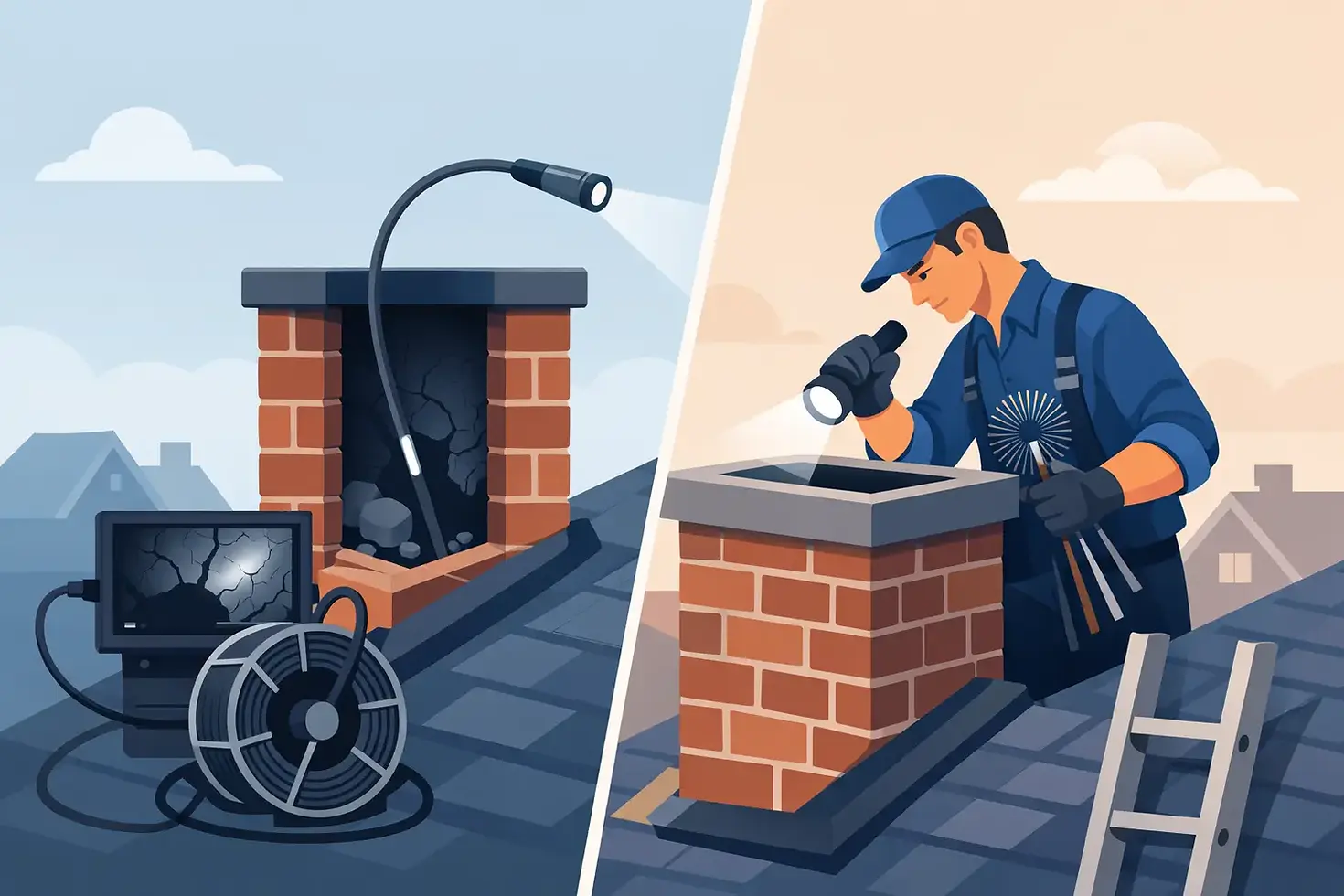
A CCTV chimney survey uses a purpose-made camera to record the inside of the flue. The camera is carefully passed through the chimney so that its condition can be viewed in detail. It can reveal areas that cannot be properly assessed during a standard visual check.
The survey may show cracked or deteriorating liners, missing mortar joints, internal obstructions, nesting material, broken clay flue sections, tar deposits, misaligned components or damage following a chimney fire. It can also help establish the route and size of a flue before a liner is installed or a new stove is connected.
The key difference is evidence. A camera survey gives a clearer picture of what is actually inside the chimney rather than relying on the visible ends of the flue and the symptoms in the room. Where repairs are being considered, recorded footage or images can make it much easier to understand why a recommendation has been made.
CCTV chimney survey vs inspection: the practical difference
It is helpful to think of an inspection as a health check and a CCTV survey as a closer diagnostic test. Both are valuable, but they answer different questions.
A standard inspection asks, “Does this chimney appear safe and serviceable from the areas we can assess?” A CCTV survey asks, “What exactly is happening along the inside of the flue?”
In some cases, a chimney professional may use the word inspection to include a camera check. In others, a CCTV survey is a separate service because it requires specialist equipment, additional time and a specific reason for investigation. It is always worth asking what is included, rather than assuming that a camera has been used as part of a normal sweep.
Neither service should be seen as a substitute for the other. A camera cannot remove soot and creosote-like tar deposits, and a routine sweep cannot necessarily confirm the condition of every hidden part of a liner. The most appropriate approach depends on the chimney, the appliance and the concerns you have noticed.
When a routine inspection is usually enough
For a well-maintained chimney with no changes in performance, a regular sweep with a visual condition check is normally the sensible starting point. This is particularly true if the appliance is used as expected, there is no smell of smoke or damp indoors, and previous sweeping has not found unusual debris.
A normal inspection may be suitable when you simply want to keep on top of maintenance before the heating season. It is also the usual first step if you have recently moved into a home but the chimney appears straightforward and there are no signs of trouble. Your sweep can then advise if anything seen during the visit warrants a camera survey.
Regular care matters. Soot and debris can conceal developing issues, while a blocked flue can affect how a fire or stove draws. Keeping the chimney swept also gives a professional the opportunity to notice changes from one visit to the next.
When a CCTV survey is worth arranging
A CCTV chimney survey is most useful when there is a specific question that cannot be answered by a visual check alone. It may be recommended after a sweep has found rubble, pieces of liner, excessive nesting material or unusual deposits. It is also sensible if a chimney has been unused for years and you are planning to bring it back into service.
Consider a camera survey if you notice any of the following:
Smoke entering the room, poor draw or a fire that is difficult to keep alight.
A persistent smoky, damp or tar-like smell, particularly after rain or in warm weather.
Signs of a chimney fire, such as loud roaring, unusually hot surfaces or flakes of material in the grate.
Water staining around the chimney breast, or evidence that the stack has deteriorated.
Plans to fit a stove, install a liner or alter the fireplace.
A property purchase where the chimney’s history and internal condition are unknown.
These symptoms do not automatically mean there is serious damage. For example, poor draw can sometimes be caused by a cold flue, inadequate ventilation, fuel that is too wet or an unsuitable appliance setting. But a camera survey can rule out, or confirm, an internal obstruction or defect before money is spent on the wrong solution.
Why a sweep alone may not answer the question
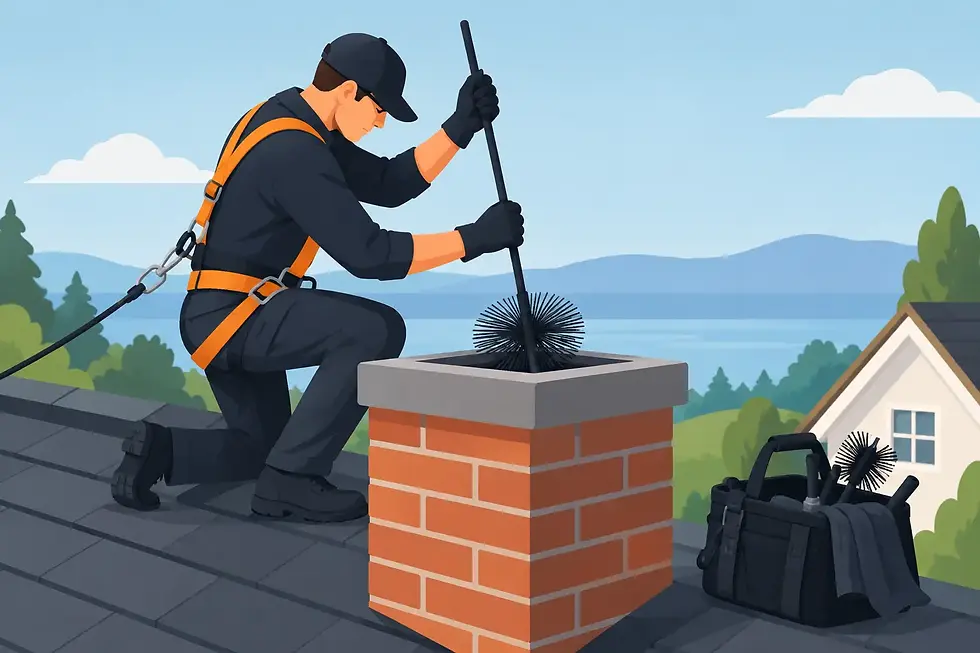
A proper sweep removes combustible soot and deposits and is an essential part of chimney safety. It can also dislodge lighter nesting material and reveal debris. Yet it is not a repair survey, and it is not designed to prove that a liner is intact from top to bottom.
If a brush catches repeatedly at one point, or if debris continues to fall despite sweeping, forcing equipment through is not the answer. The cause needs to be identified. A camera can show whether there is a bend, a narrowing, a collapsed section, a protruding joint or another obstruction that needs careful attention.
This matters especially in older homes across Somerset, Dorset and Devon, where chimneys may have been altered over many decades. A fireplace may have been opened up, closed off, relined or connected to a different appliance at some stage. The external stack can look sound while the hidden flue tells a more complicated story.
What to expect from a professional survey
Before a CCTV survey, the area around the fireplace or stove should be protected in the same careful way as for sweeping. The chimney may need to be swept first if heavy soot would obscure the camera view. The surveyor will then guide the camera through the flue, noting the route, visible defects and any obstructions.
A useful outcome is not just footage, but a plain-English explanation of what it shows and what should happen next. Sometimes the answer is reassuring: the flue is clear and the issue is likely related to fuel, ventilation or how the appliance is being used. Sometimes remedial work is advised, such as nest removal, masonry repair, relining or further assessment by the appropriate specialist.
Be cautious of anyone who presents a vague camera image as proof that expensive work is urgently required. Ask what has been found, where it is, whether the chimney can safely remain out of use, and what options are available. Clear advice should give you the confidence to make a decision without pressure.
Choosing the right service for your chimney
If your chimney is part of your regular household routine and there are no warning signs, book the sweep and inspection it needs. If something has changed, if a problem keeps returning, or if you are planning work on the fireplace or stove, ask whether a CCTV survey would give a clearer answer.
At Three Counties Sweeps, the aim is always to leave homeowners with straightforward advice, a clean home and a chimney they can use with confidence. A camera survey is not necessary for every flue, but when the inside of the chimney is the missing piece of the puzzle, seeing it properly is often the safest next step.


Comments