
.png)

Flue Repair Review for a Safer Home Chimney
A flue repair review is not simply a look at the chimney pot from the garden. It is a careful check of the route smoke and gases take from your fire or stove to the outside. When that route is damaged, blocked or no longer suited to the appliance, the problem can affect how well your fire burns, how your home smells and, most importantly, your household’s safety.
For many homes across Somerset, Dorset and Devon, especially older cottages and properties with wood burners, the chimney may have been in service for decades. Brickwork can look sound while the flue inside has cracks, loose mortar, tar deposits or a failing liner. A proper review helps separate a minor maintenance job from a repair that should not be put off.
What a flue repair review should cover
A useful review starts with the symptoms you have noticed, but it should not end there. Smoke entering the room, a cold draught, an unpleasant sooty smell or a stove that is difficult to light can all point to flue trouble. They can also be caused by a blockage, poor ventilation, damp fuel or an appliance issue. That is why guessing from one symptom is rarely enough.
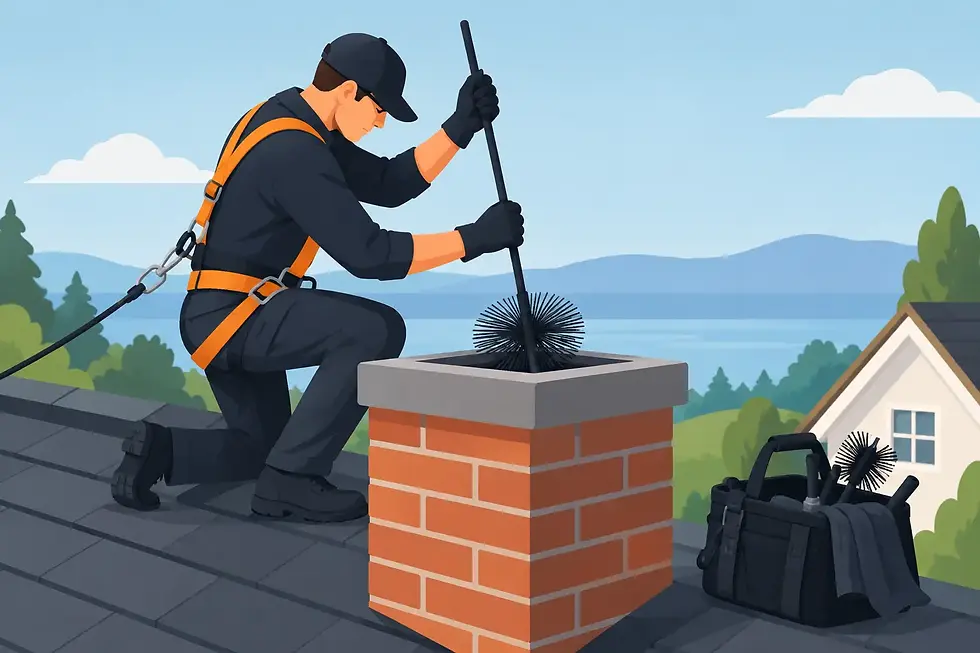
The chimney should first be swept where appropriate, so that soot and deposits do not hide the condition of the flue. A visual inspection of the chimney stack, pot, terminal and fireplace opening can then reveal obvious defects such as damaged pointing, loose pots, missing cowls or water ingress.
For a clearer picture inside the chimney, a CCTV chimney survey is often the most helpful next step. A camera can show cracked or displaced liners, rough areas that collect soot, old debris, nesting material, bends and restrictions. It also provides a record of the findings, rather than asking you to take a repair recommendation on trust alone.
A good review explains what has been found in plain language: where the issue is, why it matters, whether the appliance should be used, and what the realistic repair options are. If there is no evidence of a fault requiring repair, you should be told that too.
Signs your flue may need attention
Some faults are found during routine sweeping, before they become a larger problem. Others make themselves known when you use the fire. Do not ignore smoke or fumes in the room, even if they only occur occasionally. A chimney that draws poorly can allow combustion gases, including carbon monoxide, to enter the home.
Look out for persistent smoke spillage when lighting or refuelling a stove, excessive black staining around the fireplace, or a smell of soot that remains long after the fire is out. Falling debris in the grate, damp patches on a chimney breast and rusting on a stove or fireplace fitting can also suggest water is getting where it should not.
A sudden change in performance deserves attention. If a stove that has always worked well now burns sluggishly, struggles to stay alight or produces more smoke than usual, the cause could be a partial blockage or build-up within the flue. Bird nests are a common seasonal issue, particularly where a chimney pot is not protected by a suitable guard.
Carbon monoxide alarms are essential wherever solid-fuel appliances are used, but they are not a substitute for maintenance. If an alarm sounds, leave the property, get fresh air and follow the alarm manufacturer’s emergency guidance. Do not relight the appliance until the cause has been checked.
Cracks, leaks and liner failure
The flue liner is there to contain hot gases and protect the surrounding chimney structure. In older chimneys, the original flue may be unlined or have a clay liner that has deteriorated over time. Cracks and gaps can allow heat, moisture and combustion products to escape into areas where they do not belong.
This does not mean every old chimney needs relining. Some can be used safely with regular sweeping and appropriate maintenance. The decision depends on the condition and size of the flue, the appliance connected to it, the fuel being burned and the evidence found during inspection. Relining a chimney that does not need it is unnecessary expense; continuing to use a defective flue is a false economy.
Common repair options, explained simply
The right repair should match the fault, not follow a one-size-fits-all approach. Minor defects at the top of the stack may need repointing, replacement flaunching or a new pot or cowl. These jobs help keep rain out and maintain a clear, stable termination for the chimney.
Where the inner flue is damaged or unsuitable for a stove, a new flexible stainless-steel liner may be installed. This creates a continuous route for gases and can improve the match between the chimney and the appliance. The grade and size of liner matter, particularly for wood, smokeless fuel or multi-fuel use, so this work should be specified correctly rather than chosen on price alone.
Some masonry flues may be repaired using specialist lining systems or mortar repair methods. These can be suitable in particular situations, but they are not automatically the best answer for every chimney. Access, the chimney’s shape, the scale of damage and the appliance requirements all affect what is possible.
If a blockage or nesting material is the issue, removal and a thorough sweep may be all that is needed. A bird guard may help prevent a repeat, although any cowl or guard must be appropriate for the chimney and must not restrict the draught. Adding the wrong fitting can create a fresh problem.
Why sweeping and repairs belong together
A flue cannot be properly cared for by repair work alone. Burning wood creates soot and can create tar-like deposits if the fuel is damp or the stove is run too slowly. These deposits reduce the effective diameter of the flue and increase the risk of a chimney fire.
Regular sweeping keeps the flue clear and gives your chimney professional the opportunity to spot changes early. The recommended frequency depends on the fuel and how often the appliance is used. Wood-burning appliances commonly need more frequent attention than occasional open fires, while heavy winter use may justify an additional check.
Use properly seasoned wood with a moisture content of 20% or less, and avoid burning household waste, treated timber or painted wood. Better fuel will not repair a damaged flue, but it makes cleaner burning more likely and helps protect the chimney after repairs have been completed.
Questions worth asking before agreeing to work
When you receive a repair recommendation, you are entitled to a clear explanation. Ask what the inspection found, whether the fault has been photographed or recorded on CCTV, and whether it affects safe use of the appliance now. You should also understand whether the quotation includes sweeping, access equipment, fitting, testing and the removal of waste.
It is sensible to ask how the proposed repair suits your particular stove or fireplace. For example, if relining is advised, ask what liner type and diameter are proposed and why. If work affects a solid-fuel appliance installation, make sure the person carrying it out is suitably competent and that any relevant certification or building control requirements are addressed.
Price matters, but the cheapest option is not always the safest or most durable. Equally, a costly repair should be backed by evidence. A trustworthy professional will be happy to explain the trade-offs and give you space to make an informed decision.
When to arrange a chimney inspection
Book a review promptly if you have smoke entering the room, a carbon monoxide concern, visible damage, a chimney fire history or signs of water penetration. It is also wise to arrange an inspection before bringing an unused fireplace or stove back into service, particularly in a house you have recently bought.
For everyday peace of mind, include the chimney in your regular maintenance plan rather than waiting for a problem. At Three Counties Sweeps, a clean, careful sweep and a clear explanation of any concerns can help you decide whether a simple service, a CCTV survey or further repair advice is the sensible next step.
Your chimney does a quiet but demanding job every time the fire is lit. Giving it timely attention protects the warmth of your home without letting a small hidden fault become the reason the fire has to stay off.


Comments