
.png)
Annual Sweeping vs Reactive Cleaning - Which Is Best?
A chimney rarely gives much warning before a small problem becomes an inconvenient one. The choice between annual sweeping vs reactive cleaning often comes down to whether you would rather book a planned visit at a convenient time or deal with smoke, smells or a poor draw when you want the fire most.
For homes with a wood burner, open fire or multi-fuel stove, regular chimney care is one of the simplest ways to look after both the appliance and the household using it. Reactive cleaning has its place, particularly where a sudden blockage or birds' nest is suspected. But relying on a problem to appear first can mean more disruption, more uncertainty and, in some cases, a more involved job.
What annual chimney sweeping actually does
Annual sweeping is not simply about removing a visible layer of soot. Each time fuel is burned, particles travel up the flue. Some leave the chimney completely, while others settle on the internal walls. Wood and coal can also leave deposits that are sticky, tar-like or hard to shift, especially if fuel has been damp, the fire has often been allowed to slumber, or the chimney is cold and slow to draw.
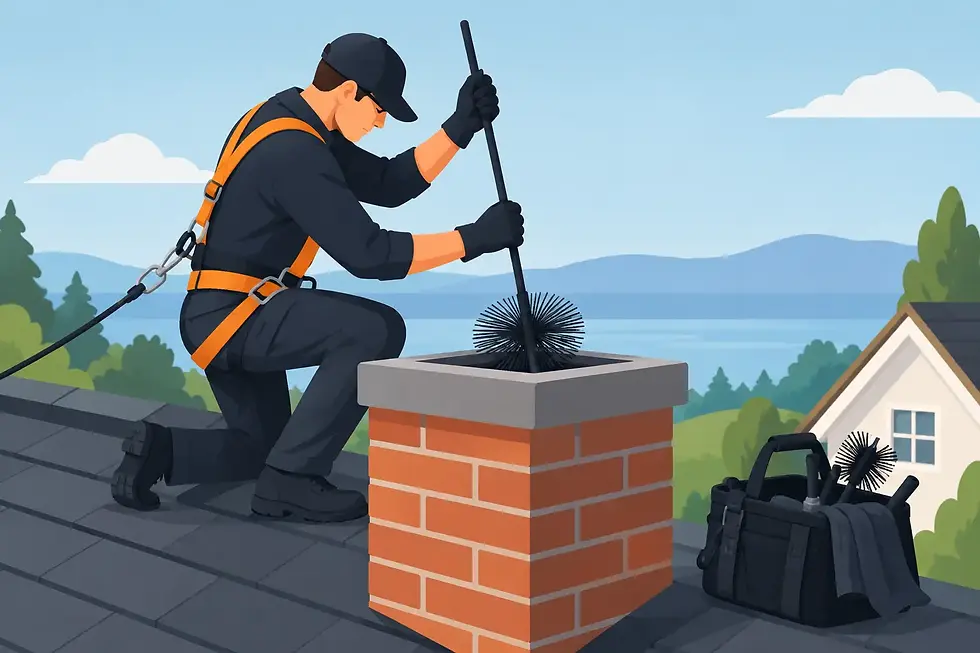
A professional sweep removes these deposits using the method that suits the chimney. This may involve traditional brush and vacuum sweeping, or power sweeping where it is appropriate. The aim is to leave the flue clear and the room clean, while checking for signs that further attention may be needed.
A planned visit also gives you the chance to discuss anything that has changed. Perhaps the stove is harder to light, smoke occasionally comes back into the room, or there is an unusual smell after rain. Raising these details during a routine appointment can help identify an issue before it stops you using the fireplace altogether.
The right interval depends on how the appliance is used and what you burn. A fireplace used only occasionally may need a different schedule from a wood burner that keeps a family room warm throughout winter. As a sensible starting point, many households arrange a sweep at least once a year, then adjust the frequency with advice from their sweep and the appliance manufacturer.
Annual sweeping vs reactive cleaning: the real difference
The main difference is not just timing. Annual sweeping is preventative maintenance. Reactive cleaning is a response to a symptom, fault or concern that is already affecting the chimney.
With a planned annual sweep, the chimney can be cleaned before the colder months, when appointments are often easier to arrange and the fireplace is less likely to be needed that evening. It creates a useful routine: the flue is checked, the work is documented, and any developing concern can be explained clearly.
Reactive cleaning usually starts with a problem. You may notice smoke spilling into the room, a strong sooty odour, black debris falling into the grate, or a stove that no longer draws properly. Sometimes the cause is a build-up of soot or tar. Sometimes it is a bird's nest, an internal obstruction, a damaged liner or an issue with the appliance itself.
That does not mean every reactive call-out is an emergency. A chimney that smells after a long damp spell, for example, may simply need assessment and cleaning. The difficulty is that it is impossible to know from the sitting room alone. Until the chimney has been inspected, the cause remains a guess.
The hidden cost of waiting for a problem
Putting off a sweep can feel reasonable when the fire seems to be working well. Yet chimneys tend to become noticeable only when something changes, and that is often at the least convenient moment - on the first cold weekend, before guests arrive, or during a spell of wet weather.
A blocked or restricted flue can affect how smoke and combustion gases leave the property. Poor draw may make lighting harder and can lead to smoke entering the room. Deposits inside the chimney can also increase the risk of a chimney fire. Regular removal of combustible soot and tar is a practical way of reducing that risk, alongside using suitable dry fuel and operating the stove as intended.
There is also the question of access. Birds often begin nesting in chimneys in spring. If an unused chimney has not been protected with an appropriate cowl or guard, nesting material can create a substantial blockage. Removing a nest should be approached carefully and at the right time of year, with wildlife considerations in mind. It is far better to deal with it promptly than continue lighting a fire beneath an obstruction.
Reactive work can occasionally reveal a fault that cleaning alone cannot solve. If there is concern about the condition of the flue, a CCTV chimney survey may be the sensible next step. A camera inspection can show internal defects, changes in the liner or obstructions that cannot be confirmed from the fireplace opening.
When reactive cleaning is the right choice
A regular booking schedule is preferable, but there are clear occasions when waiting for the next annual appointment is not wise. Stop using the fire and seek professional advice if you notice a significant change in how it performs, especially repeated smoke entering the room or debris dropping into the fireplace.
Other warning signs include a strong persistent smell, birds or nesting sounds in the chimney, visible soot around the appliance, difficulty maintaining a flame, or an alarm sounding. A carbon monoxide alarm should always be taken seriously. Get everyone into fresh air where necessary, follow the alarm guidance, and contact the appropriate emergency service or qualified professional. Do not try to solve a possible flue issue by simply opening a window and carrying on using the appliance.
Reactive cleaning is also useful after a chimney fire, even if it seemed minor, or after building work that may have affected a flue. In these situations, cleaning and checking the chimney helps establish whether it is safe to use again. Depending on what is found, a more detailed survey may be recommended.
A cleaner chimney is not the same as a healthy chimney
It is easy to assume that if a chimney has been swept, every possible concern has been ruled out. Sweeping is essential maintenance, but it does not repair cracked masonry, replace a damaged liner or correct an installation fault. A good sweep will be clear about this distinction.
During a routine appointment, a professional can look for obvious signs that the system needs closer attention. This might include unusual deposits, evidence of damp, a poor draw or an obstruction. If the chimney needs further investigation, a CCTV survey can provide a better view without unnecessary disruption to your home.
This is where choosing somebody you are comfortable inviting into the house matters. You should expect a careful, tidy approach, clear explanations and honest advice about what is needed now versus what can be monitored. Three Counties Sweeps provides domestic chimney care across Somerset, Dorset and Devon with this practical, respectful approach in mind.
How to make an annual sweep work for your household
The easiest system is to treat chimney maintenance like servicing a boiler or checking the car before winter. Pick a point in the year that suits how you use the fireplace. For many households, late summer or early autumn works well because it leaves time to address any concerns before regular use begins.
Keep a note of when the chimney was last swept, what fuel you have been burning and any changes in performance. If you have more than one appliance or flue, make sure each is included. An open fire in a rarely used room can be forgotten, but it still needs proper care before being lit.
Fuel choice makes a difference too. Burning properly seasoned or kiln-dried wood helps reduce excessive smoke and deposits. Avoid treating the stove as an incinerator: painted timber, household rubbish and unsuitable materials can create harmful fumes and damaging residues. A clean-burning fire supports the work done by your chimney sweep, but it does not replace it.
Planned care gives you more control
Reactive cleaning is sometimes unavoidable, and arranging help quickly is the right decision when warning signs appear. But it should be the exception rather than the whole maintenance plan. Annual sweeping gives you the reassurance of knowing the flue has been cleaned and checked before you depend on it.
If your chimney has not been swept since last winter, or you cannot remember when it was last inspected, that is a useful prompt to arrange it before lighting the next fire. A short planned visit now is usually far more pleasant than discovering a problem on the coldest evening of the year.


Comments