
.png)

Power Sweep Versus Rotary Brush: Which Works?
A chimney that looks fine from the fireplace can still contain soot, tar deposits or a partial blockage higher up the flue. That is why the question of power sweep versus rotary brush is not really about choosing the most dramatic-looking equipment. It is about using the right method for the chimney, appliance and type of deposits involved.
For most homeowners, a regular chimney sweep means a clean hearth, a properly working fire or stove, and reassurance that the flue has been checked by someone who knows what they are looking for. The tools matter, but so does the judgement behind them.
Power sweep versus rotary brush: the key difference
The wording can be confusing because a rotary brush may be part of a power-sweeping system. Different chimney sweeps use the terms in slightly different ways.
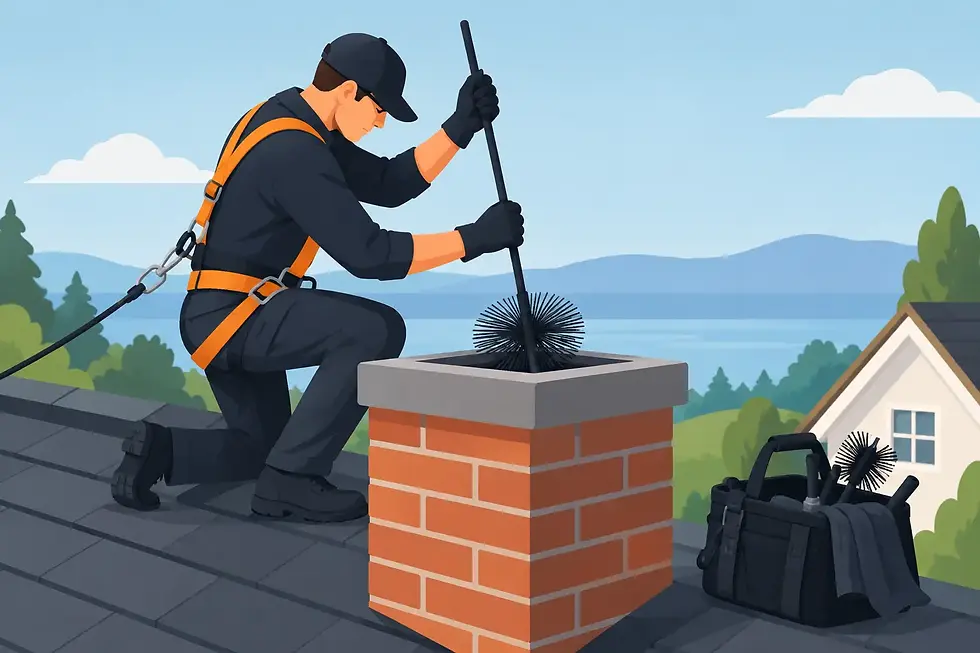
A traditional brush-and-vacuum sweep uses manual flexible rods with a correctly sized brush. The brush is worked through the chimney while a professional vacuum controls soot at the fireplace opening. This remains a very effective method for many domestic chimneys and is far from old-fashioned when used properly.
Power sweeping generally means that the cleaning head is driven by a machine. It rotates at a controlled speed as it travels through the flue. The head might be a soft brush, a more flexible whip-style attachment, or another tool selected for the chimney lining and the material being removed.
A rotary brush is one type of rotating cleaning head. It can agitate soot and light deposits around the full circumference of a flue, especially in lined systems where access and shape make it suitable. So, rather than being two completely separate choices, power sweeping is often the method and the rotary brush is the attachment used within it.
Why the right cleaning method matters
Chimneys are not all built alike. Across older cottages, period houses and newer stove installations, flues can be clay lined, brick, pumice, stainless steel or insulated flexible liner. They may be wide, narrow, straight, offset, rectangular or unusually shaped.
Using a cleaning head that is too aggressive, too large or simply unsuitable can cause problems. A flexible liner needs a method appropriate for that liner. A delicate or ageing flue may need extra care. Heavy glazed tar deposits, often called creosote, may not be safely removed by brushing alone and can require a separate assessment before any work starts.
This is why a good chimney sweep should not arrive with one tool and use it for every job. They should consider the appliance, fuel, chimney condition, previous sweeping history and anything noticed during the inspection. The aim is to clean thoroughly without causing damage or making promises that the flue condition does not support.
When a traditional brush may be the better choice
A conventional brush sweep is often ideal for routine maintenance where the chimney is in sound condition and has normal soot deposits. It gives the sweep useful feedback through the rods and brush as they move through the flue. Resistance, rough areas or a sudden obstruction can all indicate that further investigation is needed.
It can also be a sensible choice for chimneys where the sweep wants to work carefully around an older structure. The brush size and material can be matched to the flue, and the process is controlled by hand rather than by a powered motor.
For an open fire that is used occasionally and swept at sensible intervals, a traditional brush and vacuum service may be all that is needed. The important point is that it is carried out properly, with the room protected and soot contained.
When power sweeping can be useful
Power sweeping can be particularly helpful in certain lined flues, including many wood burner and multi-fuel stove installations. The rotation can give a consistent clean around the inside of a round liner and may shift compacted soot that a manual brush has not fully disturbed.
It can also be useful where the flue has bends or where a specialised soft rotary head is better able to follow the route. For some appliances, the cleaning is carried out from the stove opening after suitable preparation. In other cases, access from the top may be more appropriate. The correct approach depends on the property and safe access arrangements.
A powered system does not automatically mean a better clean. Used well, it is another useful tool. Used without care, it can be the wrong tool for the job. A professional should explain why they recommend it rather than treating it as an expensive upgrade or a one-size-fits-all solution.
What a rotary brush cannot tell you
A clean sweep is not the same as proof that a chimney is structurally sound. Rotary action can remove soot, but it cannot repair a damaged liner, resolve a failing register plate or confirm that every hidden part of the flue is intact.
If there are signs of concern - such as bits of liner in the stove, persistent smoke entering the room, unusual smells, damp staining, poor draw or recurring debris - cleaning alone may not be enough. A CCTV chimney survey can help identify issues inside the flue that cannot be seen from the fireplace or chimney pot.
Likewise, a bird's nest or a serious blockage should be dealt with as a blockage, not simply brushed harder. Nests can contain twigs, mud and other material that needs careful removal. Once cleared, protection at the chimney top may be worth discussing to help prevent a repeat visit from determined local wildlife.
Is power sweeping messier than brushing?
Not when the job is set up correctly. A clean service depends far more on preparation, containment and vacuum equipment than on whether the brush is turned by hand or by a motor.
Before work begins, the fireplace or stove area should be protected. The flue opening is sealed as needed, and a suitable vacuum is used to control soot while cleaning takes place. A tidy sweep will also take care when moving equipment through the house and leave the work area clean afterwards.
Homeowners can help by clearing ornaments, logs and easily moved items from around the fireplace or stove before the appointment. There is no need to attempt your own pre-clean inside the appliance. It is generally more helpful to leave the ash and debris for the sweep to see, as it can offer clues about how the fire has been burning.
The deposits make a difference
Dry, powdery soot is normally straightforward to remove. Wood burners, particularly those used regularly through winter, can produce fine soot that gathers quickly in a liner. Smokeless fuel and coal may leave different residues, while burning damp wood can create more tarry deposits.
That is one reason fuel choice matters. Burning properly seasoned wood, or wood with a moisture content of 20% or below, helps your stove burn more efficiently and reduces the likelihood of excessive deposits. Running a stove too slowly for long periods can also encourage tar formation, even when the fuel is good.
No cleaning system can compensate for unsuitable fuel or poor burning habits. If your chimney repeatedly produces heavy deposits between appointments, it is worth asking for practical advice on stove use, air controls and fuel storage.
How often should a chimney be swept?
The best interval depends on what you burn and how often you use the appliance. As a general guide, wood and solid-fuel appliances commonly need sweeping at least once a year, and sometimes more often if they are used heavily. Gas appliances also need regular inspection and maintenance, although their cleaning needs are different. Oil-fired systems should be serviced in line with the appliance manufacturer's requirements.
Your chimney sweep can recommend a sensible schedule based on your own use rather than a generic rule. Keeping up with it is usually simpler and less costly than waiting until smoke, smell or poor performance forces the issue.
What to ask when booking a sweep
You do not need to know whether you require a power sweep or rotary brush before you call. Describe your appliance, fuel and any concerns you have noticed. A helpful sweep will ask a few questions, assess the chimney on arrival and choose the safest suitable method.
It is reasonable to ask whether the sweep is insured, trained and a member of a recognised chimney sweeping association. You may also want confirmation that you will receive a sweeping certificate after the service, particularly for your household records and insurance paperwork.
At Three Counties Sweeps, the focus is on a careful assessment and a clean, professional job, not on forcing every chimney into the same process. Whether a brush-and-vacuum sweep or a powered rotary method is appropriate, the goal is the same: a chimney you can use with greater confidence.
A properly maintained chimney rarely demands attention, which is exactly how it should be. Book cleaning before the colder months arrive, and let the condition of your own flue guide the method rather than the name of the equipment.


Comments