
.png)

Power Sweeping vs Brush Sweeping
- plamb10
- Jun 23
- 6 min read
If you have been comparing power sweeping vs brush sweeping, you have probably already realised there is plenty of mixed advice around. One person says power sweeping is the only proper way to clean a flue. Another insists traditional brush sweeping is all you need. In reality, the best method depends on the type of appliance, the condition of the chimney and what is actually inside it.
For most homeowners, the main concern is simple. You want the chimney properly cleaned, you do not want soot all over the house, and you want confidence that your fire, stove or flue is safe to use. That is exactly where understanding the difference helps.
What is the difference between power sweeping and brush sweeping?
Brush sweeping is the traditional method most people picture when they think of chimney sweeping. A sweep uses rods and brushes sized to suit the flue, working through soot, tar and loose deposits by hand. It is a proven and effective method and, in many situations, it is still absolutely the right choice.
Power sweeping uses a rotary head attached to specialist equipment. Instead of relying purely on manual brushing, the rotating action breaks up soot and deposits more aggressively and more evenly along the flue walls. It is often paired with a professional vacuum system to keep the work clean inside the home.
That difference in action is why the two methods are not simply interchangeable. They can both clean chimneys well, but they do not tackle every job in the same way.
When brush sweeping is the better option
There is a reason traditional brush sweeping has been around for so long. It works. For many open fires, lined chimneys and flues that are regularly maintained, a well-matched brush and rod system does the job perfectly well.
Brush sweeping can also be the more suitable choice where a chimney needs a careful, controlled approach. Older properties, period homes and certain flue types may benefit from a method that allows the sweep to feel resistance, changes in shape and possible obstructions as they work. That hands-on feedback matters.
It is also a sensible option when the issue is straightforward soot removal rather than heavier glazing or stubborn build-up. If the chimney is swept regularly and the fuel being burned is suitable and dry, brush sweeping is often more than adequate.
The key point is this: traditional does not mean outdated. Done properly, brush sweeping remains an effective professional service, not a second-best one.
When power sweeping comes into its own
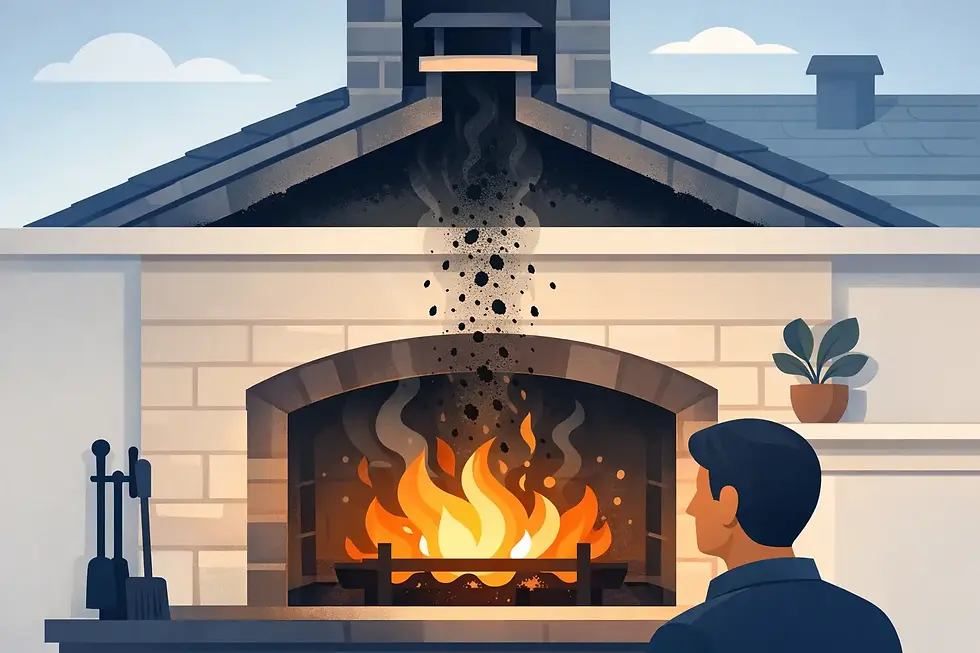
Power sweeping is especially useful when a flue has heavier deposits, awkward bends or a build-up that manual brushing may struggle to remove as thoroughly. Wood-burning stoves and multi-fuel appliances can sometimes leave behind compacted soot or tarry residue, particularly if the fuel has been damp or the appliance has been slumbered too often.
The rotary action helps break down those deposits more efficiently. In the right chimney, that can mean a more complete clean and a better result first time. It can also be very effective in flexible flue liners, where the sweeping head can maintain more consistent contact with the inner surface.
Many homeowners also like the fact that power sweeping sounds more modern and more thorough. Sometimes that impression is justified, but not always. A newer method is not automatically the best one for every chimney. It has to suit the appliance and the flue condition.
Power sweeping vs brush sweeping for wood burners and stoves
This is where the comparison often matters most. Wood burners and stoves have changed what people expect from chimney care. Modern appliances can burn very cleanly when used correctly, but they can also produce stubborn deposits if the fuel quality is poor or the stove is run at low temperatures for long periods.
In these cases, power sweeping can be an excellent choice because it is particularly good at disturbing compacted soot along the flue liner. If the flue is swept regularly and the stove has been burning seasoned wood properly, brush sweeping may still be entirely suitable.
What matters more than the label is whether the method matches the appliance. A good sweep will not force one approach onto every job. They will assess the type of stove, the flue route, how the appliance has been used and whether there are signs of tar, obstruction or nesting material.
It is not about which method sounds better
Homeowners are sometimes sold on method names rather than results. That can be unhelpful. A chimney does not become safer just because a service sounds more advanced. It becomes safer when it is inspected properly, cleaned correctly and checked for issues that could affect use.
A brush sweep in experienced hands can be a better option than power sweeping used where it does not suit the chimney. The opposite is also true. If a flue liner has deposits that need more aggressive rotary cleaning, relying only on manual brushing may leave material behind.
This is why the best chimney sweeps do not treat power sweeping vs brush sweeping as a sales pitch. They treat it as a practical decision.
Cleanliness inside the home matters too
For most people, the worry is not only whether the chimney gets clean. It is whether the sitting room stays clean too.
Both brush sweeping and power sweeping can be carried out cleanly when the correct equipment is used. Dust sheets, proper sealing around the appliance opening and a professional vacuum system make all the difference. Mess is not caused by the method alone. It is usually caused by poor preparation or rushed workmanship.
That is worth remembering if you are choosing between sweeps. Ask less about which term they use and more about how they protect your home, how they contain soot, and whether they explain the process clearly before they start.
The condition of the chimney matters as much as the method
No two chimneys are exactly alike. One may be straight, lined and swept every year without fail. Another may be in an older property with bends, historic wear, occasional bird activity or years of inconsistent maintenance. That is why a one-size-fits-all answer rarely works.
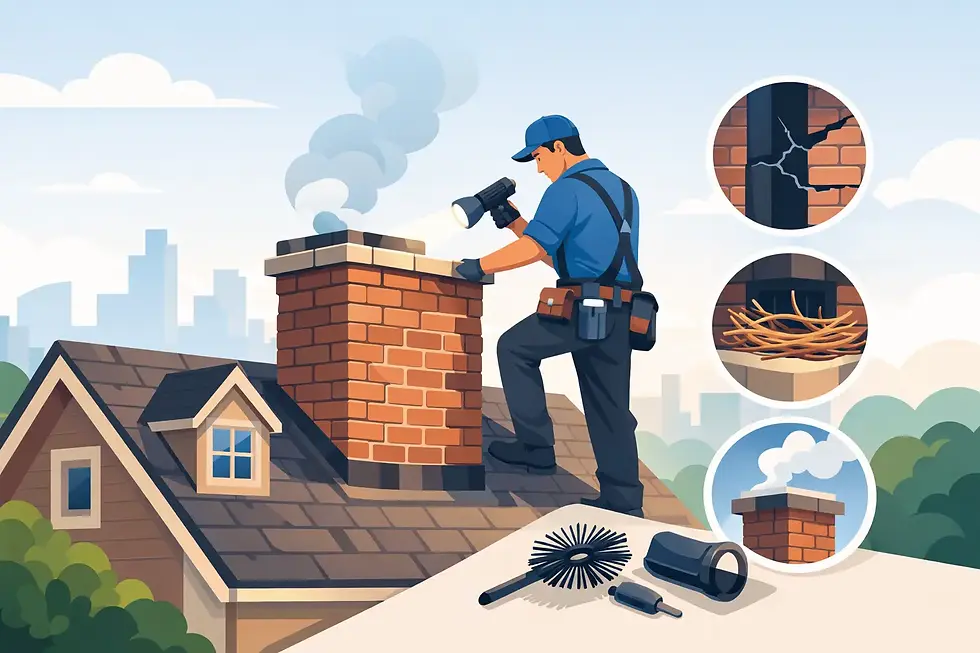
A chimney with a birds nest, heavy tar, loose masonry, damage in the flue or signs of poor draw may need more than a standard sweep. Sometimes the right next step is a CCTV survey or further investigation rather than simply choosing between power and brush sweeping.
A trustworthy sweep will tell you if the chimney needs more attention and explain why in plain terms. That matters far more than making the service sound technical.
How to choose the right chimney sweep
The safest choice is not the one offering the fanciest wording. It is the one offering clear advice, proper training and a respectful service in your home.
Look for someone who is insured, DBS checked if they are working in customers' homes, and properly trained through a recognised industry body. You should also expect them to ask sensible questions about your fire or stove, how often it is used and whether you have noticed smells, smoke issues or anything falling into the fireplace.
A good sweep should be able to explain whether brush sweeping, power sweeping or a combination is most suitable, and they should explain it without jargon. If they cannot tell you why they are choosing a method, that is usually a sign to keep looking.
At Three Counties Sweeps, that is exactly how we approach it. The method follows the chimney, not the other way round.
So which one should you choose?
If your chimney is regularly maintained, in good condition and simply needs routine cleaning, brush sweeping may be all that is needed. If you have a stove or lined flue with more stubborn build-up, power sweeping may give a better result. In some cases, both approaches have their place depending on what the sweep finds on inspection.
The honest answer is that there is no single winner in power sweeping vs brush sweeping. There is only the right method for that chimney, in that home, at that time.
And that is usually what people want after all - not a trendy label, just a clean, safe chimney and the reassurance that the job has been done properly.

Comments