
.png)

Smoke Draw Case: What It Means for Your Chimney
Smoke should travel from your fire or stove into the chimney and safely outside. If it drifts back into the room, struggles to rise, or leaves a strong smoky smell, you may be dealing with what people often call a smoke draw case. It is not something to put up with, especially in a family home. Poor draw can make a fire unpleasant to use and, more seriously, can allow harmful combustion gases into your living space.
A chimney that has worked well for years can suddenly develop a draw problem. The good news is that the cause is often identifiable, and a professional sweep or inspection can establish what needs attention without guesswork.
What is a smoke draw case?
“Draw” is the natural upward pull that carries smoke, gases and particles from an appliance, through the flue, and out at the chimney pot. Warm air rising up the flue creates this pull. For a fire, open fireplace, wood burner or multi-fuel stove to work properly, the chimney needs enough draw to clear smoke consistently.
A smoke draw case simply describes a situation where that process is not working as it should. You might see smoke entering the room when lighting the appliance, smell fumes after the fire has been going for a while, or notice that the flames seem sluggish and difficult to keep going.
There is a difference between a little smoke when first lighting a cold stove and a persistent problem. On a very cold day, a cold flue can initially hold a plug of cold air that resists the rising smoke. A correctly lit fire usually warms the flue and improves the draw quite quickly. If smoke continues to spill into the room, treat it as a fault that needs investigating.
Signs your chimney is not drawing properly
The most obvious sign is visible smoke coming back into the room. However, chimney draw problems are not always so clear-cut. A smoky odour around the fireplace, black staining above the opening, soot around a stove door, or a fire that regularly dies despite suitable fuel can all point to restricted or inconsistent airflow.
You may also notice the issue only under certain conditions. For example, the fire may smoke on windy days, when a kitchen extractor fan is running, or after the house has been made more airtight with new windows and insulation. These details are useful because they help narrow down the cause.
If you have a carbon monoxide alarm and it sounds, take it seriously. Follow the manufacturer’s instructions, get everyone into fresh air, and seek urgent advice where needed. Do not keep using the appliance until the cause has been checked and it is safe to do so.
Common causes of poor chimney draw
A blocked or partially blocked flue is one of the first things to rule out. Soot and tar deposits can reduce the internal space of a flue over time, particularly where wood has been burnt damp or the appliance has been run slowly for long periods. Bird nests, leaves and other debris are also common causes, particularly after spring and summer.
A chimney sweep can remove loose deposits and check whether the flue is clear. If the problem remains, a CCTV chimney survey can provide a closer look inside. This may reveal a dislodged liner, a narrowing in the flue, masonry debris, damaged joints or an obstruction that cannot be identified from the fireplace alone.
A cold chimney or poor lighting method
Cold air is heavier than warm air. When the chimney has not been used for a while, especially in an older or external chimney stack, cold air can sit in the flue and prevent smoke from rising at first. Lighting a small, hot kindling fire with the stove air controls fully open usually helps establish the draw.
Fuel matters too. Wet logs create more smoke and less heat, making it harder for the flue to warm up and operate properly. Use properly seasoned wood with a moisture content of 20% or below, and avoid overloading the firebox with large logs before the fire is established.
Not enough replacement air
Your fire needs air from somewhere. Modern homes can be very well sealed, and extractor fans in kitchens, bathrooms and utility rooms can remove air from the property quickly. That can create negative pressure, drawing smoke back down the chimney instead of allowing it to rise.
As a simple observation, see whether the issue changes when an extractor fan is switched off or a nearby window is opened slightly. This is not a repair in itself, but it can help show whether airflow in the room is contributing. A stove installer or chimney professional can then advise on suitable permanent ventilation if required.
Wind, chimney height and nearby structures
Wind does not always improve chimney draw. Certain wind directions can force air down a chimney pot, particularly where the stack is short, exposed, or affected by the roofline. Tall trees, neighbouring buildings and extensions can also alter airflow around the property.
This is why a draw problem that only happens in particular weather deserves proper assessment. Fitting a different chimney cowl can sometimes help, but it should not be a guess. The wrong cowl may restrict the flue or fail to solve the real issue.
Flue or appliance faults
A damaged flue liner, unsuitable flue size, failed stove seals or an appliance that has not been installed correctly can all affect performance. These faults are less likely to be resolved by sweeping alone, although sweeping and a camera inspection are often the sensible first steps.
Open fires can be especially sensitive to chimney conditions because they move a large volume of air. A wood burner may have a different issue, such as blocked air inlets, closed controls, a baffle plate in the wrong position or a flue system that needs specialist installer attention.
How a professional checks a smoke draw case
A good visit starts with the basics: asking when the problem occurs, what fuel is being used, whether the appliance has changed, and when the chimney was last swept. A visual check of the fireplace, stove, hearth, flue connection and chimney stack can reveal useful clues before any work begins.
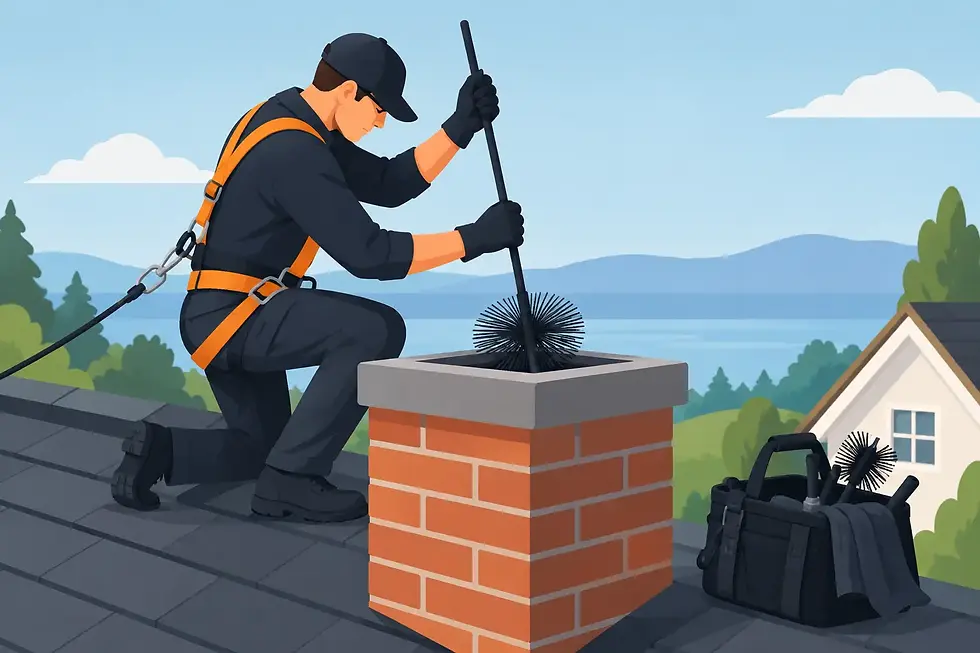
The flue is then swept where appropriate, using the right equipment for the appliance and chimney. This removes deposits and helps establish whether a straightforward blockage was responsible. Careful preparation and a brush-and-vacuum approach keep soot contained within the work area.
A smoke draw test may be carried out to observe how smoke travels through the flue and whether it exits correctly at the top. It can help identify a weak draw, leakage or a blockage. Where the results are unclear, a CCTV chimney survey gives a much clearer picture of the flue’s internal condition.
The right solution depends on the finding. It may be as simple as removing a nest and sweeping accumulated soot. In other cases, the next step could be advice from a qualified stove installer, a repair to the flue, or further investigation of ventilation and chimney terminal options.
What you can do before booking a visit
Do not attempt to burn through a suspected blockage or keep relighting a fire that is filling the room with smoke. Stop using the appliance until it has been checked. Empty the ash pan only when cold, and do not disturb any material you can see higher up in the flue opening.
It helps to make a note of what you have noticed. Is the problem worse with an open fire or a stove? Does it happen only when the wind is from a certain direction? Has there been building work, a new extractor fan, a new appliance or a period when the chimney was unused? These details can save time and lead to a more accurate diagnosis.
Keep carbon monoxide alarms fitted in the appropriate rooms, test them regularly, and never rely on smell alone to warn you of dangerous gases. Carbon monoxide cannot be seen or smelt.
When to arrange a chimney sweep or survey
Arrange a professional check promptly if smoke is entering the room more than briefly during lighting, if there is a persistent smoky smell, or if you suspect a nest or blockage. It is also wise to book before returning to a chimney that has been unused for a season.
Regular sweeping remains one of the best ways to prevent a smoke draw case caused by soot, tar and debris. The right frequency depends on the fuel you burn and how often you use the appliance, but frequent wood or solid-fuel users should not wait for symptoms before arranging maintenance.
At Three Counties Sweeps, we know that a smoky fireplace can quickly turn from a cosy evening into a real worry. A clean, careful inspection gives you a clear answer about what is happening in your chimney and what should happen next - so you can enjoy your fire with greater confidence.


Comments