
.png)

Why Is Your Fireplace Backdrafting Indoors?
A fire should draw smoke up the chimney, not send it back into your room. If you are asking, “why is fireplace backdraughting indoors?”, the short answer is that the chimney is not getting enough upward pull. The cause may be as simple as a cold flue, but it can also point to a blockage, poor ventilation or a chimney fault that needs attention.
A little smoke when first lighting an open fire or stove can happen, especially after the chimney has been unused. Persistent smoke, a smoky smell, or fumes entering the room are different. Treat them seriously, stop using the appliance until you understand the cause, and make sure you have a working carbon monoxide alarm nearby.
What backdraughting means
Backdraughting happens when smoke, combustion gases and sometimes soot move into the room rather than travelling safely up the flue. Chimneys work because warm air rises. As the fire heats the air in the flue, it creates a natural upward movement known as draw or draught.
Anything that makes that upward movement weak, reverses the air flow, or obstructs the flue can cause smoke to spill from an open fireplace or escape through the stove door. It is not simply an inconvenience. Wood smoke affects air quality indoors, and combustion gases can be dangerous.
Why is fireplace backdraughting indoors? Common causes
The flue is cold
This is one of the most common reasons, particularly on a chilly, damp morning or after the fire has been out for several days. Cold air can sit in the chimney like a plug. When you light a fire beneath it, the smoke may struggle to push upwards at first and take the easier route into the room.
The issue is often worse with tall external chimneys, common in older properties across Somerset, Dorset and Devon. These stacks can lose heat quickly, so the flue takes longer to warm through. A properly prepared fire with dry kindling and a small, hot flame is usually more effective than filling the grate with large logs straight away.
A blocked or restricted chimney
Soot, tar deposits, fallen masonry, loose pot lining and bird nests can all reduce the space available for smoke to pass. Jackdaws and other birds are frequent chimney visitors, especially outside the main burning season. A partial blockage may allow some smoke through, then cause the fire to spill back into the room as it builds.
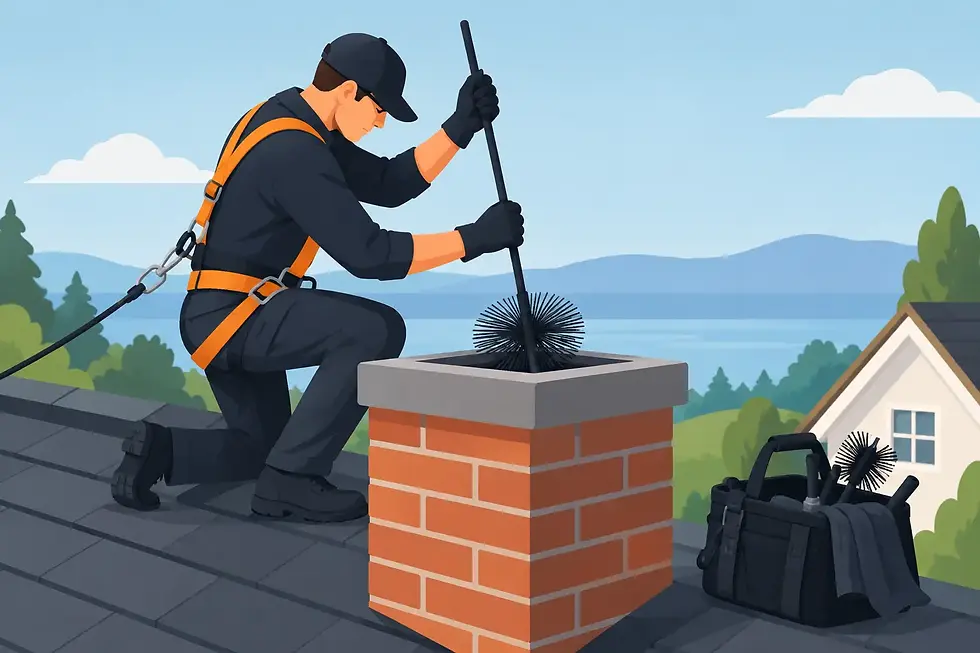
A chimney can also be restricted by heavy soot deposits even if it does not look blocked from below. This is one reason regular sweeping matters. A professional sweep can remove deposits and identify visible signs that a CCTV survey or further repair work may be needed.
The room has negative air pressure
Your fire needs a supply of replacement air. As warm air rises up the chimney, fresh air must enter the room to take its place. Modern draught-proofing, tightly fitted doors and windows, and extractor fans can all make this more difficult.
Kitchen cooker hoods, bathroom extractors, tumble dryers and mechanical ventilation systems may pull air from the house. If they create lower pressure indoors than outside, air can be drawn down the chimney instead of allowing smoke to rise. This is particularly relevant with wood burners in well-insulated homes.
As a simple check, turn off extractors and open a nearby window slightly before lighting the fire. If the draught improves noticeably, ventilation is likely contributing to the problem. Do not rely on an open window as a permanent fix without getting suitable advice, especially where a stove installation should have a dedicated air vent.
Wind and weather are affecting the chimney
Wind does not always help a chimney draw. The direction, strength and shape of your roofline, nearby trees or neighbouring buildings can create turbulence around the chimney pot. This can force air down the flue, known as downdraught.
If smoke enters the room only in certain wind directions, weather may be the main factor. A chimney cowl can sometimes help, but it must be the right type for the appliance and problem. Fitting a cowl without checking the flue condition, chimney height and ventilation can make matters worse rather than better.
The fire is being lit or fuelled poorly
Wet wood, oversized logs and a fire that is starved of air create more smoke than a weak chimney can carry away. Damp fuel also produces more tar in the flue over time, increasing the chance of future restriction.
Use properly seasoned wood with a moisture content of 20% or less, along with dry kindling and an appropriate firelighter. For a stove, check that the air controls are open for lighting and that the baffle plate has not been displaced. For an open fire, begin with a small fire that establishes heat in the chimney before adding larger pieces of fuel.
There is a fault with the chimney or appliance
Sometimes the issue is not a temporary one. A damaged liner, an incorrectly sized flue, a chimney that is too short for its position, or a poorly fitted stove can all affect draw. Internal bends, rough old flues and leaking joints may also slow the movement of gases.
These problems cannot be confirmed by looking into the fireplace alone. A chimney CCTV survey is useful where backdraughting keeps happening, particularly after sweeping has ruled out loose soot and nesting material. It gives a clearer view of the flue from top to bottom and helps prevent guesswork.
What to do when smoke comes into the room
If smoke starts spilling into the room while the fire is burning, do not add more fuel in the hope it will burn through the problem. Keep people and pets away from the smoke, open doors or windows to ventilate the space if it is safe to do so, and allow the fire to die down under control. Never pour water onto a solid-fuel fire.
If a carbon monoxide alarm sounds, leave the property immediately, call the emergency services, and do not re-enter until you have been told it is safe. Carbon monoxide has no smell, so an alarm is essential even if the only obvious symptom is smoke.
Once the appliance is cold, check the obvious points: that any damper is open, stove air controls are set correctly, and an extractor fan has not been running. If the problem returns, do not keep testing the fire. Repeated backdraughting needs professional attention.
When to arrange a chimney inspection
A one-off puff of smoke from a cold fireplace may improve once the flue is warm. However, book an inspection or sweep promptly if the fireplace backdraughts repeatedly, the problem has appeared suddenly, or you notice soot falling into the grate, a strong smoky smell, poor burning, or birds entering the chimney.
It is also sensible to have the chimney checked before using a fireplace after a long period out of service, after building work near the roof, or if you have moved into a property with an unknown chimney history. Sweeping removes combustible deposits, but an inspection can also reveal nesting, damaged liners and other issues that may affect safe operation.
At Three Counties Sweeps, we see many backdraughting problems that have a straightforward cause, such as a nest or an overdue sweep. Where the cause is less clear, a careful inspection and CCTV survey can help identify the next sensible step without making assumptions.
A fireplace should make a room feel warm and comfortable, not leave you opening windows to clear smoke. If yours is struggling to draw, pause its use and have the chimney checked before the next fire. It is the safest way to protect your home, your appliance and the people in it.


Comments