
.png)

Chimney Sweep vs Chimney Inspection Explained
A wood burner can look as though it is working perfectly while the flue above it is slowly filling with soot, tar deposits or debris. That is why the question of chimney sweep vs chimney inspection matters: the two services are closely connected, but they do different jobs. Knowing which one you need can prevent a small concern becoming an unpleasant, costly or unsafe surprise.
For most homes, regular sweeping is the essential routine. An inspection is the closer look needed when there is a concern about the condition, route or safety of the chimney. In some cases, one appointment will sensibly include both.
What does a chimney sweep do?
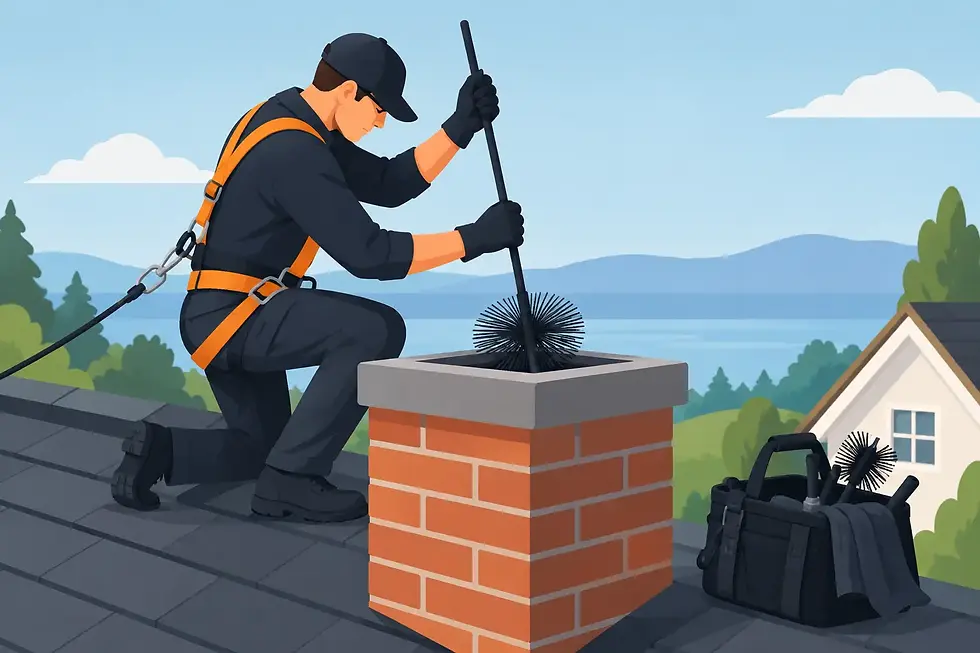
A chimney sweep removes the soot, ash, creosote and loose debris that builds up inside a flue through normal use. This is usually carried out using professional brush-and-vacuum equipment, with sheets and care taken to protect the room around the fireplace or stove.
The aim is straightforward: to keep the flue clear enough for smoke and combustion gases to travel safely out of the property. A clean chimney also helps a stove or open fire draw properly, which can make it easier to light and reduce the chance of smoke spilling back into the room.
During a sweep, a professional will often spot obvious warning signs. These might include excessive tar, loose material, a strong soot smell, signs of a bird’s nest, or a problem with the appliance’s draw. But a standard sweep is not automatically a full assessment of every hidden part of the chimney.
For a regularly used wood burner or open fire, sweeping is normally the service to book first. The right frequency depends on the fuel you burn, how often you use it and the condition of your appliance. Wood tends to create more deposits than smokeless fuel, especially if it has not been properly seasoned.
What does a chimney inspection involve?
A chimney inspection is about condition rather than cleaning alone. It is used to investigate what cannot be seen from the fireplace, stove opening or chimney pot. A visual inspection may identify clear issues at the accessible parts of the system, while a CCTV chimney survey lets a specialist examine the inside of the flue in much greater detail.
A camera survey can help reveal cracks, failing mortar joints, displaced liners, internal blockages, old debris, tar build-up or damage caused by a previous chimney fire. It may also show whether a flue liner is suitable for the appliance connected to it.
Not every chimney needs a CCTV survey at every sweep. However, it is a sensible investment when there is a persistent problem, when buying an older property, after a chimney fire, or before installing a new stove or liner. It gives you evidence of what is actually happening inside the chimney rather than relying on guesswork.
An inspection is also useful where a chimney has been unused for a long time. Birds, weather and general deterioration can all affect a flue that has been left alone for years. A chimney may look sound from the ground while having a blockage or defect further down.
Chimney sweep vs chimney inspection: the practical difference
The simplest way to think about it is this: sweeping removes deposits; inspection checks the structure and condition of the route those deposits travel through.
A sweep answers the question, “Is the flue clean and clear enough for normal use?” An inspection answers, “Is the flue in suitable condition, and is there a fault or hidden issue that needs attention?”
There is some overlap. A careful sweep includes a professional eye and should never be treated as a quick clean with no thought for safety. Equally, an inspection may identify deposits that need sweeping before the chimney can be properly assessed. Still, cleaning a flue does not repair a cracked liner, and a camera survey does not replace regular removal of soot and creosote.
This difference matters particularly in period homes across Somerset, Dorset and Devon, where chimneys may have been altered, lined, capped or reopened several times over the years. Older properties can have unusual flue routes and hidden changes that are not obvious from the hearth.
When a sweep is probably enough
If your stove or fireplace is in regular use, burns well, has no unusual smell or smoke issues, and has been maintained consistently, a routine chimney sweep will usually be the appropriate booking. Keeping to a sensible schedule is far better than waiting until performance changes.
You should arrange a sweep before the main heating season rather than after the first cold spell, when appointment availability can become tighter. It also means your appliance is ready before you rely on it every day.
A sweep is also the right place to start if you suspect a straightforward blockage, such as loose soot or a bird’s nest. Nest removal should be handled carefully and only when it is lawful to do so, as active nests are protected. A professional can advise on the next safe step and whether a bird guard may help prevent a repeat once the nesting season has passed.
Signs you may need an inspection as well
Book an inspection, or ask your sweep whether one is advisable, if something does not feel right. Smoke entering the room, a poor draw, a persistent chimney smell, bits of debris falling into the fireplace, or staining around the breast are all reasons to investigate further.
Other situations call for a closer look even if there is no immediate problem. These include moving into a house with an existing stove, reconnecting an old fireplace, changing fuel type, fitting a new appliance, or receiving no clear history of maintenance. A camera survey can provide a useful baseline before you make decisions or spend money on installation work.
If you have had a chimney fire, do not simply resume using the appliance after a sweep. The intense heat can damage a liner or expose weaknesses in the flue. An inspection helps establish whether the chimney remains safe to use and whether repair work is needed.
Condensation and tar can also be clues. A little surface soot is normal, but thick, shiny black deposits or liquid-like staining can point to wet wood, a cold flue, poor burning habits or an unsuitable setup. Sweeping removes the immediate build-up, while inspection helps identify whether there is an underlying reason it keeps returning.
Why regular sweeping still matters after a survey
A clear CCTV image today is reassuring, but it cannot keep a chimney clean next winter. Every fire produces by-products, and the amount depends heavily on fuel quality and how the appliance is operated.
Burning dry, properly seasoned wood is one of the best ways to reduce tar deposits. Avoid slumbering a stove for long periods, as slow, smoky burning creates more residue. Use the appliance as intended and make sure the room has suitable ventilation.
Even with good habits, a flue needs routine attention. Think of a survey as a condition check and a sweep as ongoing maintenance. One tells you about the chimney’s health; the other helps preserve it.
What to expect from a professional visit
A trustworthy chimney service should explain what is being done and why, without making a straightforward job sound more alarming than it is. You should know whether you are booking a standard sweep, a visual check, a CCTV survey or a combination of services.
For a sweep, the room should be protected, the flue cleaned using suitable equipment, and the appliance area left tidy. You should also receive clear advice if anything unusual is found. For a CCTV inspection, ask for an explanation of any images or findings in plain language, along with practical options if work is recommended.
Credentials matter when inviting someone into your home. Look for appropriate insurance, professional training and membership of a recognised industry body. At Three Counties Sweeps, the focus is on clean, careful work, clear communication and treating every home with respect - because reassurance should come from the service itself, not just a promise.
If your fire is due its usual clean, arrange a sweep before you need it. If it has been smoking, smelling unusual or causing concern, ask for an inspection too. A calm, professional check now can make the next time you light the stove feel exactly as it should: warm, simple and worry-free.


Comments